
When choosing a tree for your landscape, there are plenty of reasons to look close to home. Native trees are species that have grown naturally in our region for generations, making them an important part of New England’s forests, wildlife habitats, and ecosystems.
For Massachusetts gardeners, planting native trees can be a great way to create a beautiful landscape while also supporting the environment around you. Native trees provide food and shelter for birds, pollinators, and other wildlife, and because they’ve adapted to our regional conditions, the right tree in the right location can be a resilient addition to your yard.
Best of all, “native” doesn’t mean you have to sacrifice ornamental appeal. From spring flowers and brilliant fall foliage to evergreens that provide year-round structure, there are native trees for just about every type of landscape.
Here are some of our favorites to consider for your New England garden.
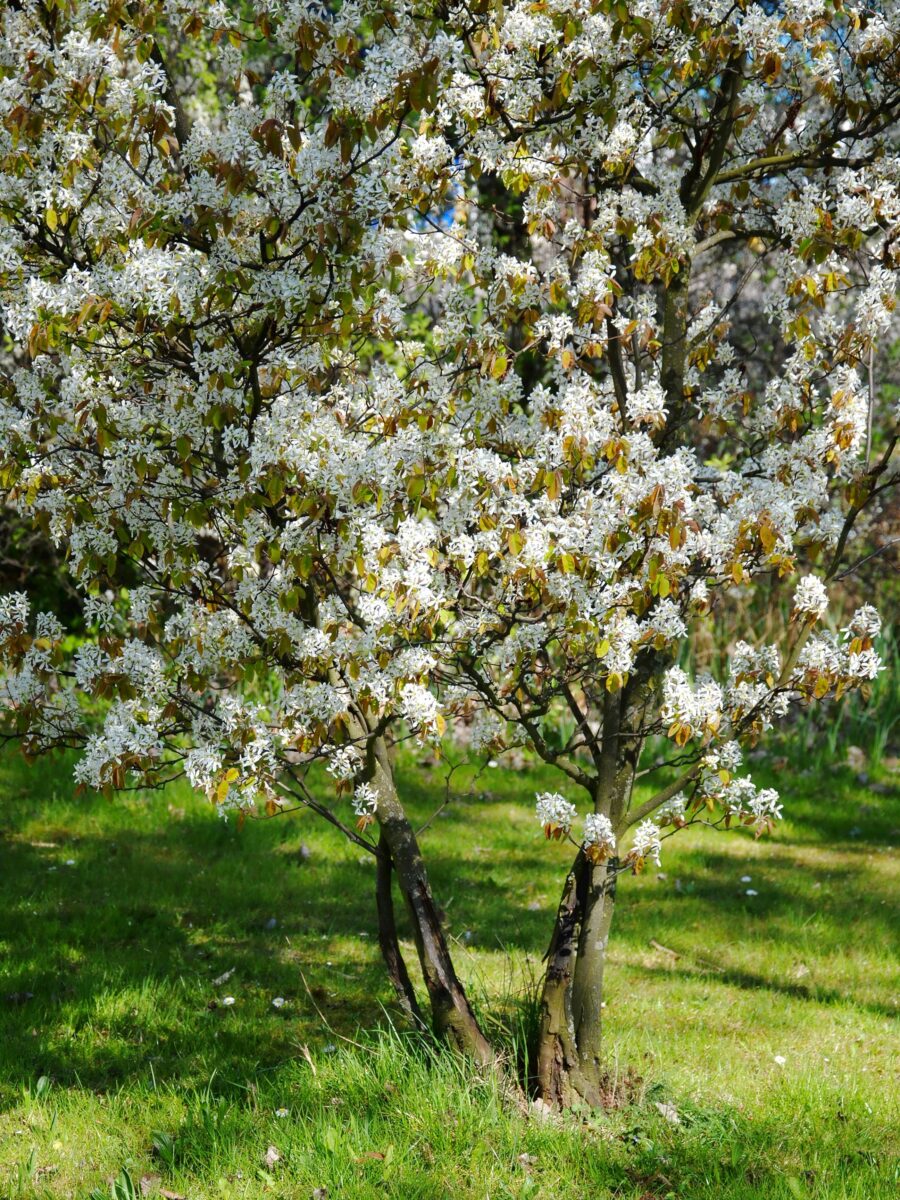
Serviceberry / Shadbush (Amelanchier spp.)
Best for: Multi-season interest and wildlife
If you want a smaller native tree that offers something in nearly every season, Serviceberry is hard to beat. Clusters of white flowers appear in early spring, followed by small berry-like fruits that are enjoyed by birds and other wildlife. In fall, the foliage adds another show with shades of yellow, orange, and red.
Serviceberries are especially useful in landscapes where there isn’t room for a massive shade tree. Depending on the species and cultivar, they can grow as either a small tree or a multi-stemmed specimen, making them a natural fit for woodland gardens, borders, and areas around the home.
Why we love it: Spring flowers, colorful fall foliage, and fruit for wildlife all in one manageable tree.
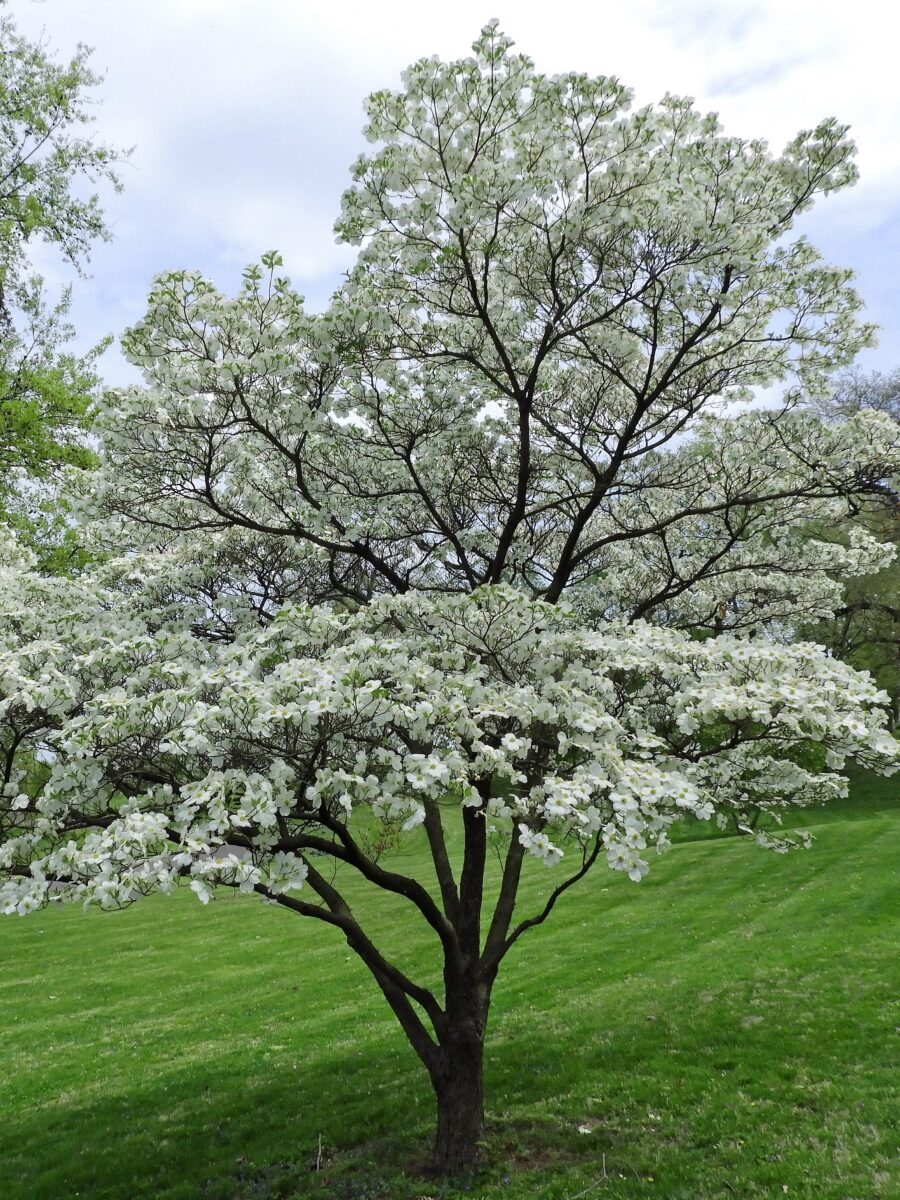
Flowering Dogwood (Cornus florida)
Best for: Spring flowers
Few native trees announce spring quite like Flowering Dogwood. Its showy white or pink bracts surround the tree’s small true flowers, creating a beautiful display in spring. Later in the year, red fruits provide food for birds, while the foliage can turn shades of red and burgundy in fall.
Flowering Dogwood naturally grows along woodland edges and beneath taller trees, so it appreciates a site that offers some protection from intense conditions. Good drainage and proper siting are especially important for keeping dogwoods healthy.
Why we love it: It packs flowers, fruit, fall color, and wildlife benefits into a relatively small landscape tree.
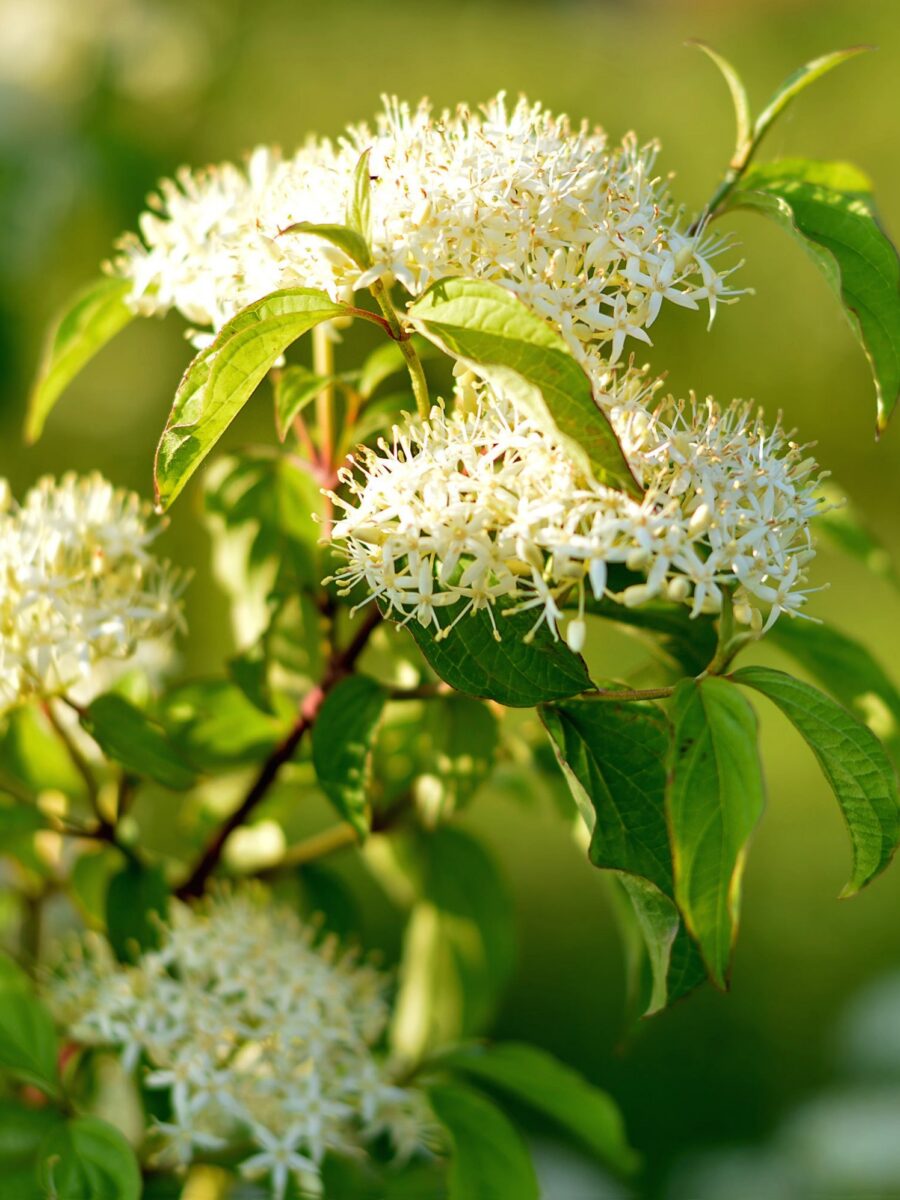
Pagoda Dogwood (Cornus alternifolia)
Best for: Woodland and partially shaded gardens
For a native tree with a completely different look from Flowering Dogwood, consider Pagoda Dogwood. Its branches tend to develop in distinctive horizontal layers, giving the tree a graceful, tiered appearance.
Clusters of small white flowers appear in late spring, followed by dark fruits that attract birds. Pagoda Dogwood is particularly at home in woodland-style landscapes and locations with some shade, making it a useful option for gardeners who don’t have an open, full-sun planting site.
Why we love it: Its layered branching provides beautiful structure even when the tree isn’t in flower.
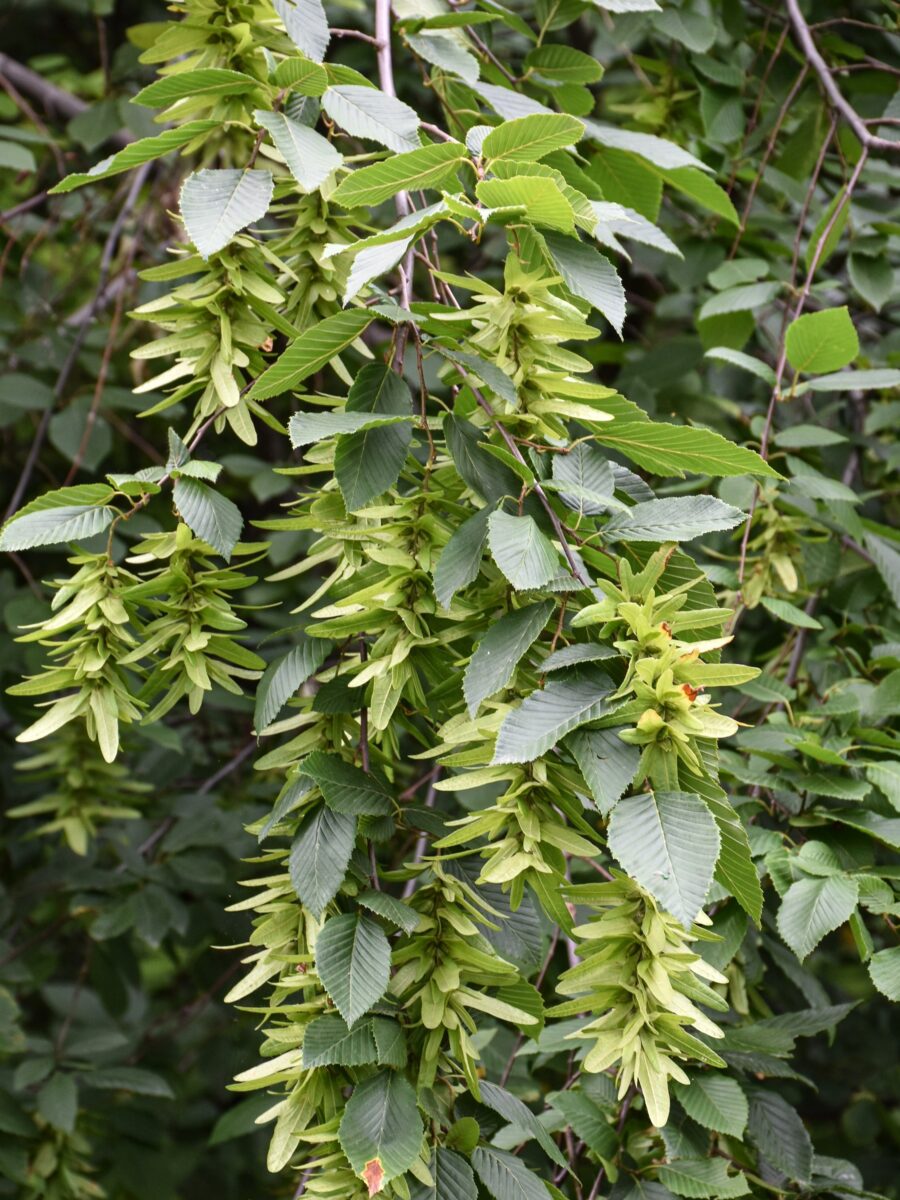
American Hornbeam (Carpinus caroliniana)
Best for: Smaller spaces and woodland gardens
American Hornbeam is one of those native trees that deserves more attention. Sometimes called Musclewood because of its smooth, sinewy-looking trunk, it typically stays much smaller than the large canopy trees found throughout New England forests.
It naturally grows as an understory tree and can handle partial shade, making it useful for sites where a sun-loving shade tree wouldn’t be the right choice. Its foliage also develops attractive shades of yellow, orange, and red in fall.
Why we love it: Interesting bark, manageable size, shade tolerance, and fall color make it a versatile native tree.
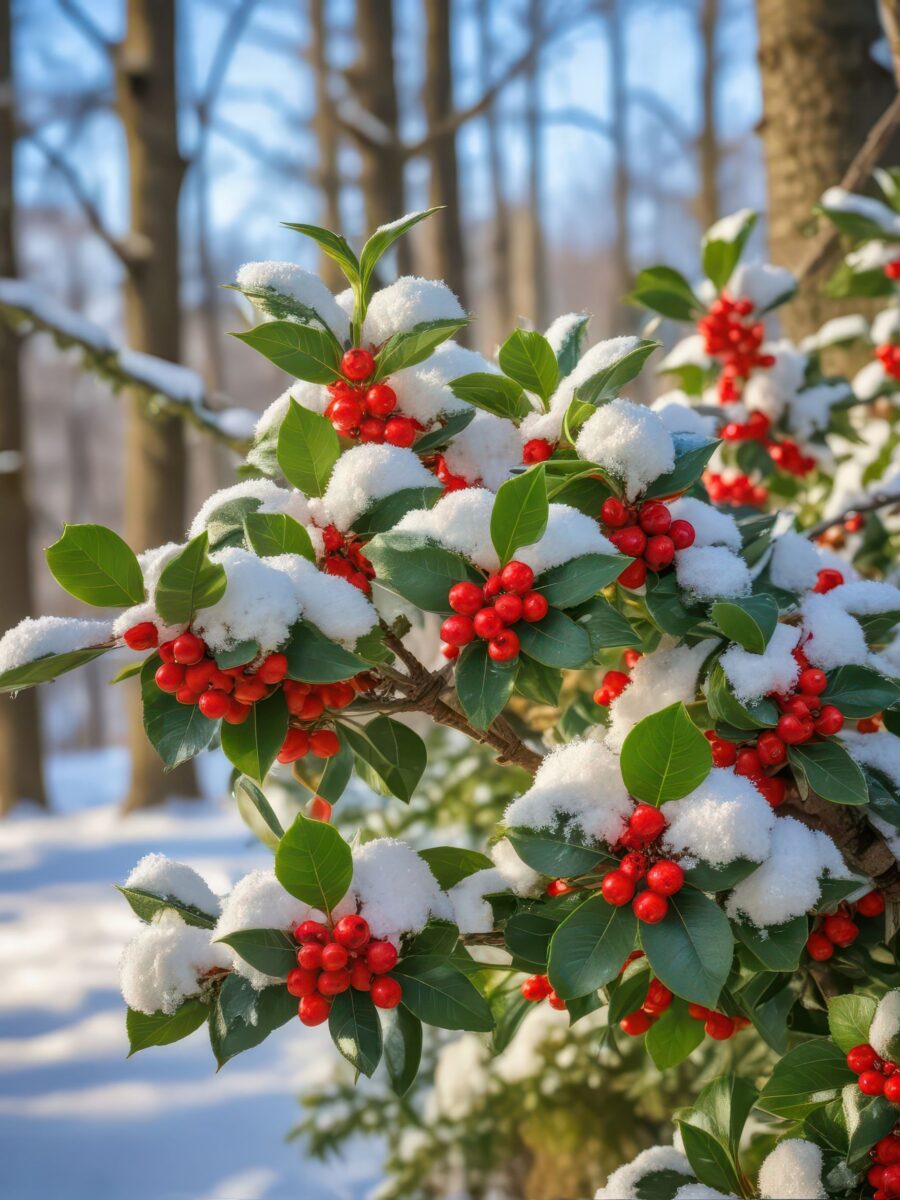
American Holly (Ilex opaca)
Best for: Year-round interest and birds
Yes, there is a holly native to our region! American Holly offers glossy evergreen foliage that keeps the landscape looking full throughout winter, along with bright red berries on female plants when a compatible male pollinator is nearby.
Those berries aren’t just decorative. They can also provide a food source for birds, while the dense evergreen branches offer valuable cover.
American Holly can eventually become a substantial tree, so give it enough space to develop rather than treating it like a small foundation shrub.
Why we love it: It’s a native broadleaf evergreen with beautiful winter color and excellent wildlife value.
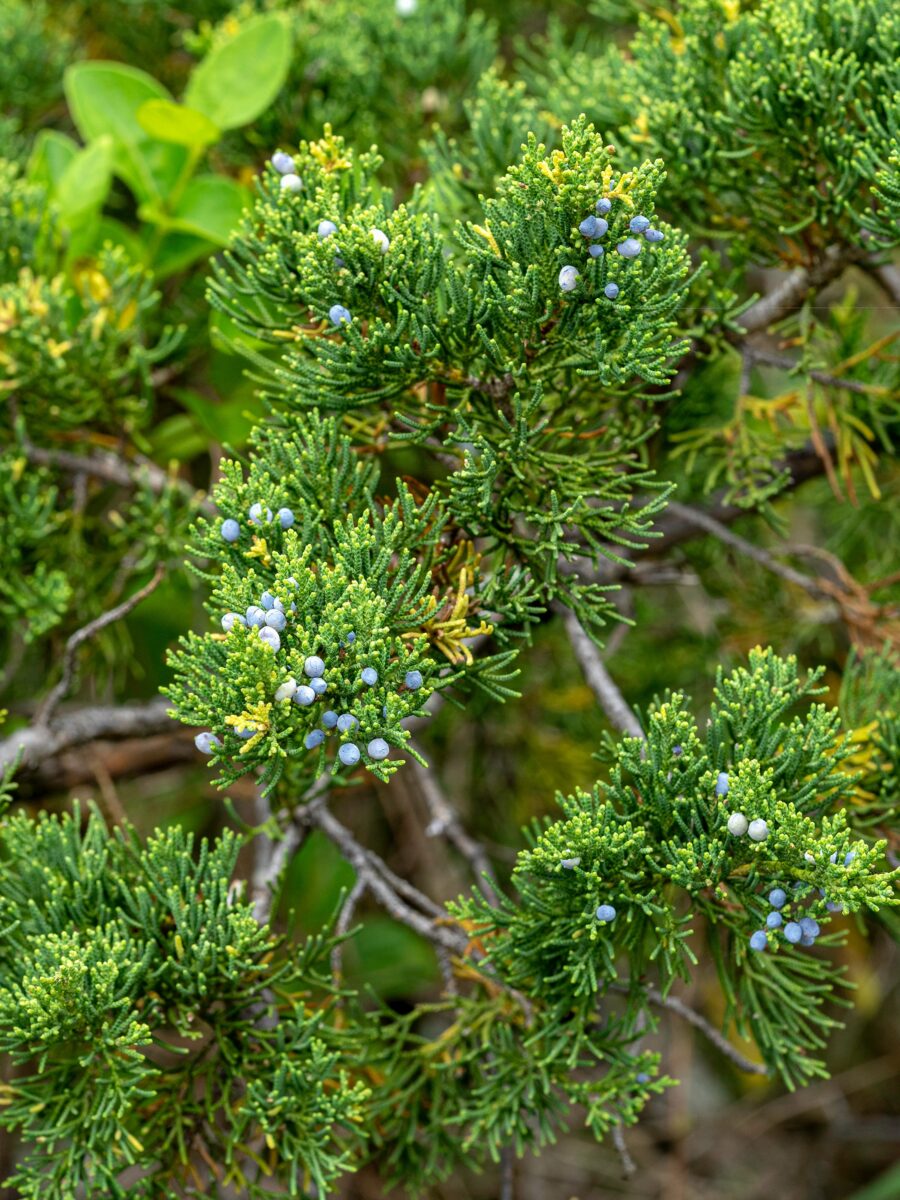
Eastern Red Cedar (Juniperus virginiana)
Best for: Screening and wildlife habitat
Despite its common name, Eastern Red Cedar is actually a juniper. This tough native evergreen provides year-round color and dense cover that can make it particularly valuable to birds.
Female plants can produce blue, berry-like cones that are eaten by wildlife. Eastern Red Cedar is also adaptable to challenging sites once established and works well in naturalized landscapes or where its evergreen foliage can provide screening.
Why we love it: It’s a hardworking native evergreen that combines year-round structure with excellent habitat value.
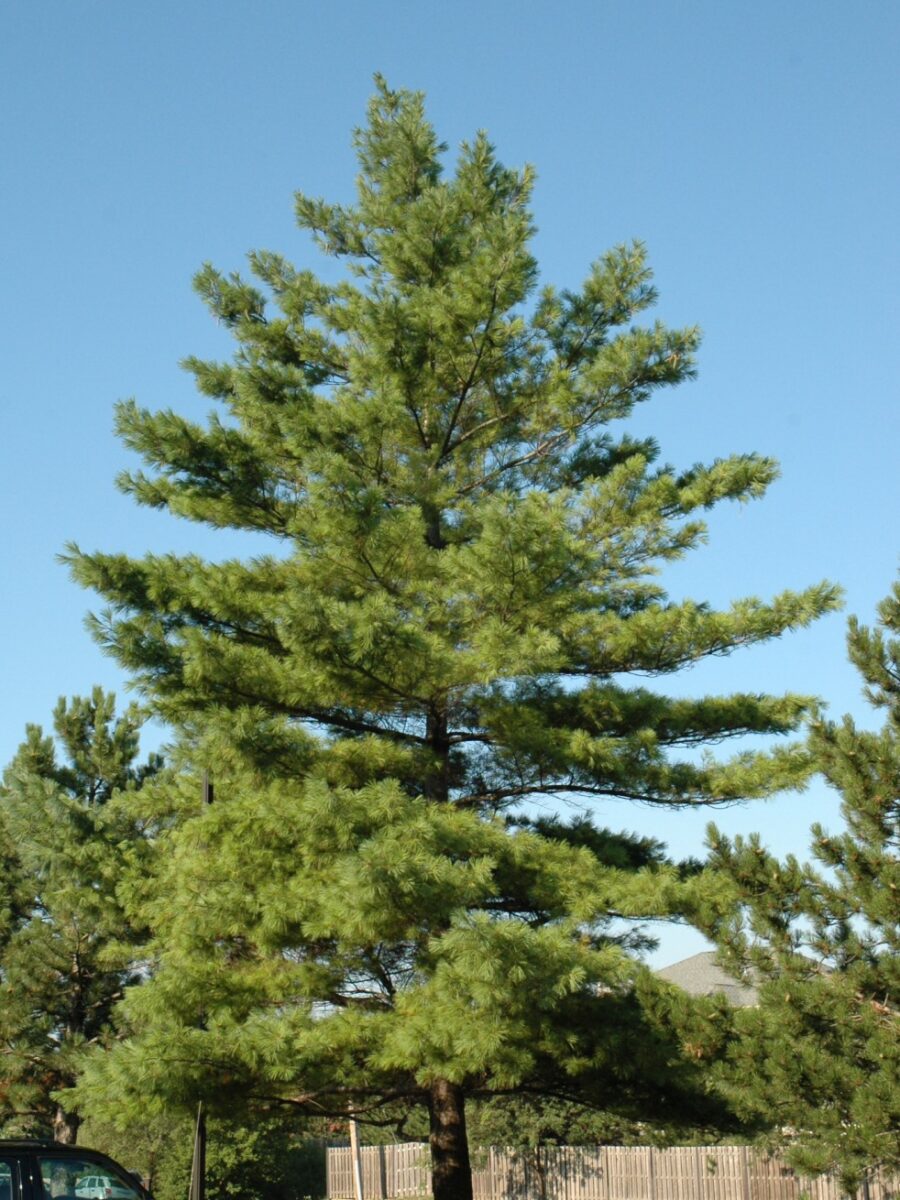
Eastern White Pine (Pinus strobus)
Best for: Large spaces and evergreen screening
It’s hard to picture a New England landscape without Eastern White Pine. This iconic native evergreen has long, soft needles held in bundles of five and can eventually develop into a very large tree.
White Pine can be an excellent choice for larger properties, naturalized areas, and evergreen screens when there’s enough room for it to reach its potential. Its branches also provide shelter and nesting habitat for wildlife throughout the year.
Because of its eventual size, this is one tree where planning ahead really matters. Avoid squeezing a White Pine into a space that will become too small for it as it matures.
Why we love it: Few trees capture the character of the New England landscape quite like a mature White Pine.
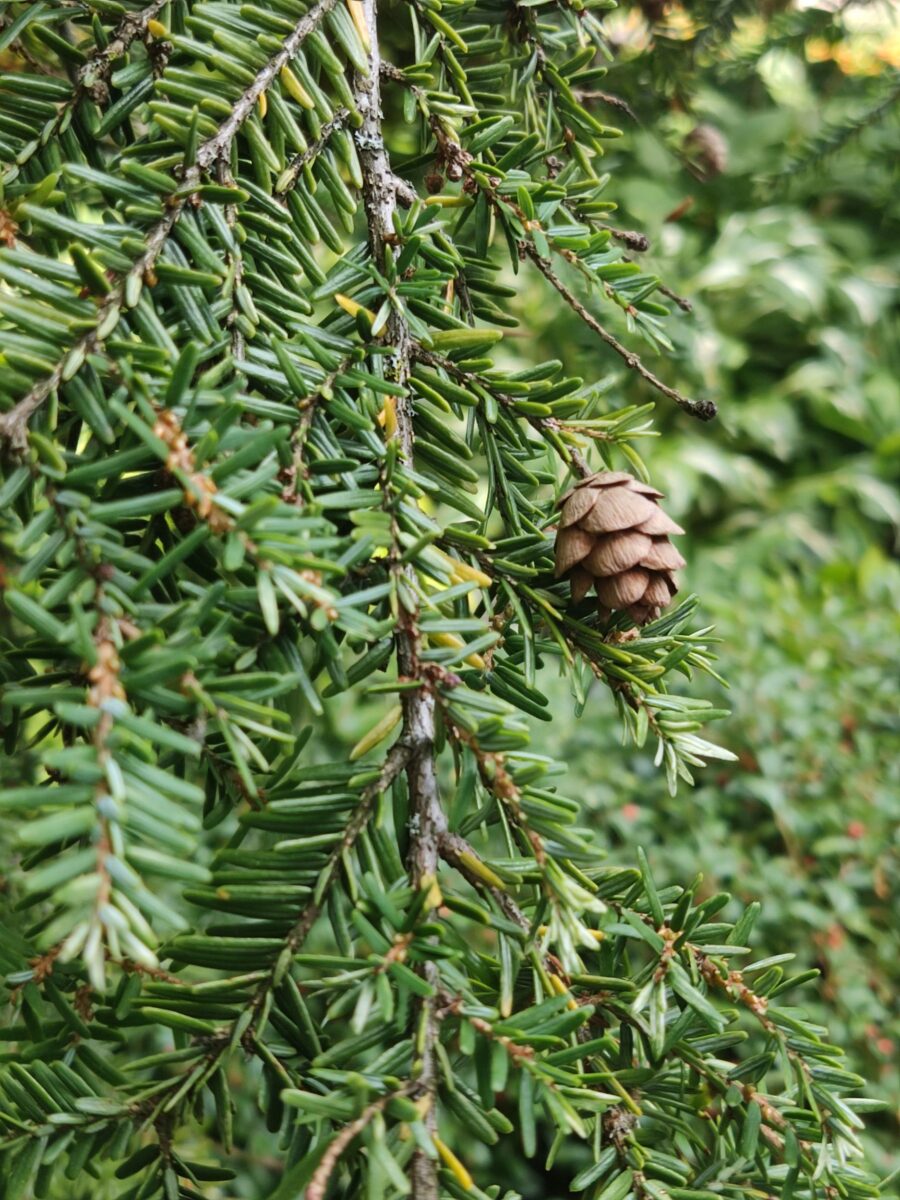
Eastern Hemlock (Tsuga canadensis)
Best for: Shade and evergreen structure
Finding an evergreen for a shadier location can be challenging, and that’s where Eastern Hemlock stands out. This native conifer naturally grows in New England forests and can tolerate significantly more shade than many other evergreen trees.
Its fine-textured foliage and graceful branches give it a softer appearance than many conifers, and it can work as a specimen, screen, or part of a woodland-style planting.
There is one important consideration: Eastern Hemlock is susceptible to hemlock woolly adelgid, an invasive insect found throughout Massachusetts. That doesn’t necessarily mean you can’t grow hemlock, but trees should be monitored for the characteristic white, cottony masses the insects produce near the bases of the needles.
Why we love it: It’s one of our most useful native evergreen choices for landscapes with less sun.
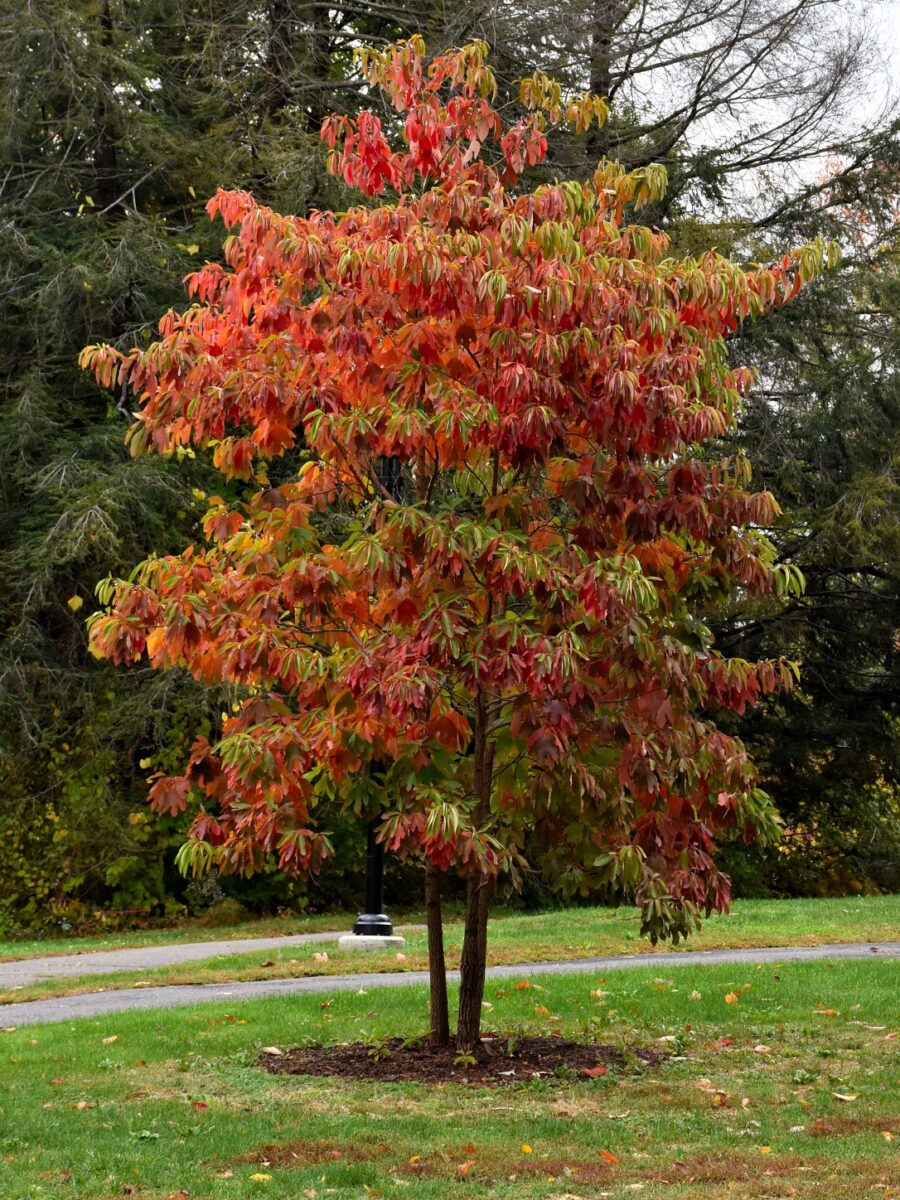
Sassafras (Sassafras albidum)
Best for: Fall color and naturalized landscapes
Sassafras might win the award for the most fun foliage on this list. A single tree can produce leaves in several shapes—including unlobed, three-lobed, and the instantly recognizable “mitten” shape.
Come fall, those leaves can turn brilliant shades of yellow, orange, and red. Sassafras also produces flowers that attract pollinators, while female trees can produce dark blue fruits that are eaten by wildlife when pollination occurs.
One thing to know before planting is that Sassafras naturally spreads through its root system and can form colonies. That can be an advantage in naturalized areas, but it’s something to consider when deciding where to put one.
Why we love it: Distinctive leaves and spectacular fall color give Sassafras a personality all its own.
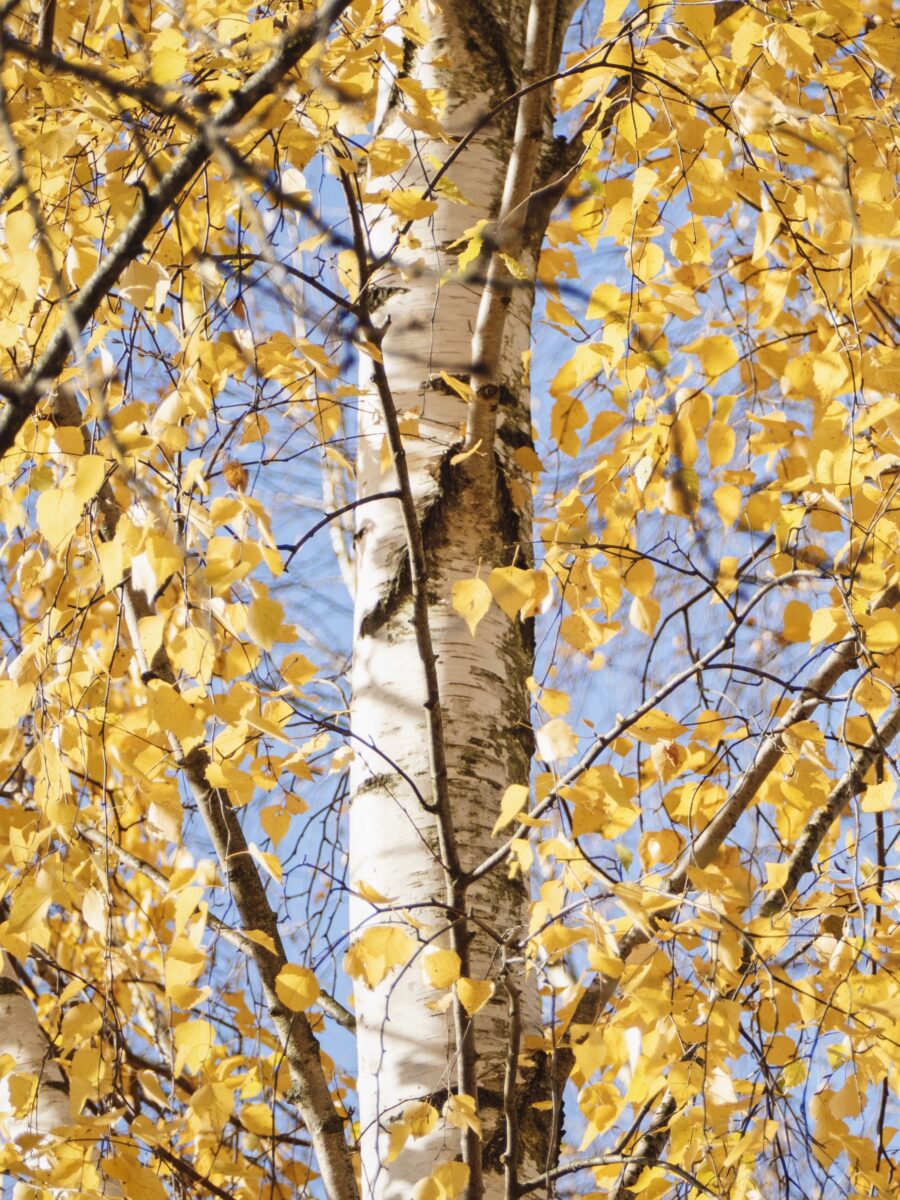
Gray Birch (Betula populifolia)
Best for: Naturalistic New England landscapes
Gray Birch is a familiar sight in New England, particularly in open areas and places where forests are beginning to regenerate. Its pale bark and delicate foliage give it an airy appearance that works beautifully in informal and naturalistic landscapes.
Gray Birch is considered a pioneer species, meaning it’s one of the trees that readily establishes in open or disturbed areas. It isn’t necessarily the tree we’d choose when looking for a centuries-long legacy specimen, but it can be an excellent way to bring the look and ecological character of the New England landscape into a yard.
Why we love it: Its pale bark and light canopy create a distinctly New England look without feeling heavy in the landscape.
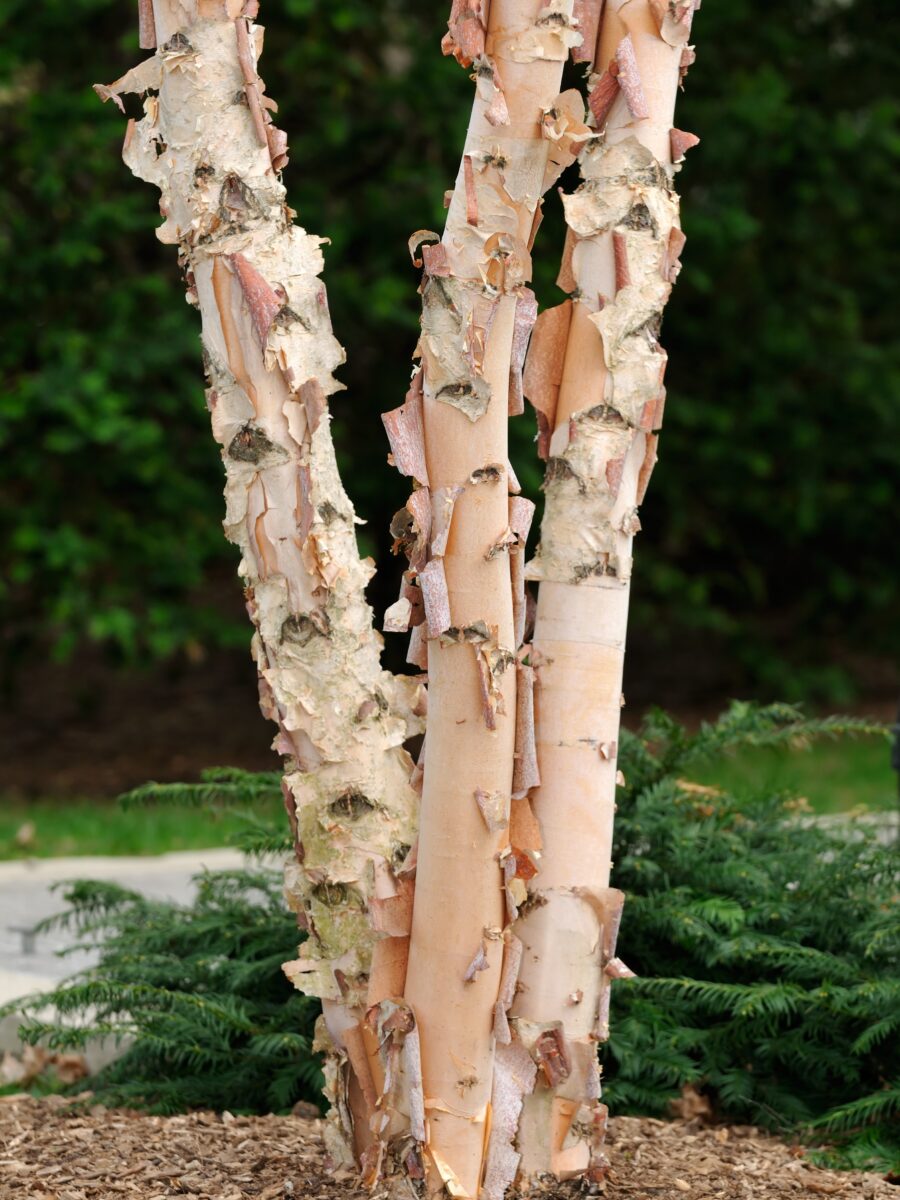
River Birch (Betula nigra)
Best for: Moist soils
River Birch earns a spot on this list for its adaptability to moisture. In nature, it’s associated with riverbanks, floodplains, and other areas where soils can stay moist, making it a particularly useful native tree for landscapes with wetter conditions.
It’s also highly ornamental. Depending on the cultivar, the peeling bark can reveal shades of cream, tan, cinnamon, and brown, providing interest long after the leaves have fallen.
Although River Birch appreciates moisture, that doesn’t mean it should simply be planted in standing water. As with any tree, matching its needs to the actual conditions of your property is important.
Why we love it: Beautiful exfoliating bark and an ability to handle moist soils give River Birch both ornamental and practical appeal.
Why Plant Native Trees?
Adding a native tree isn’t just about choosing something that grows well in New England. It’s also about adding another piece to the ecosystem that surrounds your home.
Native trees can provide nectar, pollen, fruit, seeds, nuts, nesting sites, and shelter for the insects, birds, and other animals that have evolved alongside them. Even one well-chosen tree can add valuable habitat to a residential landscape.
That said, being native doesn’t automatically make a tree maintenance-free or appropriate for every yard. Sun exposure, soil drainage, available space, moisture, mature size, and potential pest or disease concerns still matter. The best native tree is one that’s suited to both our region and the particular conditions in your landscape.
Choosing the Right Native Tree for Your Yard
Before you bring a tree home, think beyond what it looks like today. Consider how large it will eventually become, how much sunlight the location receives, how quickly the soil drains after rain, and what you want the tree to accomplish.
Looking for spring flowers? Serviceberry or one of our native dogwoods might rise to the top. Need an evergreen? American Holly, Eastern Red Cedar, White Pine, and Eastern Hemlock each fill a different role. Have a moist site? River Birch may be worth considering. Working with partial shade? American Hornbeam, Pagoda Dogwood, and Eastern Hemlock give you some interesting possibilities.
Matching the tree to the site from the beginning is one of the best things you can do to help it thrive for years to come.
Visit your local Mahoney’s Garden Center to explore our selection of native trees, and talk with our nursery team if you need help finding the right tree for your space. Availability can vary by location and season, but we’re always happy to help you consider the best options for your landscape.
Frequently Asked Questions About Native Trees
1. What does it mean when a tree is native to Massachusetts?
A native tree is one that occurred naturally in the region without being introduced by people. These species are part of the ecosystems that developed here over long periods of time and have relationships with local insects, birds, and other wildlife.
2. Are native trees easier to care for?
They can be well adapted to regional conditions, but native doesn’t mean maintenance-free. A moisture-loving native planted in a hot, dry site can still struggle, just as a sun-loving tree can struggle in deep shade. Choosing the right tree for your particular conditions is still essential.
3. Are native trees better for wildlife?
Native trees can be especially valuable because local wildlife has evolved alongside them. Depending on the species, a native tree may provide flowers for pollinators, fruit or seeds for birds, foliage for native insects, or branches and cavities for shelter and nesting.
4. When is the best time to plant a tree in Massachusetts?
Spring and fall are both excellent planting seasons in Massachusetts. Fall can be particularly advantageous because cooler air temperatures reduce stress while soils remain warm enough for root growth. Regardless of the season, newly planted trees need consistent watering while their root systems establish.
5. Can I plant only native trees in my landscape?
Absolutely, but you don’t have to take an all-or-nothing approach to benefit local ecosystems. Adding native trees to an existing landscape—even one that also contains non-native ornamental plants—can increase habitat and plant diversity. Focus on choosing plants that are well suited to your property and avoid known invasive species whenever possible.