
July 10, 2022
How to Keep Animals Out of Your Garden
TL;DR: The best way to keep animals out of your garden is to combine physical barriers, scent-based repellents, and deer-resistant plants. Reapply repellents regularly and adjust your strategy by season for the best results.
If you’ve ever walked outside in the morning only to find half your garden chewed down to the stems, you’re not alone. Rabbits, deer, squirrels, and other critters are some of the most common challenges gardeners face.
The good news is that you don’t have to give up on your favorite plants. With the right mix of deterrents, barriers, and smart planting choices, you can protect your garden all season long.
Why Animals Eat Garden Plants
Most garden damage isn’t random. Animals are simply looking for three things:
- Easy food
- Shelter
- Water
Tender new growth, vegetables, and flowering plants are especially attractive because they’re soft, nutritious, and easy to reach. In early spring, rabbits target young shoots. By late summer and fall, deer often become the biggest problem as natural food sources decline.
The Most Common Garden Critters
Rabbits
- Clean, angled cuts on stems and leaves
- Damage close to the ground
- Most active in spring and early summer
Deer
- Large, torn bites on leaves and branches
- Damage at multiple heights
- Most active in late summer and fall
Squirrels and Chipmunks
- Dug-up bulbs
- Missing fruits or vegetables
- Scattered soil or holes in beds
Groundhogs
- Large sections of plants eaten
- Burrow entrances near garden edges
Top 5 Ways to Keep Animals Out of Your Garden
A combination approach works best.
- Install fencing or netting around vulnerable plants
- Use scent-based repellents regularly
- Remove fallen fruit or food sources
- Plant deer- and rabbit-resistant varieties
- Rotate deterrent methods to prevent animals from привык habits
Use Physical Barriers First
Barriers are one of the most reliable ways to stop animals.
Fencing
- Rabbit fencing should be at least 2–3 feet tall
- Bury the bottom a few inches underground
- Deer fencing should be 6–8 feet tall
Netting and Row Covers
- Protects vegetables and berries
- Easy to install and remove
- Ideal for seasonal crops
Try Scent-Based Repellents
Repellents make plants smell or taste unpleasant to animals.
They work best when:
- Applied before damage starts
- Reapplied after rain
- Used consistently
Two common types:
- Granular repellents for garden beds
- Spray repellents for foliage and shrubs
In New England, repellents are especially important in:
- Early spring (rabbit damage)
- Late summer and fall (deer pressure)

Rabbit Scram: A Targeted Solution for Rabbit Damage
If rabbits are your main problem, a species-specific repellent can be very effective. Rabbit Scram is a granular repellent designed specifically to deter rabbits from feeding in garden beds.
Rabbit Scram works by releasing a scent that rabbits associate with predators. When spread around plants, it creates a barrier that rabbits prefer to avoid rather than cross.
Gardeners often use Rabbit Scram:
- Around vegetable beds
- Near newly planted perennials
- Along garden borders
- In early spring when rabbit damage is most common
Because it’s a granular product, it’s easy to apply around the base of plants without spraying foliage. For best results, reapply after heavy rain and every few weeks during peak rabbit activity.
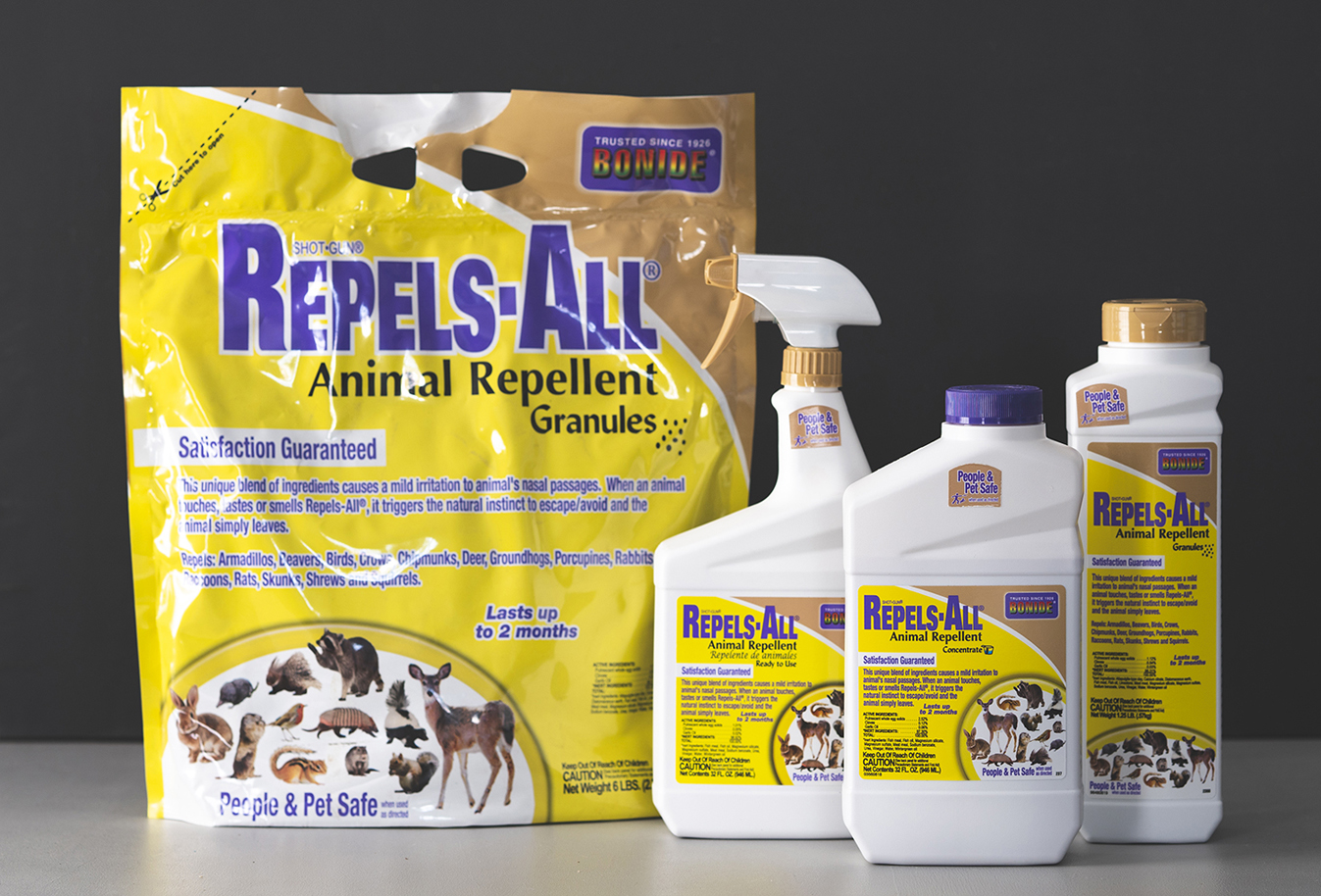 Repels-All: Broad-Spectrum Protection
If you’re dealing with more than just rabbits, a multi-animal repellent can be the better choice. Repels-All is designed to deter a wide range of garden pests, including:
- Deer
- Rabbits
- Squirrels
- Chipmunks
- Groundhogs
Repels-All works by combining scent and taste deterrents that make treated plants less appealing. It’s commonly available in both spray and granular forms, making it flexible for different areas of the garden.
Gardeners typically use Repels-All:
- On shrubs and ornamentals
- Around vegetable gardens
- Along property edges
- In areas with mixed animal pressure
Like most repellents, it should be:
- Applied before major damage begins
- Reapplied after rain
- Used consistently throughout the season
Remove Food Sources
Gardens become more attractive when easy meals are available.
To reduce animal activity:
- Pick ripe vegetables and fruit promptly
- Clean up fallen produce
- Avoid leaving birdseed near garden beds
- Remove dense hiding spots near plants
Plant Varieties Animals Usually Avoid
While no plant is completely animal-proof, some are less appealing.
Plants rabbits and deer often avoid
- Lavender
- Salvia
- Daffodils
- Marigolds
- Russian sage
- Allium
- Peonies
Mixing these into your garden can help reduce damage.
Seasonal Tips for New England Gardens
Spring
- Protect new growth from rabbits
- Use fencing around young vegetables
- Apply repellents early
Summer
- Watch for squirrels and chipmunks
- Use netting over berries and tomatoes
- Keep gardens tidy
Fall
- Deer pressure increases
- Reapply repellents regularly
- Protect shrubs and perennials
When to Reapply Repellents
For best results:
- Reapply every 2–4 weeks
- Reapply after heavy rain
- Reapply when new growth appears
Consistency is key. Irregular use leads to reduced effectiveness.
Need Help Choosing the Right Solution?
Every garden is different. The best approach depends on the animals in your area, the plants you’re growing, and the season.
Visit your local Mahoney’s Garden Center for expert advice and products designed to keep critters away while protecting your plants.
Say goodbye to nibbled plants, come visit us at your local Mahoney’s and pick up your deterrents today!
FAQ
How do I keep rabbits out of my garden naturally?
Install low fencing around beds, use scent-based repellents, and remove hiding places near plants. A combination of barriers and repellents works best.
What smells keep deer away from plants?
Many deer repellents use ingredients like garlic, eggs, or plant oils that create unpleasant scents and tastes.
Do granular repellents work better than sprays?
Both are effective when used correctly. Granular repellents are ideal for garden beds, while sprays work well on shrubs and vegetables.
How often should I apply animal repellent?
Most repellents should be applied every 2–4 weeks and after heavy rain.
What plants are deer-resistant?
Deer often avoid plants with strong scents or tough textures, such as lavender, salvia, daffodils, and allium.
Will fencing stop squirrels?
Fencing helps with larger animals, but squirrels may climb over it. Netting is more effective for fruits and vegetables.
Are animal repellents safe for pets?
Most modern repellents are safe when used as directed. Always check the label.