
June 14, 2019
Hydrangeas In All Their Glory
Shop Hydrangeas Online
Can you think of a more beloved plant in New England than the Hydrangea? Its flowers have many forms, ranging from beautiful rounded mopheads in shades of blue, to showy panicles in shades of pink and white, to delicate lacecap flowers in tones of pink and blue. New varieties are expanding the range of flower color into the red spectrum. In terms of size, there are varieties ranging from 2’ to 6’ in height. And the climbing hydrangea is as beautiful as it is unusual. This means there is a hydrangea for every location.
Types of Hydrangeas
There are 6 species of hydrangea commonly grown in our area.
Hydrangea macrophylla
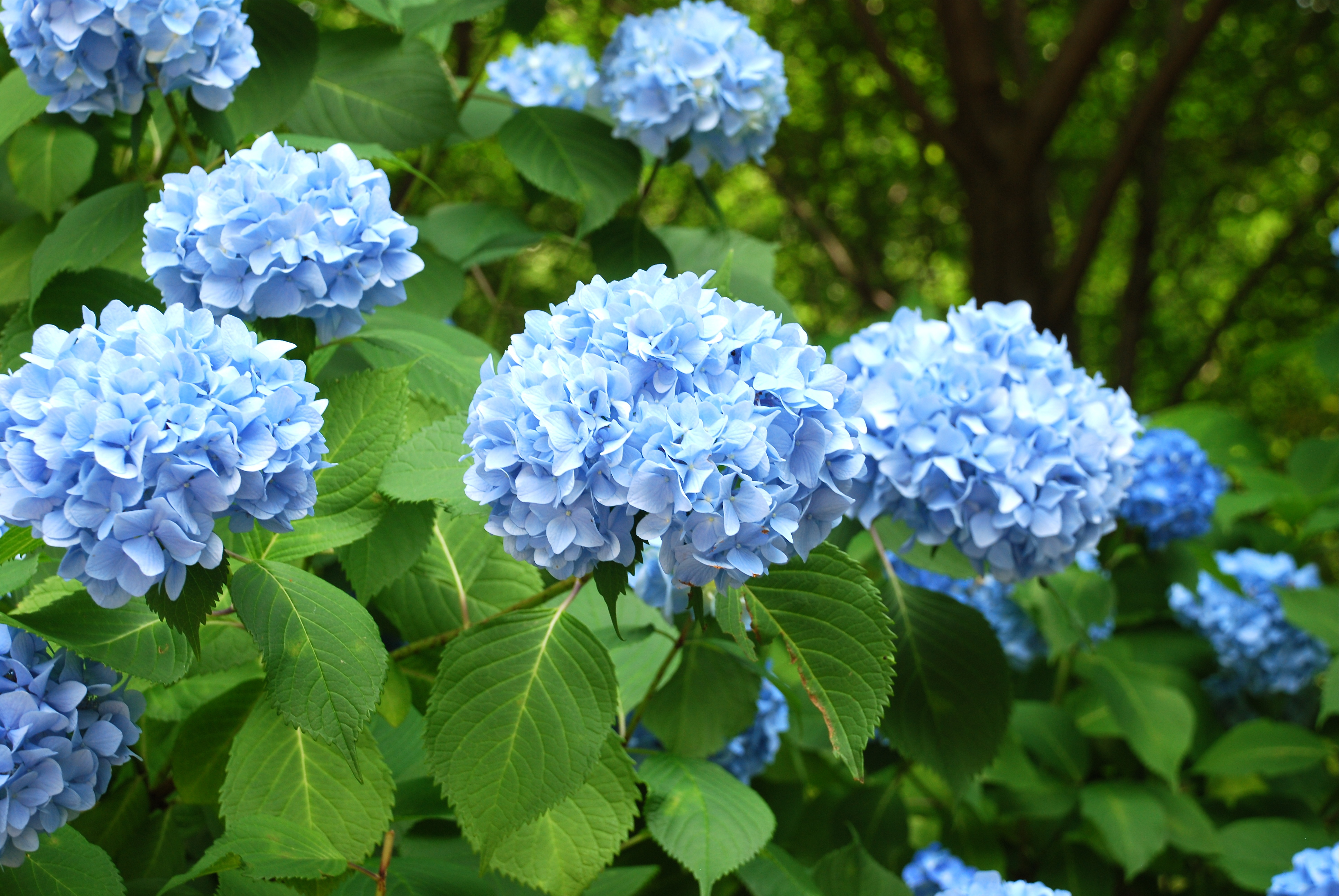
japanese ajisai/hydrangea
Perhaps the most familiar is Hydrangea macrophylla (known as mophead or bigleaf hydrangea). In addition to the rounded mophead flower form, Hydrangea macrophylla also comes in a lacecap flower form. These are flat to slightly domed flower heads with many small florets in the center and larger, showier florets around the edges, creating an elegant and lacy flower form. ‘Twist ‘n’ Shout’ and ‘Wedding Gown’ are examples of the lacecap form of Hydrangea macrophylla. In terms of mophead flowers, there are many varieties from which to choose. ‘Nantucket Blue’, ‘Endless Summer’, ‘Bloomstruck’, ‘Blushing Bride’, ‘Let’s Dance Blue Jangles’, ‘Let’s Dance Rave’, ‘Let’s Dance Rhythmic Blue’ and ‘LA Dreamin’ all have mophead type flowers. A new introduction with raspberry red mophead flowers is ‘Summer Crush’.
Hydrangea paniculata
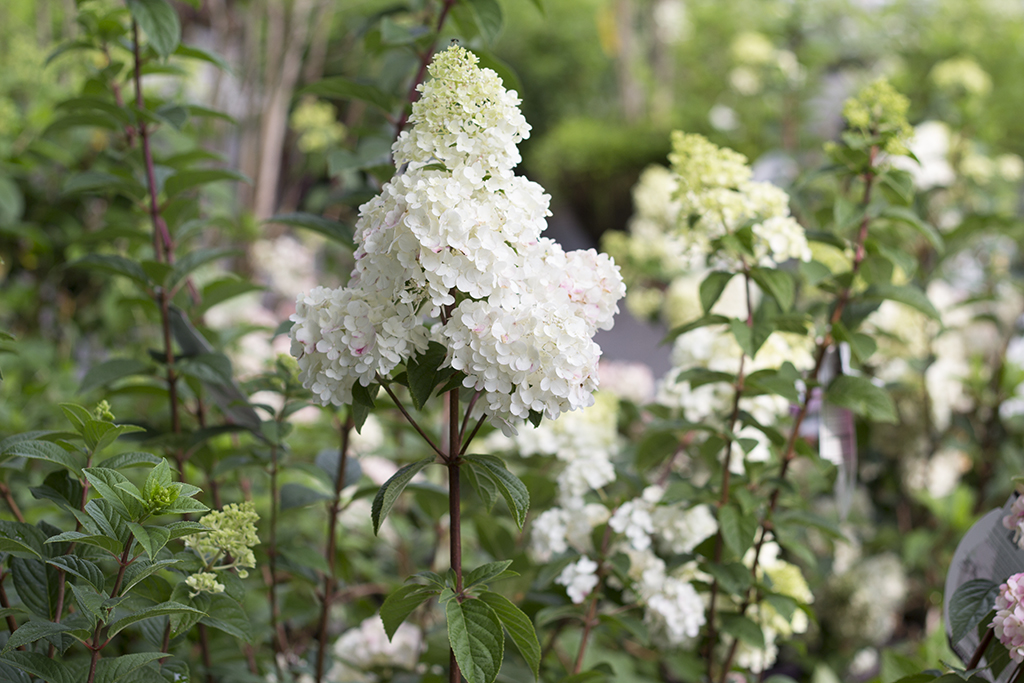
Hydrangea paniculata (panicle hydrangea) has large cone-shaped flowers. Reliable bloomers, panicle hydrangeas subtly change color over their many months of bloom. Soft green buds open to creamy white flowers which morph into varying shades of pink, and with some varieties, even red by season’s end. Some panicle hydrangeas come in full size versions which grow to 6’-8’ and in smaller versions which grow 4’-5’ in height (‘Quick Fire’ / ‘Little Quick Fire’ and ‘Limelight’ / ‘Little Lime’). The smallest variety is ‘Bobo’ which bears large white flowers on a shrub that reaches only 3’ in height. Varieties such as ‘Pinky Winky’, ‘Strawberry Sundae’ and ‘Zinfin Doll’ showcase flowers in different shades of color from bottom to top.
In addition to the shrub form, paniculatas such as ‘Limelight’, ‘Pink Diamond’ and ‘Quick Fire’ are available in tree form. Growing atop a short trunk, this unique form adds stature, structure and scale to the garden. Depending on the variety, they will grow 6’-10’ in height, making a dramatic statement in the landscape.
Hydrangea arborescens
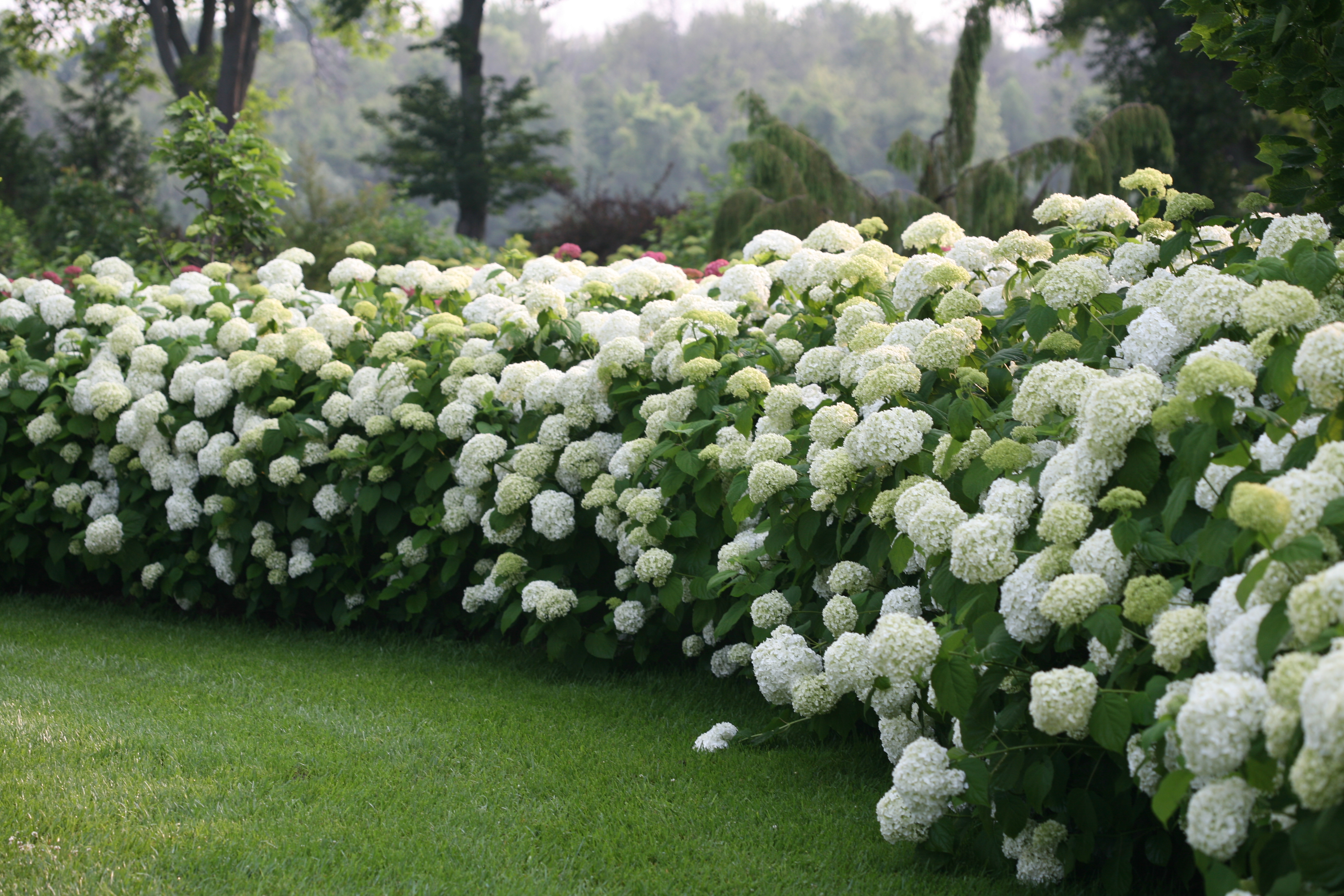
Hydrangea arborescens (smooth hydrangea) is quite shade tolerant. It has showy dome shaped white flowers. The well-known variety ‘Annabelle’ has dramatic, large white flowers. ‘Annabelle’ has been joined by the ‘Incrediball’ and ‘Invincibelle’ series which offer pink varieties in addition to white.
Hydrangea serrata
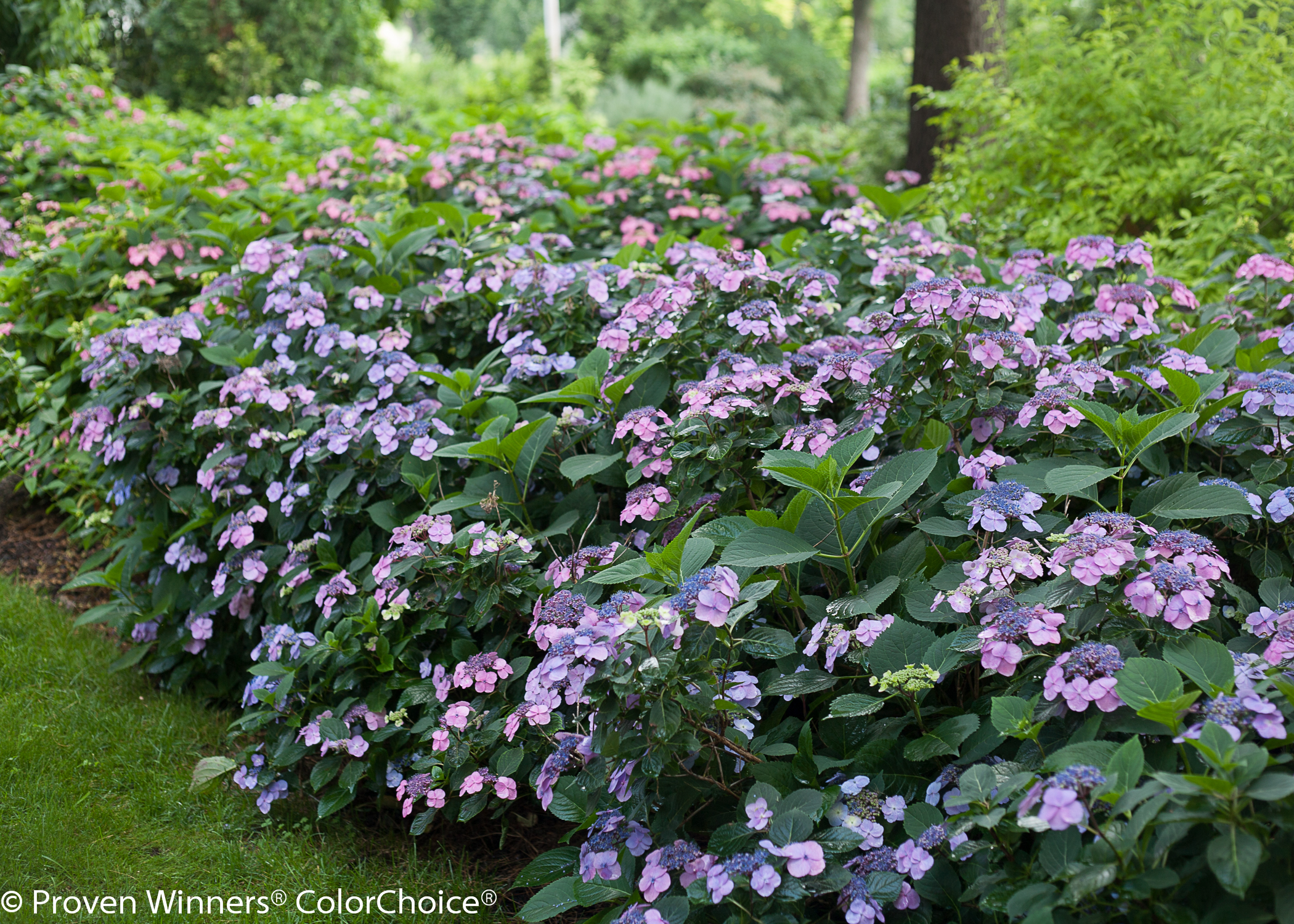
Hydrangea serrata (mountain hydrangea) is very cold tolerant and seldom damaged by winter conditions. The elegant lacecap flowers attract pollinators, a bonus in any garden. ‘Bluebird’ has light blue flowers while newer varieties such as those in the ‘Tuff Stuff’ series offer stronger tones ranging from bright pink to purple blue.
Hydrangea quercifolia
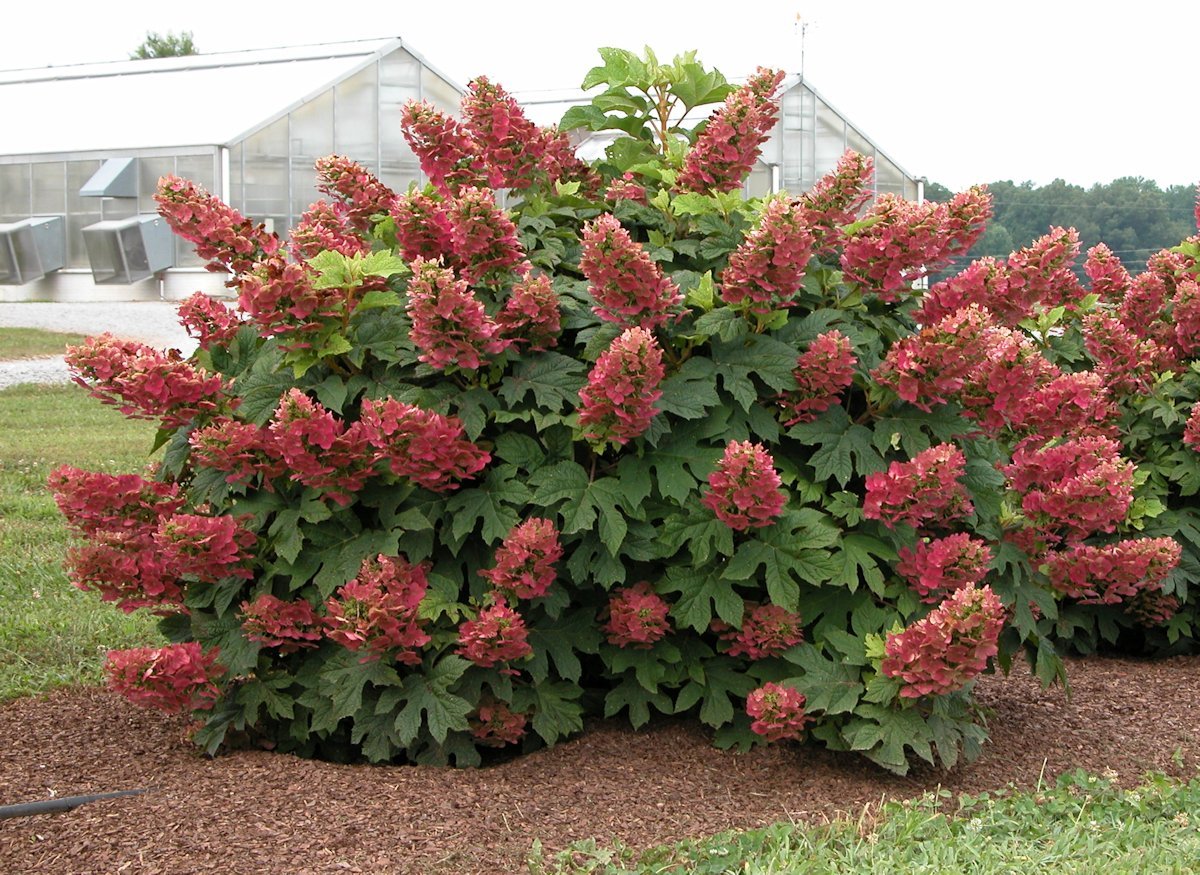
Hydrangea quercifolia (oakleaf hydrangea) is a striking and unusual form of hydrangea. The leaves are large and resemble oak leaves, hence its common name. Dark green in summer, the leaves turn mahogany red in fall. Flowers are large panicles in white or pink, depending on the variety. Hydrangea quercifolia has exfoliating bark which becomes more pronounced with age. The beautiful bark adds considerable winter interest to the landscape. Varieties such as ‘Alice’ and will reach 6’-8’ in height and width. ‘Snow Queen’ and ‘Gatsby Gal’ are slightly smaller. ‘Sikes Dwarf’ matures at just 3’-4’. The white flowers of ‘Ruby Slippers’ quickly mature to deep pink. It is similar in size to ‘Sikes Dwarf’. ‘Snowflake’ and ‘Gatsby Star’ have showy white double blossoms that are arranged in layers.
Hydrangea petiolaris
Hydrangea petiolaris is commonly known as climbing hydrangea. It is slow to establish and follows the axiom “first it sleeps, then it creeps, then it leaps”. It clings and climbs to fencing or other structures by twining and aerial rootlets along its stems. Horizontal lateral branches can extend several feet. The foliage is heart shaped. Large fragrant white flowers appear in June. A mature specimen growing along a fence or up a tree is a thing of beauty. The woody vine adds texture and interest throughout the winter.
Seasonal Interest & Garden Impact
Hydrangeas begin blooming just as the first flush of roses fades, typically in late June, and continue flowering well into fall. Their blooms often change color as they mature and may remain on the plant through winter, fading to soft tan tones. Some types also offer beautiful red and mahogany foliage in autumn, while sturdy stems provide structure and visual interest in the winter landscape.
Sun & Light Requirements
For best flowering, hydrangeas need about four hours of sun per day, ideally morning sun. Hot afternoon sun can cause mophead types to wilt.
- Panicle hydrangeas are the most sun tolerant and perform well from full sun to part shade.
- Oakleaf and smooth hydrangeas are the most shade tolerant and are good options for lower-light areas.
Soil pH & Flower Color
Hydrangeas thrive in the naturally acidic soils common in New England. This acidity allows aluminum to be readily absorbed by the roots, which enhances blue flower coloration. In most cases, adding aluminum or altering soil pH is unnecessary. For gardeners who prefer pink blooms, many modern varieties are bred to hold their color regardless of soil conditions—eliminating the need for difficult and often ineffective pH adjustments.
Fertilizing: Less Is More
Hydrangeas planted in good soil generally need very little fertilizer. Over-fertilizing often results in lush green leaves but fewer flowers. Yearly fertilizing isn’t required, though older shrubs may benefit from an occasional slow-release fertilizer with higher phosphorus to encourage blooming. Avoid high-nitrogen fertilizers, which promote leaf growth at the expense of flowers.
Watering & Mulching
Hydrangeas have shallow root systems and need consistent, deep watering, especially while establishing. Well-draining soil is essential, as they do not tolerate soggy conditions. A two-inch layer of mulch helps conserve moisture in summer and insulate roots in winter—just be sure to keep mulch away from the stems.
Pruning Hydrangeas: What You Need to Know
When and how to prune hydrangeas is one of the most common questions gardeners ask. The short answer? Hydrangeas need very little pruning. In fact, pruning too often or too aggressively can remove flower buds and result in fewer blooms.
Most hydrangeas also need two or more years to become established before reaching peak flowering. Mature plants always perform better, so patience pays off.
The key to successful pruning is understanding whether your hydrangea blooms on new wood or old wood.
Pruning Hydrangeas That Bloom on New Wood
Hydrangeas that bloom on new wood form their flower buds on the current season’s growth. These types can be safely pruned without sacrificing blooms.
Includes:
- Hydrangea paniculata (panicle hydrangea)
- Hydrangea arborescens (smooth hydrangea)
When to prune:
Late winter or very early spring, while plants are still dormant.
Why prune:
To remove old flower heads, control size, or tidy up uneven growth.
Pruning Hydrangeas That Bloom on Old Wood
Hydrangeas that bloom on old wood set their flower buds at the end of the previous growing season. Pruning at the wrong time can remove those buds entirely.
Includes:
- Hydrangea macrophylla (bigleaf hydrangea)
- Hydrangea serrata (mountain hydrangea)
- Hydrangea quercifolia (oakleaf hydrangea)
- Hydrangea petiolaris (climbing hydrangea)
When to prune:
Avoid spring pruning. Only prune if absolutely necessary, and do so right after flowering.
Important note:
Winter weather can damage dormant buds, especially on bigleaf hydrangeas, which is why flowering can sometimes be inconsistent.
What About Reblooming Hydrangeas?
Reblooming varieties (like Endless Summer® and Let’s Dance® series) flower on both old and new wood, offering more reliable blooms—but also making pruning trickier.
Best practice:
Minimal pruning only. Removing stems may eliminate buds on either old or new wood.
One Last Tip for Spring Patience
Hydrangeas are among the last plants to leaf out in spring. A stem that looks dead in May may still be alive. Wait until Memorial Day or early June before removing stems—truly dead ones will pull out easily with a gentle tug.
Hydrangeas thrive for years and reward gardeners with some of the most spectacular blooms in the garden. When sited properly, they give us multiple seasons of interest with very little care. You can grow them as individual specimens or plant them en masse to form a hedge. They combine well with other plants, adding interest and structure to the mixed border. Smaller varieties can even be grown in containers. It is hard to imagine gardening in New England without them!