
January 19, 2026
Welcoming the Blue Jays: Bold Color and Big Personality in the Winter Garden
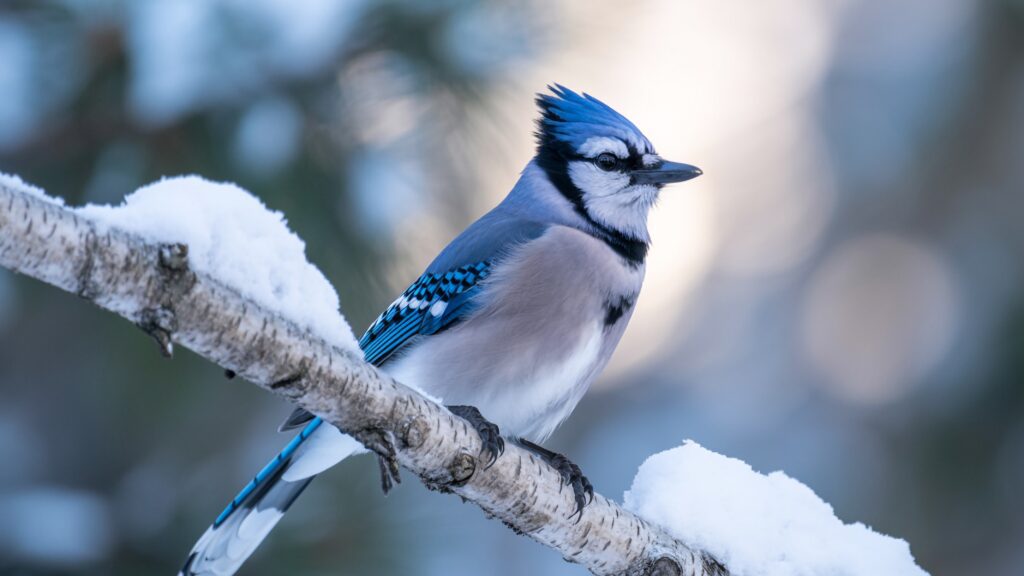
If there’s one bird that brings unmistakable color and confidence to a winter landscape, it’s the blue jay. With their brilliant blue feathers, crisp white markings, and loud, expressive calls, they are impossible to miss—even on the grayest New England day. While some birds retreat quietly in winter, blue jays remain active, visible, and full of personality.
These intelligent, year-round residents are a familiar sight in Massachusetts gardens, especially during winter when food sources become more limited. Learning how to support blue jays during the colder months not only helps them thrive, but also adds energy and movement to your winter birdwatching.
What Do Blue Jays Eat in Winter?
Blue jays are hearty birds with strong beaks, perfectly suited for cracking nuts and seeds that other birds struggle with. In winter, they rely heavily on high-energy foods to stay warm.
Their favorites include:
- Peanuts (in or out of the shell): A top choice. Shelled peanuts are easier, but watching jays crack shells is half the fun.
- Sunflower Seeds: Especially black-oil sunflower seeds, which are rich in fat.
- Suet: They happily visit suet feeders, especially during cold snaps.
- Corn: Cracked corn or dried corn on the cob placed on platforms attracts jays quickly.
Because blue jays are larger birds, sturdy platform feeders or hopper feeders work best. They’re also known to grab food and fly off—sometimes to stash it for later.
Creating the Perfect Winter Habitat for Blue Jays
Blue jays don’t just rely on feeders; they benefit from a well-structured landscape that offers food, shelter, and security.
Trees and Shrubs They Love
- Oaks: Acorns are a crucial food source, and blue jays play a major role in spreading oak trees by caching forgotten acorns.
- Beech and Hickory Trees: These produce nuts that jays rely on in fall and winter.
- Evergreens: Pines and spruces provide excellent shelter from snow, wind, and predators.
Shelter from Winter Weather
- Blue jays often retreat into dense trees during storms.
- A mix of tall trees and evergreens gives them safe places to rest and roost overnight.
Fun Facts
- Blue jays are incredibly intelligent and can remember hundreds of food cache locations.
- A single blue jay can bury up to 5,000 acorns in one season as a food reserve.
- They only remember about 25% of the acorns they hide, but the forgotten ones often grow into oak trees, many of them native.
- Oak trees support over 500 species of moths and butterflies, whose caterpillars are a vital food source for birds.
- By helping regenerate oak forests, blue jays quietly support the entire bird population and play an important role in the natural cycle of life.
- Their blue color isn’t from pigment—it’s caused by light reflecting off the structure of their feathers.
- They can mimic the calls of hawks, sometimes using this trick to scare other birds away from feeders.
How to Enjoy Blue Jays This Winter
Blue jays bring drama and excitement to winter birding—sometimes loudly so.
- Give Them Space: They can be dominant at feeders. Offering multiple feeding stations helps smaller birds feel comfortable too.
- Watch for Caching Behavior: Jays often carry peanuts away to hide them in the ground or leaf litter.
- Listen as Much as You Look: Their wide range of calls means you’ll often hear them before you see them.
Mahoney’s Has What You Need for Winter Birds
At Mahoney’s Garden Centers, we’re here to help you support bold winter visitors like blue jays. From peanuts and suet to durable feeders and bird-friendly plants, our team can help you create a backyard that welcomes birds all season long.
Stop by one of our 7 locations to stock up, ask questions, and turn your garden into a lively winter destination—for blue jays and all your feathered friends.