
While some winter birds announce themselves with bold colors or loud calls, song sparrows bring a quieter kind of charm. These streaky, soft-brown birds may not stand out at first glance, but once you know what to look for—and listen for—they become a rewarding winter companion. In New England, song sparrows return each year between October and April, making them a familiar seasonal presence just as gardens settle into winter.
Often seen hopping along the ground or slipping into low shrubs, song sparrows remind us that winter birding isn’t always about flash—it’s about noticing the details.
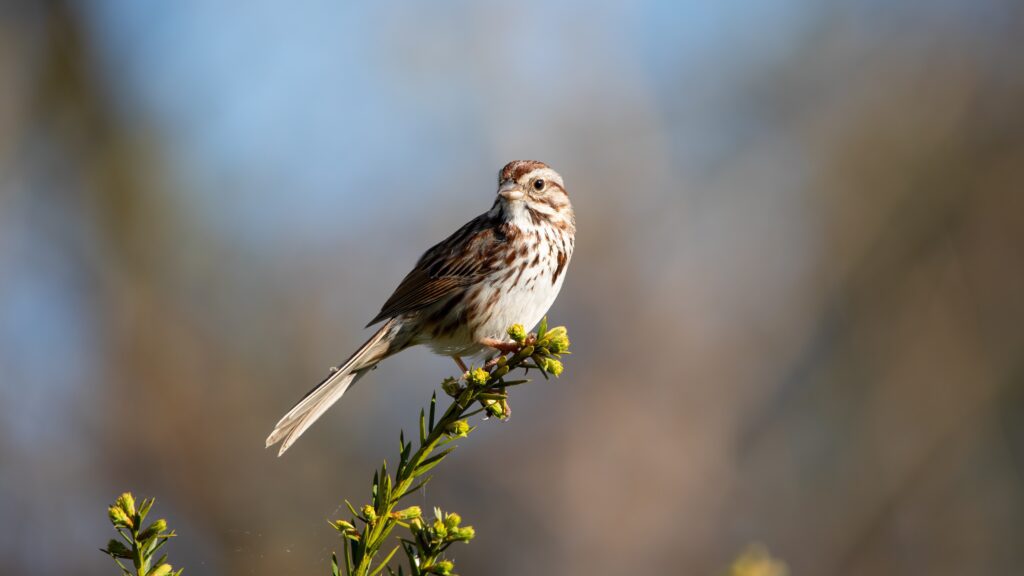
Song Sparrow or House Sparrow? How to Tell the Difference
One of the most common points of confusion in winter birding is telling song sparrows apart from house sparrows. While they may seem similar at a quick glance, a closer look reveals clear differences.
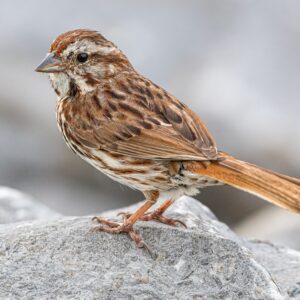 Song Sparrows (Native & Seasonal Visitors):
- Heavy brown streaking on the chest that often forms a central dark spot
- Rounded head with a bold eyebrow stripe
- Longer tail, often flicked while perched
- Found in gardens, brushy areas, wetlands, and natural landscapes
- More likely to be seen alone or in small groups
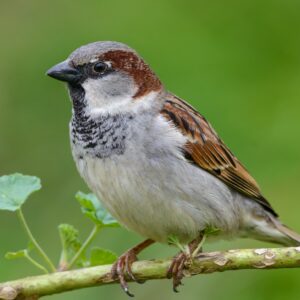 House Sparrows (Non-Native & Year-Round Residents):
- Chunkier bodies with plainer chests
- Males have a gray cap and black throat; females are more uniform brown
- Shorter tail and stockier posture
- Common around buildings, parking lots, and feeders near structures
- Often seen in large, noisy flocks
Once you spot that streaked chest and central spot, you’ll know you’re looking at a song sparrow.
What Do Song Sparrows Eat in Winter?
Song sparrows are ground feeders, much like juncos, and they spend much of their time searching beneath feeders for fallen seed.
Winter favorites include:
- Millet: One of their top food choices
- Cracked Corn: Easy to eat and ideal for cold weather
- Shelled Sunflower Seeds: Simple and energy-rich
- Seed Blends for Ground Feeders: Especially mixes without large, hard shells
Scattering seed on the ground or using a low platform feeder helps song sparrows feel comfortable while feeding.
Creating a Winter-Friendly Habitat for Song Sparrows
Food is only part of the picture—song sparrows rely heavily on cover and natural shelter during winter.
Low Cover Matters
- Dense shrubs, hedges, and brushy edges are essential for protection from predators and harsh weather.
- Leaving seed heads on perennials and ornamental grasses provides both food and shelter. Check out our blog on the benefits of keeping perennials up throughout the winter!
A Seasonal Return
- Song sparrows migrate short distances, returning to New England each fall and heading north again in spring.
- Offering consistent food and shelter increases the chances they’ll return to the same garden year after year.
Natural Foraging
- These birds forage among leaf litter, so leaving some areas of your garden undisturbed can be surprisingly helpful.
Fun Facts About Song Sparrows
- Song sparrows are one of the most widespread native sparrows in North America.
- Each male has a unique song, and individuals can learn and remember multiple variations.
- Despite their name, song sparrows sing less frequently in winter—but on mild days, you may still hear a soft melody.
How to Enjoy Song Sparrows This Winter
Song sparrows reward patience and observation.
- Watch the Ground First: Look beneath feeders and along garden edges.
- Listen Closely: Their calls are softer than many winter birds, but once familiar, they’re easy to recognize.
- Notice the Patterns: Seeing the same birds return each winter is one of the joys of seasonal birding.
Mahoney’s Has What You Need for Winter Birding
At Mahoney’s Garden Centers, we love helping gardeners support winter visitors like song sparrows. From millet-rich seed blends and platform feeders to advice on creating bird-friendly landscapes, our team is here to help you make your garden welcoming all season long.
Stop by one of our 7 locations to stock up, ask questions, and discover how even the quietest birds can make winter feel alive.