
Few landscape investments provide as much long-term value as planting a shade tree. Beyond creating a cool place to relax on hot summer days, shade trees can lower energy costs, support local wildlife, improve air quality, and increase your property’s curb appeal for decades to come.
Whether you’re planting a tree for a new home, replacing a mature tree, or simply looking to create a more comfortable backyard, choosing the right species for New England’s climate is the first step toward success.
Here are some of our favorite shade trees for New England landscapes.
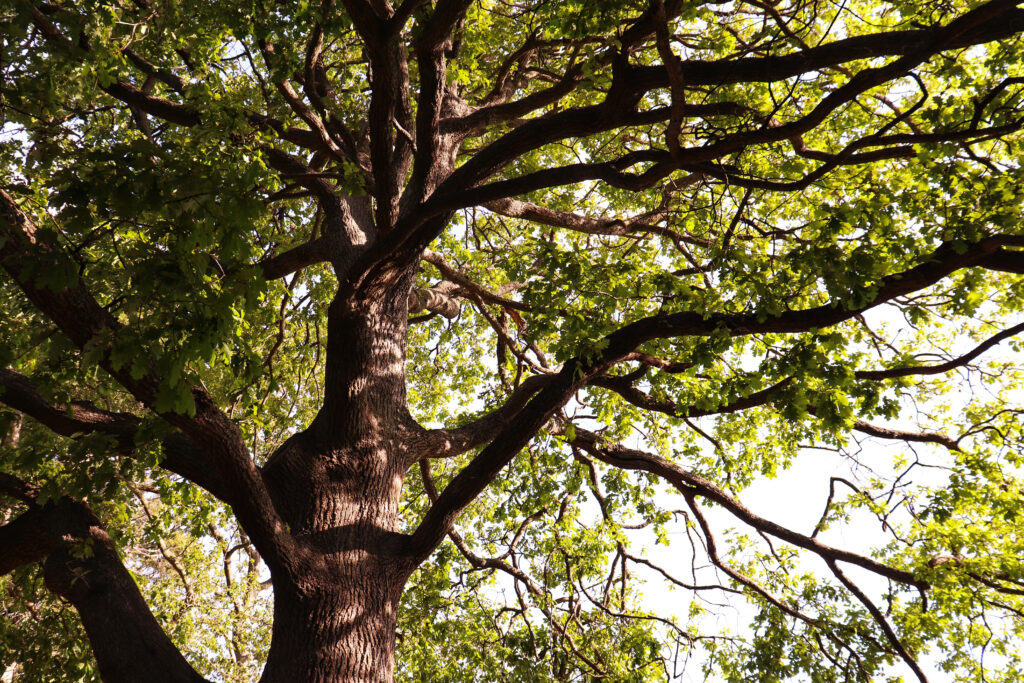
why should you plant a shade tree?
A well-placed shade tree does much more than block the sun.
Some of the biggest benefits include:
- Cooling patios, decks, and outdoor living spaces
- Helping reduce summer cooling costs by shading your home
- Providing food and shelter for birds and beneficial wildlife
- Improving air quality by filtering pollutants and storing carbon
- Reducing stormwater runoff by absorbing rainfall
- Increasing property value and curb appeal
- Adding beautiful seasonal interest throughout the year
Many shade trees also become the centerpiece of a landscape, providing beauty for generations.
what makes a great shade tree?
The best shade trees share several important qualities:
- A broad, spreading canopy
- Strong branch structure
- Adaptability to New England’s climate
- Long lifespan
- Attractive seasonal interest
- Resistance to common pests and diseases
While every yard is different, these trees have proven themselves to be reliable performers throughout our region.
which shade trees grow best in new england?
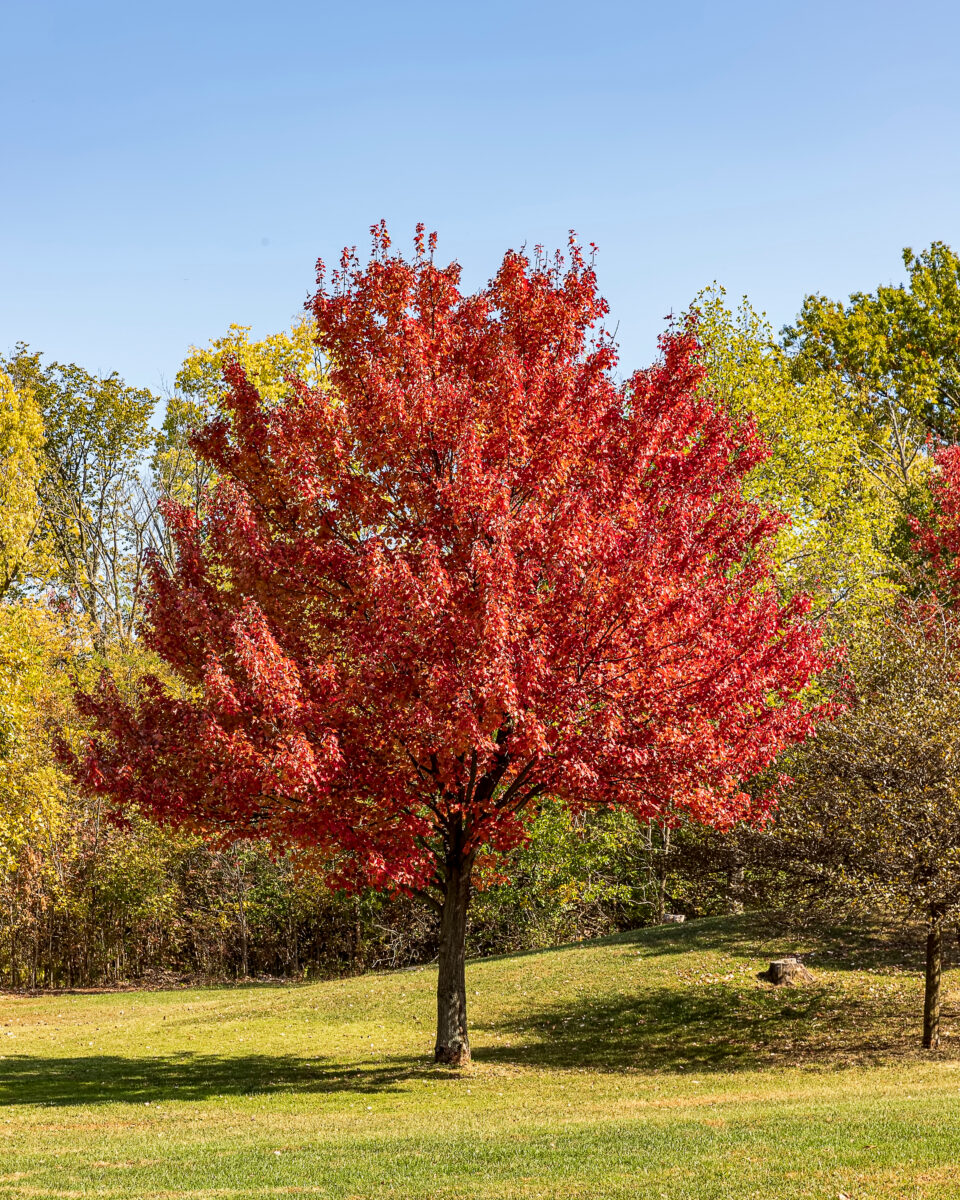
Red Maple (Acer rubrum)
One of New England’s most recognizable native trees, Red Maple is prized for its adaptability, relatively quick growth, and spectacular fall color.
Its rounded canopy provides generous shade during the summer while brilliant shades of scarlet, orange, and crimson brighten the landscape each autumn. Red Maple tolerates a wide range of soil conditions, making it one of the easiest large shade trees to grow.
Why we love it:
- Native to New England
- Fast-growing
- Outstanding fall color
- Excellent lawn or street tree
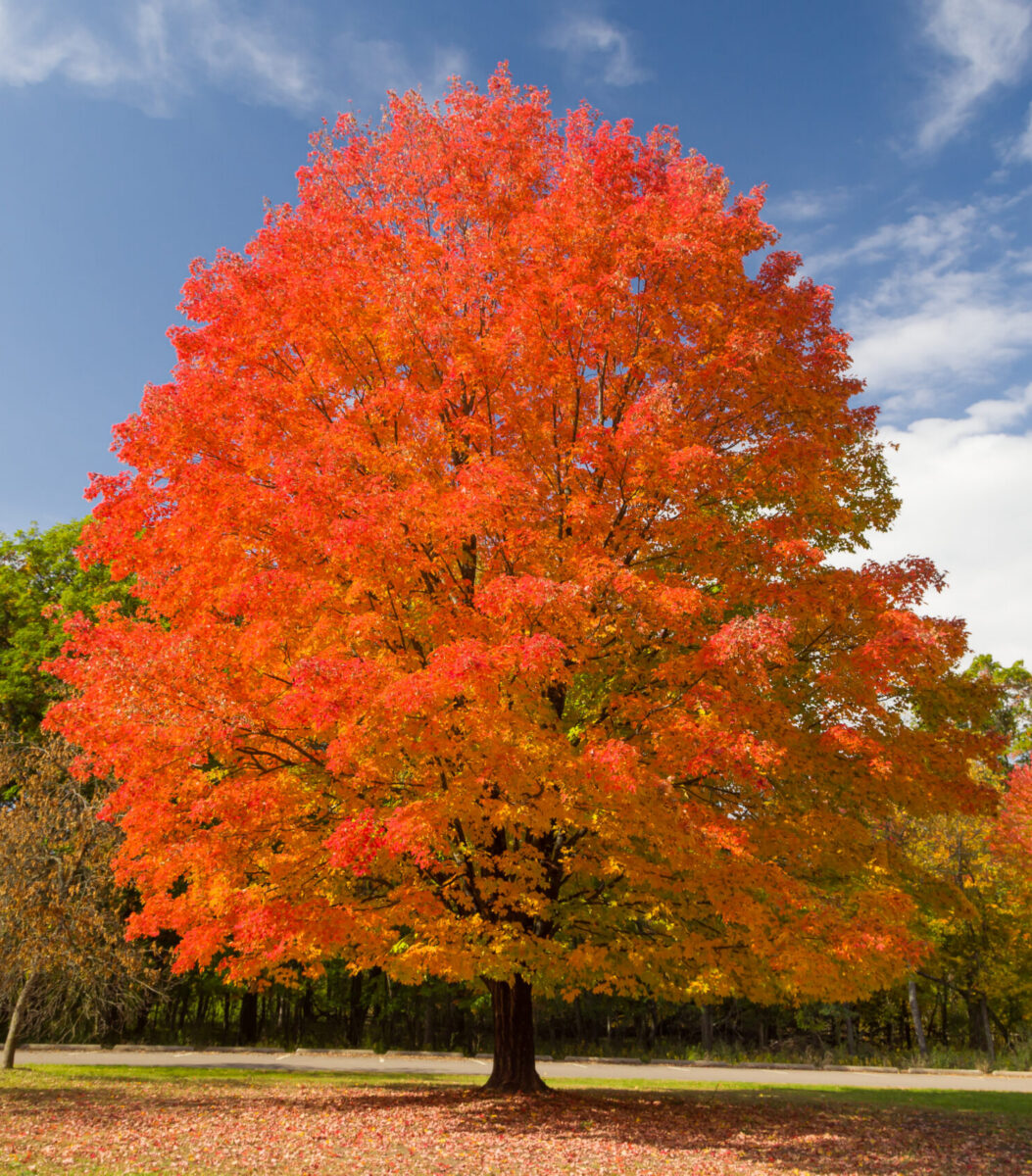
sugar Maple (Acer saccharum)
If you’ve ever admired New England’s famous autumn foliage, you’ve likely admired a Sugar Maple.
Although it grows more slowly than Red Maple, Sugar Maple rewards patience with a dense canopy, exceptional longevity, and brilliant orange and red fall color. It’s one of the finest shade trees for larger properties.
Why we love it:
- Dense summer shade
- Exceptional fall color
- Long-lived
- Classic New England tree
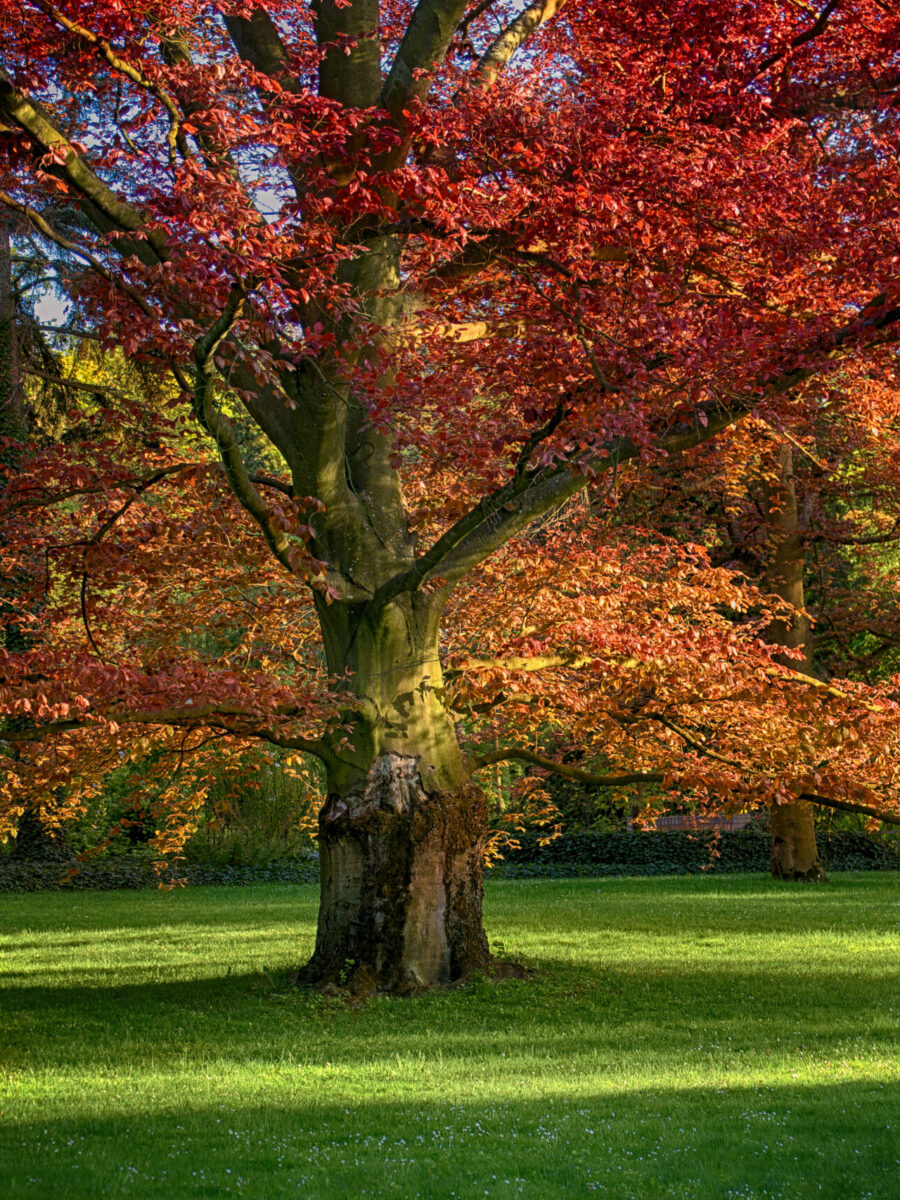
northern red oak (quercus rubra)
For homeowners planting with future generations in mind, Northern Red Oak is hard to beat.
This majestic native tree develops a broad canopy capable of providing abundant shade while supporting hundreds of species of butterflies, moths, birds, and other beneficial wildlife.
Why we love it:
- Native species
- Outstanding wildlife value
- Strong branch structure
- Beautiful red fall foliage
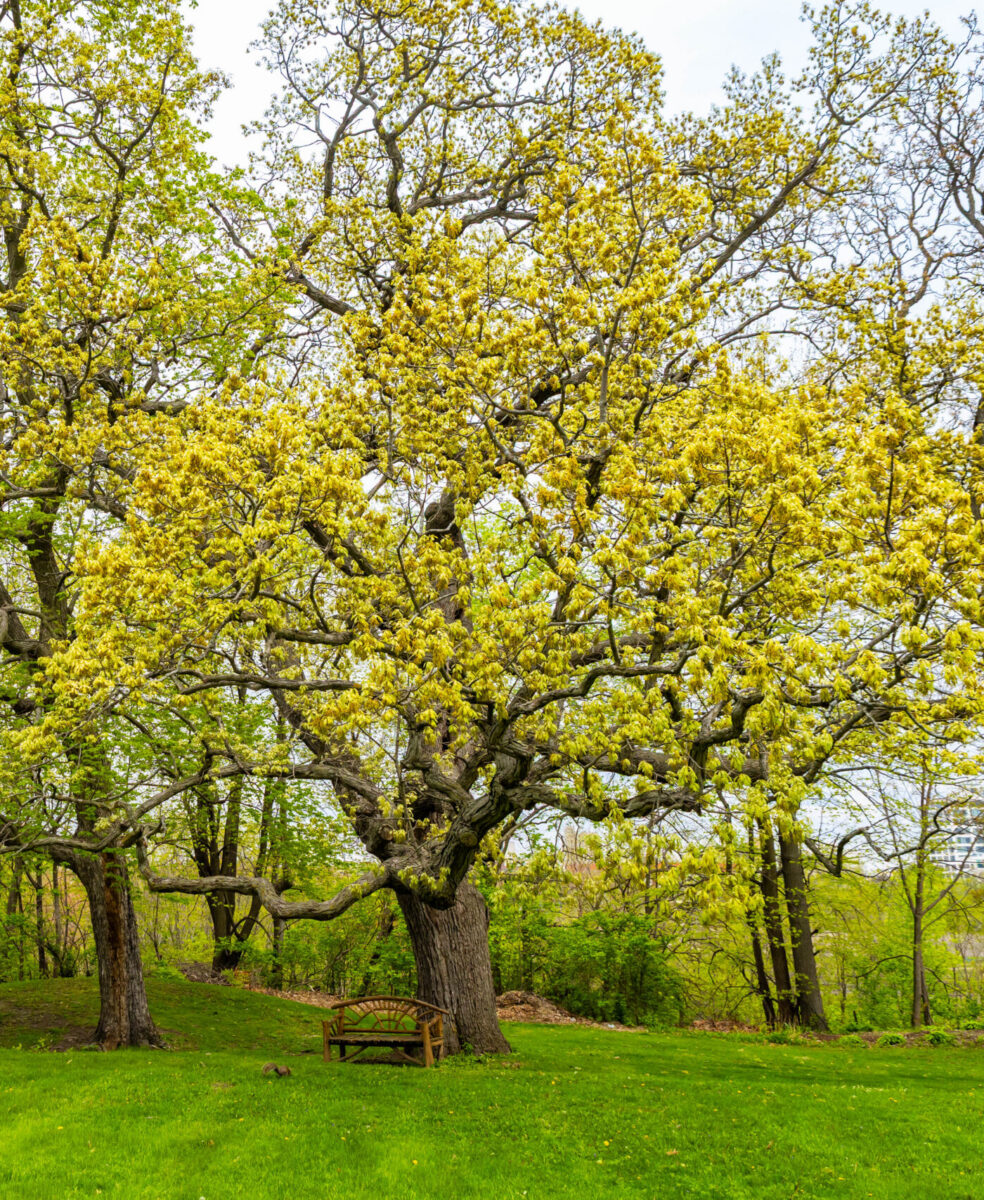
White Oak (Quercus alba)
White Oak is one of the most iconic shade trees in North America.
Though slower growing, it eventually develops an enormous rounded canopy and can live for centuries with proper care. Mature White Oaks become incredible landscape centerpieces while producing acorns that benefit many native birds and mammals.
Why we love it:
- Massive shade canopy
- Extremely long-lived
- Excellent wildlife tree
- Beautiful branching structure
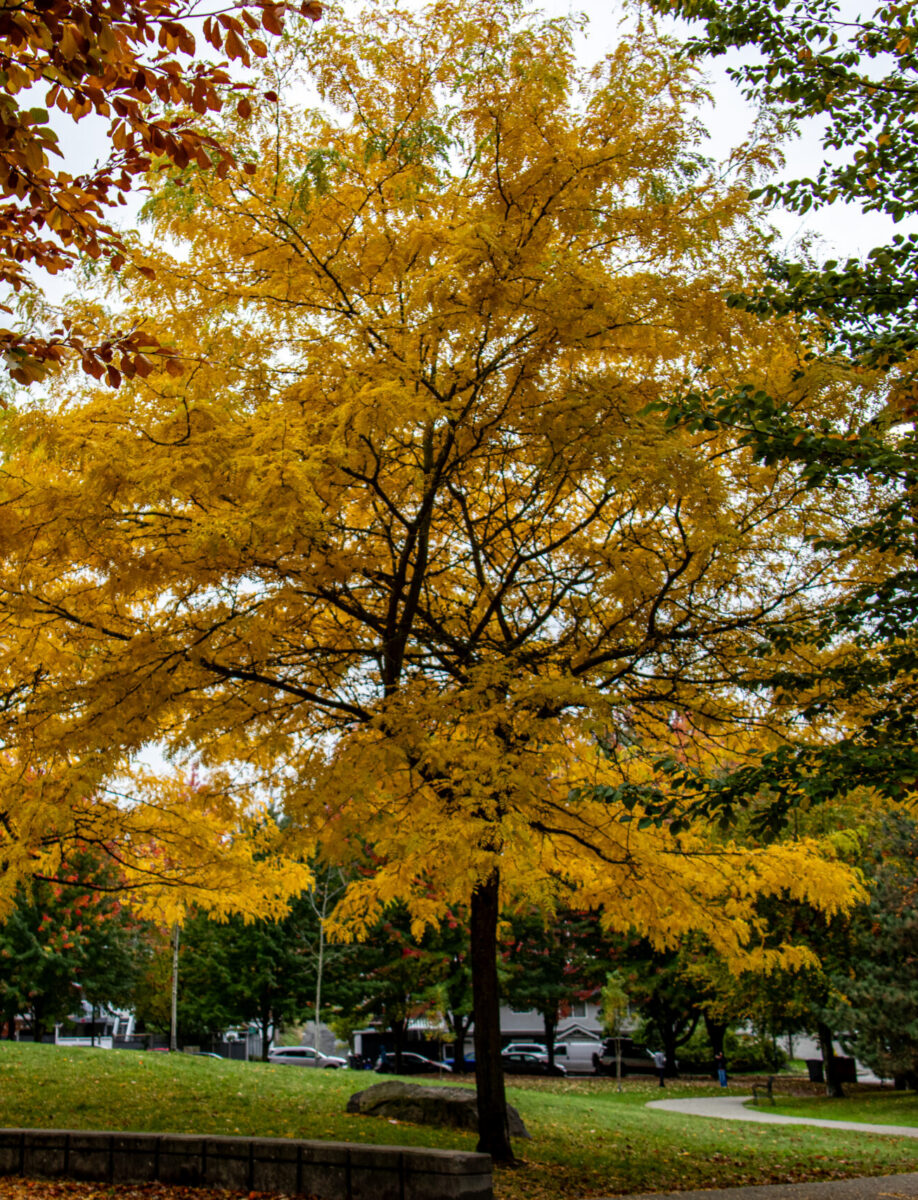
Honeylocust (Gleditsia triacanthos var. inermis)
Not every shade tree creates deep shade. Honeylocust offers something a little different.
Its fine, fern-like foliage creates filtered shade that cools patios and lawns while still allowing enough sunlight for many plants and grasses to grow beneath it. Thornless landscape varieties are also tidy and easy to maintain.
Why we love it:
- Light, filtered shade
- Fine-textured foliage
- Great over patios and lawns
- Easy to grow beneath
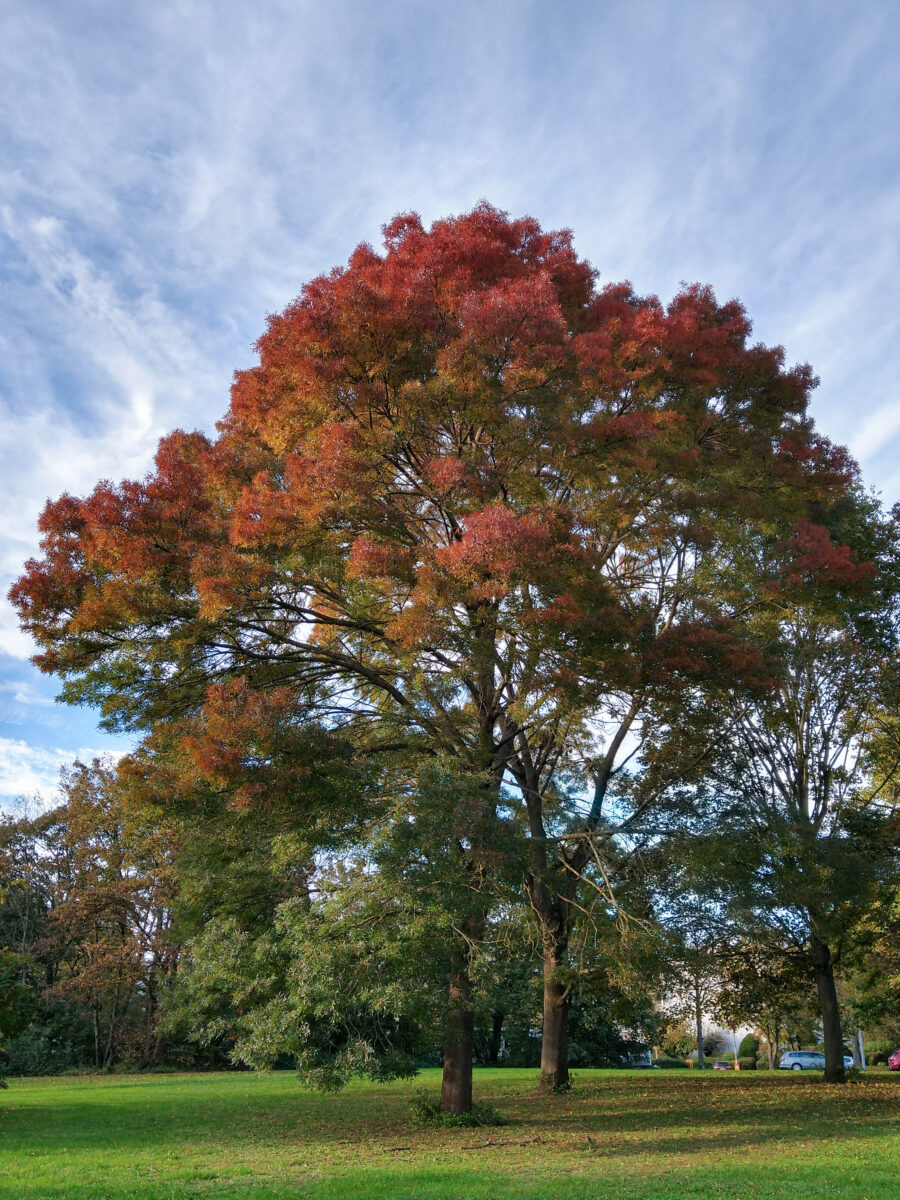
Japanese Zelkova (Zelkova serrata)
Japanese Zelkova has become a favorite replacement for traditional American Elms thanks to its graceful shape and dependable performance.
Its broad, vase-shaped canopy provides excellent shade while its rich green foliage turns shades of yellow, orange, and reddish-purple in autumn. It’s also well adapted to urban environments and makes an outstanding street or lawn tree.
Why we love it:
- Beautiful vase-shaped canopy
- Excellent shade
- Attractive fall color
- Good disease resistance
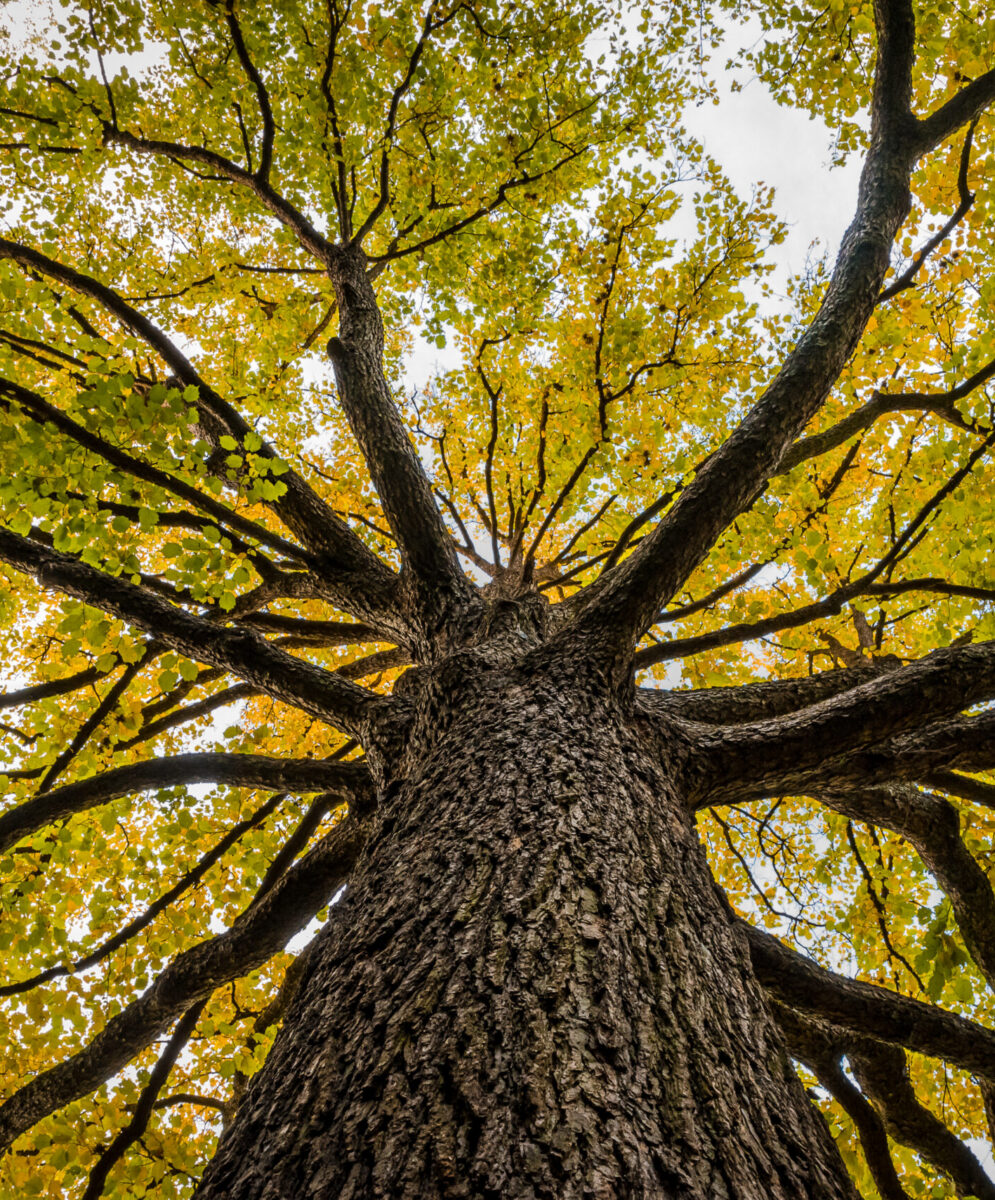
Disease-Resistant Elm (Ulmus hybrids)
Today’s disease-resistant elms bring back the classic beauty of the American Elm while offering much greater resistance to Dutch elm disease.
These modern selections develop large arching canopies that create exceptional shade and become stunning specimen trees in larger landscapes.
Why we love it:
- Classic shade tree form
- Broad arching canopy
- Improved disease resistance
- Fast-growing
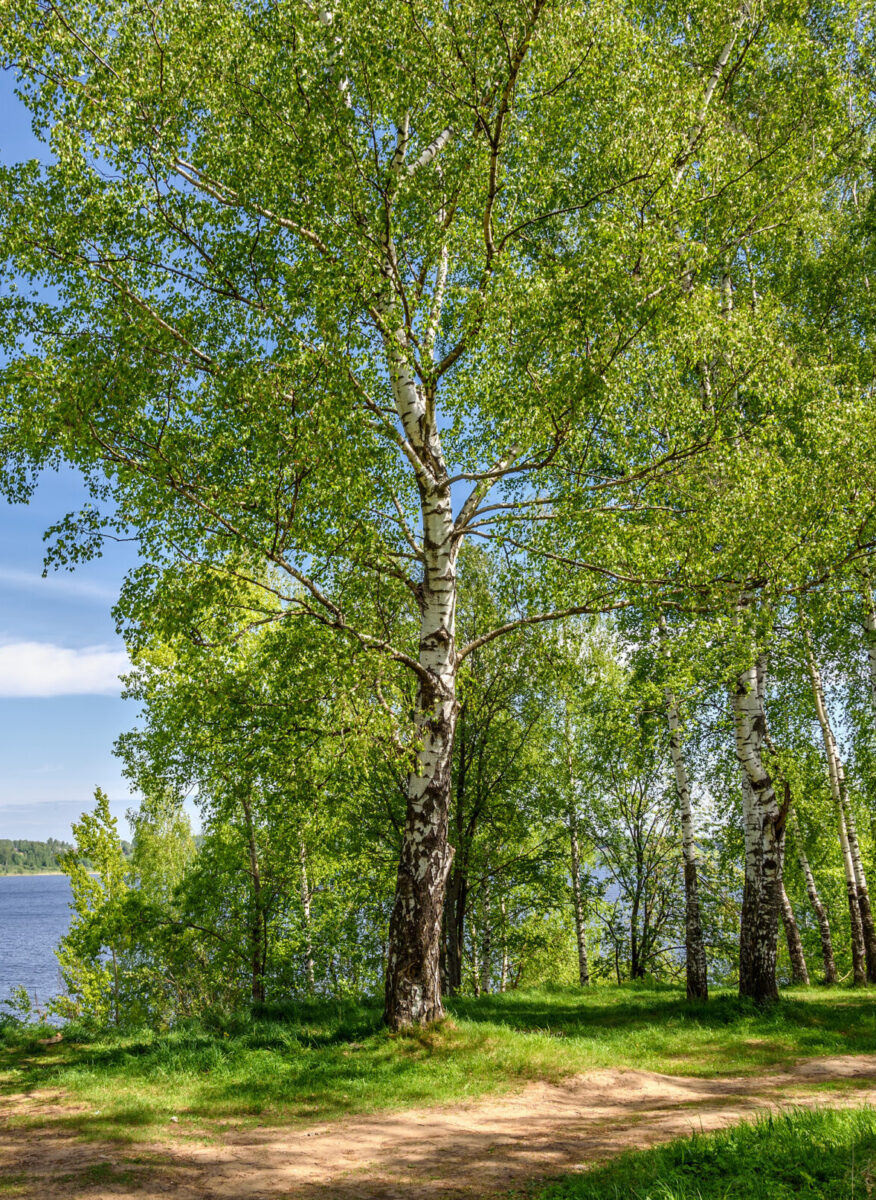
River Birch (Betula nigra cultivars)
Birch trees are beloved for their beautiful bark, but today’s River Birch varieties are much better suited to modern landscapes than White Birch.
Cultivars like Heritage®, City Slicker®, and Little King (‘Fox Valley’) offer excellent resistance to bronze birch borer while tolerating heat and humidity far better than White Birch. Their attractive peeling bark provides year-round interest, while their leafy canopies create welcome shade.
Why we love it:
- Beautiful peeling bark
- Better pest resistance than White Birch
- Fast-growing
- Multi-season interest
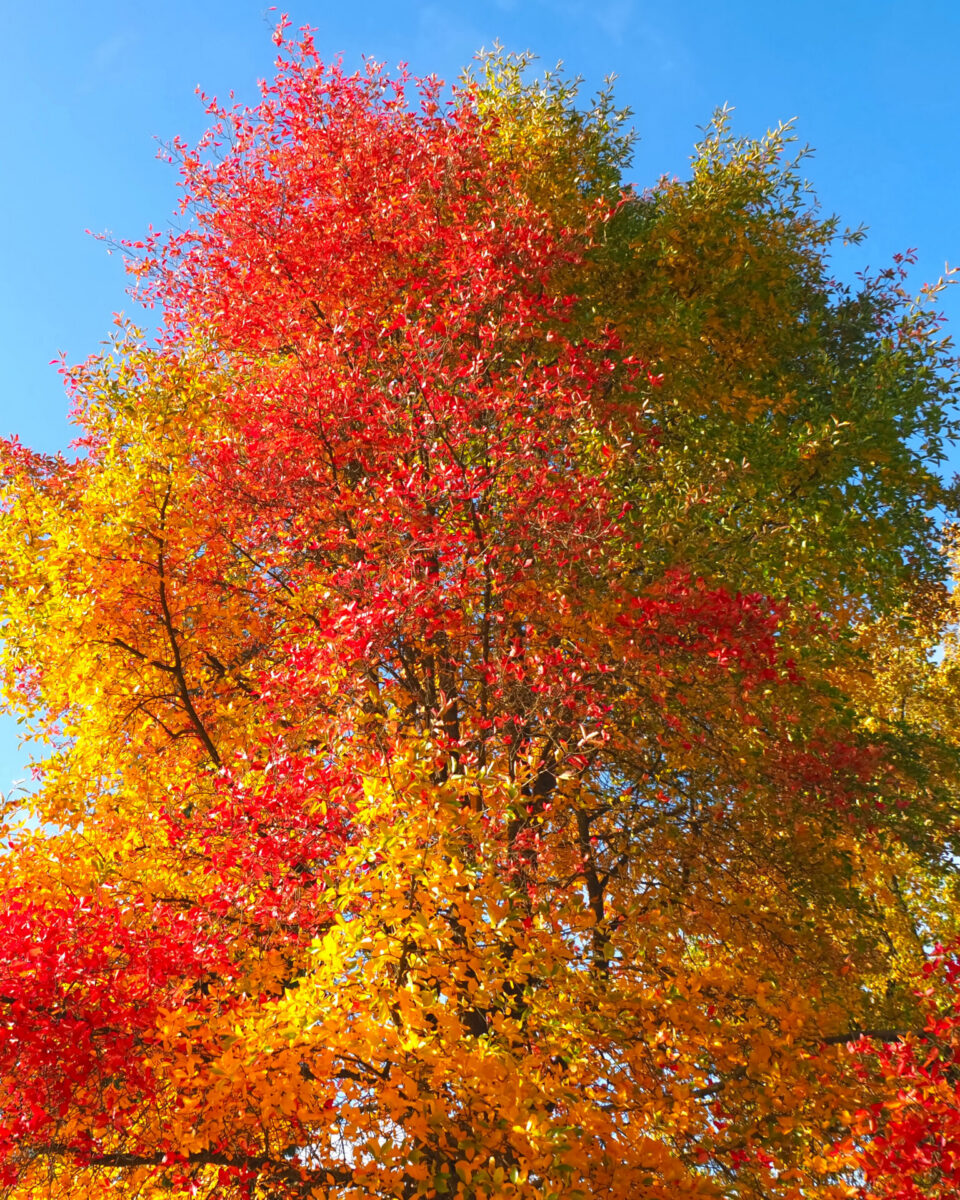
Blackgum/Black Tupelo (Nyssa sylvatica)
Blackgum is one of the finest native trees for fall color.
Its glossy green summer foliage transforms into brilliant shades of scarlet, orange, and crimson each autumn. During the growing season, its dense canopy provides cooling shade, while birds enjoy its fruit later in the season.
Why we love it:
- Native species
- Outstanding fall color
- Excellent wildlife value
- Reliable shade canopy
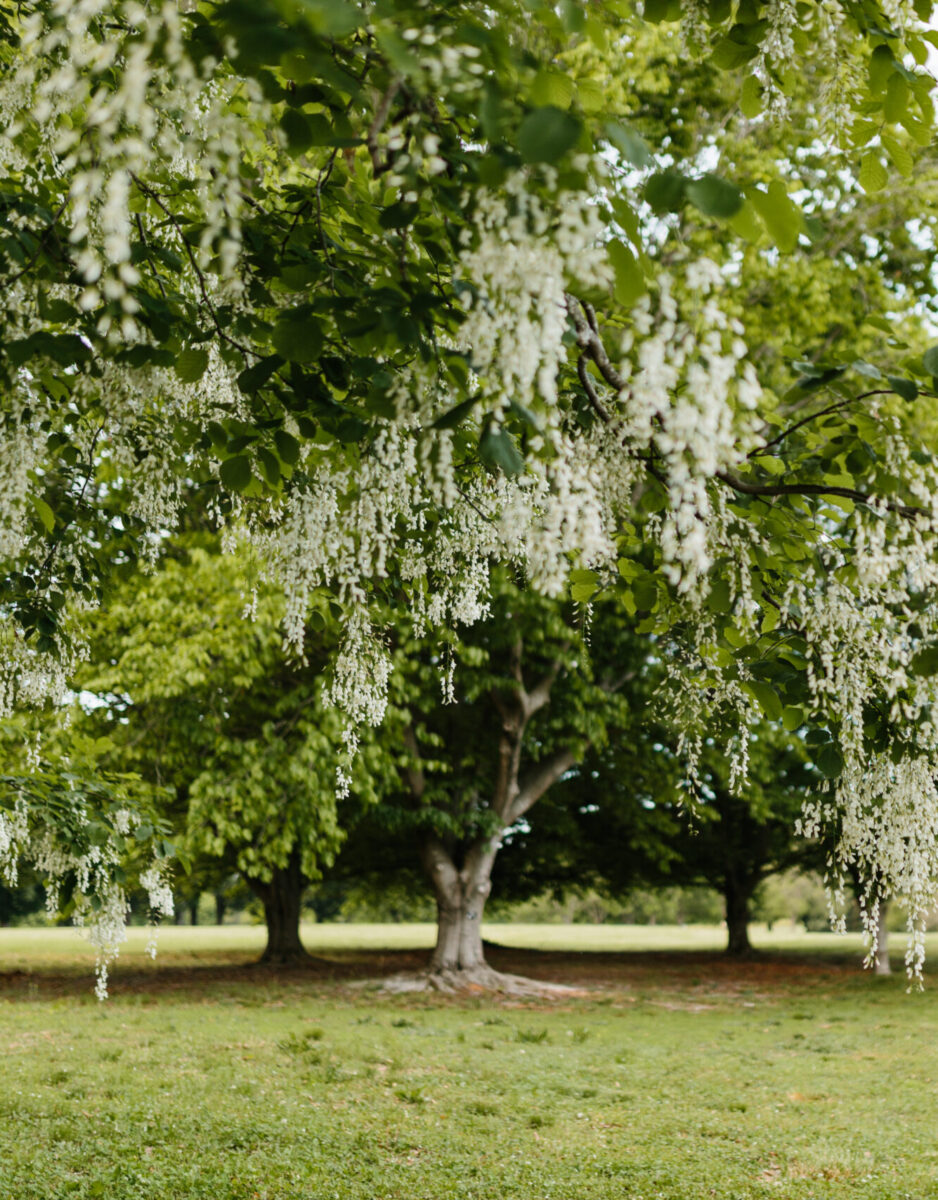
American Yellowwood (Cladrastis kentukea)
American Yellowwood is one of the most elegant shade trees you can plant.
While it grows somewhat more slowly than some larger trees, mature specimens reward gardeners with fragrant white flower clusters in late spring, soft yellow fall color, and a rounded canopy that provides comfortable shade without overwhelming the landscape.
Why we love it:
- Fragrant spring flowers
- Rounded canopy
- Beautiful fall color
- Outstanding specimen tree
how do you choose the right shade tree?
Before selecting a tree, consider a few important factors.
Available Space
Many shade trees eventually reach 50 to 80 feet tall with equally wide canopies. Be sure to plant them far enough from homes, driveways, sidewalks, septic systems, and overhead utility lines so they’ll have room to mature.
Sunlight
Most shade trees perform best in full sun, receiving at least six hours of direct sunlight each day.
Soil Conditions
Some species prefer well-drained soils, while others tolerate heavier or wetter sites. Matching the tree to your property’s conditions helps ensure long-term success.
Growth Rate
Fast-growing trees provide shade more quickly, while slower-growing species often develop stronger branch structures and live much longer.
how can you help a new shade tree thrive
Proper care during the first few years is essential for establishing a healthy root system.
To give your tree the best start:
- Water deeply once or twice a week during dry weather rather than watering lightly every day.
- Apply 2–3 inches of mulch around the base, keeping it a few inches away from the trunk.
- Keep grass away from the base of the tree to reduce competition for water and nutrients.
- During prolonged summer heat, monitor soil moisture carefully—newly planted trees often need supplemental watering even when established landscapes appear fine.
- Consider using a root-supporting fertilizer or biostimulant to encourage strong root development during establishment.
With a little extra care early on, your shade tree can provide beauty, comfort, and value for decades.
enjoy the benefits of shade for years to come
The best shade trees for New England do more than cool your yard—they create gathering spaces, support wildlife, provide stunning seasonal beauty, and become lasting parts of your landscape for generations.
Whether you’re looking for the brilliant fall color of a maple, the timeless beauty of an oak, or the graceful canopy of a Zelkova, there’s a shade tree that’s perfect for your property.
Stop by your local Mahoney’s Garden Center to explore our selection of shade trees. Our knowledgeable team can help you choose the best tree for your space and answer any questions about planting, watering, and long-term care.