
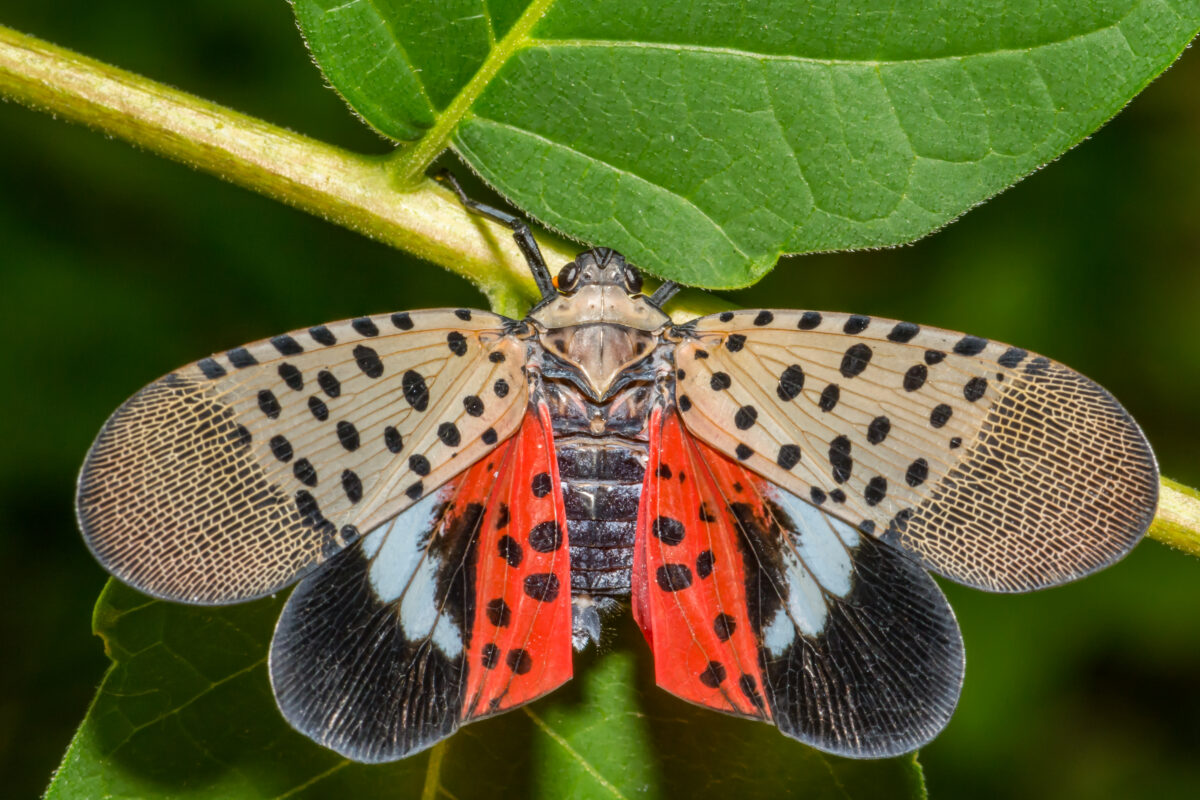
If you’ve spotted a black bug with white spots hopping around your yard or a colorful insect with bright red wings flying through your landscape, chances are you’ve met the spotted lanternfly.
Although they may look eye-catching, spotted lanternflies are one of the newest invasive pests affecting New England. While they aren’t dangerous to people or pets, they can cause serious problems for trees, vineyards, fruit crops, and ornamental plants.
The good news? Homeowners can play an important role in slowing their spread.
What is a spotted Lanternfly?
Spotted lanternflies (Lycorma delicatula) are invasive insects native to Asia that were first discovered in Pennsylvania in 2014. Since then, they’ve continued to spread throughout the Northeast, including Massachusetts. The Massachusetts Department of Agricultural Resources provides up-to-date information on spotted lanternflies in Massachusetts, including identification, current distribution, and resources for residents.
They go through several life stages during the year:
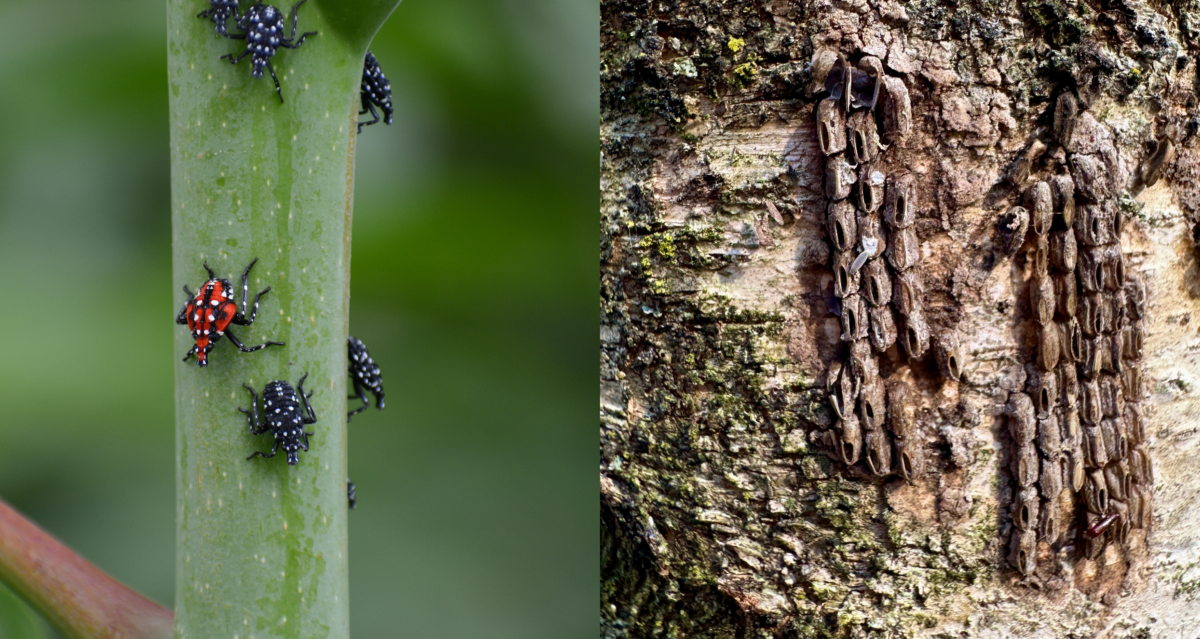
- Spring: Tiny black nymphs with white spots hatch from eggs
- Early summer: Nymphs grow larger and eventually develop bright red patches.
- Late summer into fall: Adults emerge with gray, black-spotted wings that open to reveal striking red hind wings.
- Fall and winter: Females lay egg masses on trees, stones, outdoor furniture, vehicles, and many other smooth surfaces before dying after the first hard freezes.
why are they a problem
Unlike caterpillars that chew leaves, spotted lanternflies feed by piercing plants and sucking out sap.
Heavy infestations can weaken plants over time by reducing their ability to photosynthesize and store energy. As they feed, they also excrete a sticky substance called honeydew, which encourages black sooty mold to grow on leaves, branches, patios, decks, cars, and outdoor furniture.
They’re especially concerning for:
- Grapevines
- Apple and other fruit trees
- Maple trees
- Birch trees
- Willow
- Black Walnut
- Hops
- Many ornamental trees and shrubs
Fortunately, healthy, established landscape trees can often tolerate some feeding. The greatest concern is large populations building over time and the impact on agriculture, vineyards, and orchards.
what is tree-of-heaven, & why does it matter?
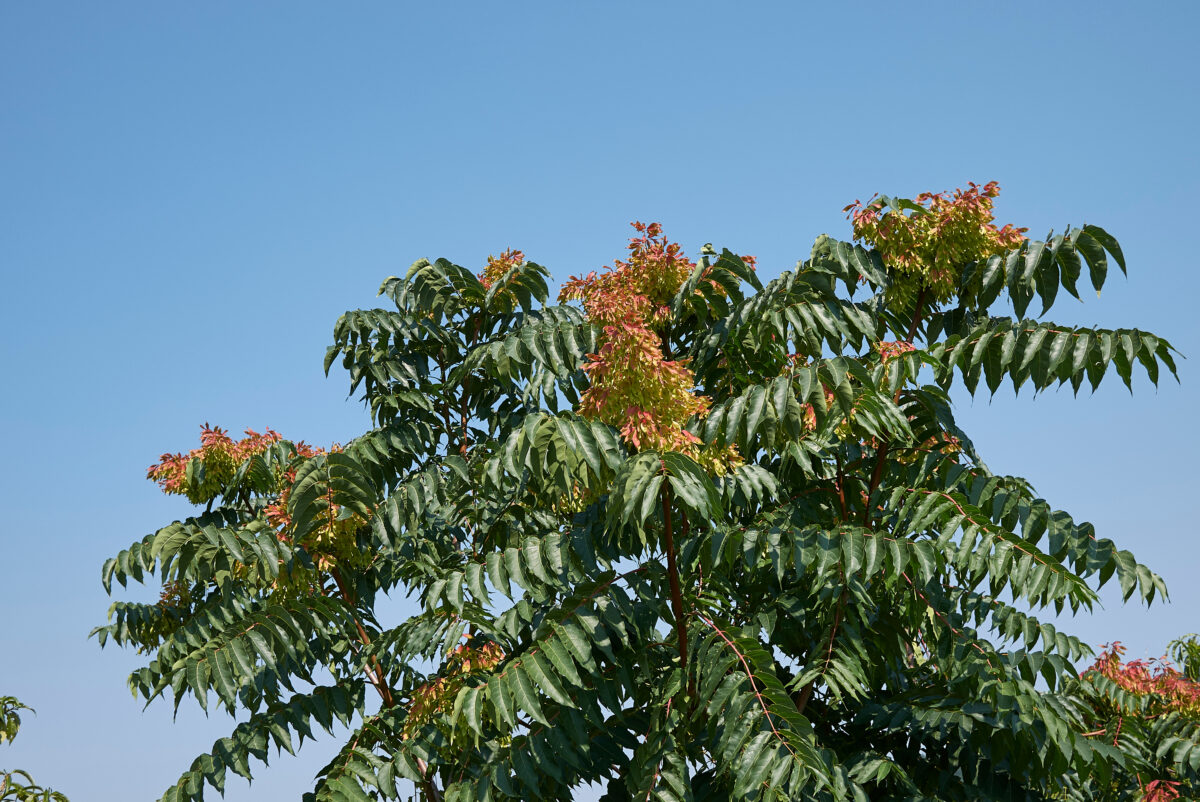
One plant plays a particularly important role in the lanternfly’s life cycle: Tree-of-Heaven (Ailanthus altissima).
This fast-growing invasive tree is the spotted lanternfly’s preferred host. While the insects will feed on many different plants, they rely heavily on Tree-of-Heaven as they mature and reproduce.
If you have Tree-of-Heaven growing on your property, removing it properly can help reduce suitable habitat. However, this tree spreads aggressively through its roots, so simply cutting it down often causes even more sprouts to appear. Large trees are usually best removed using recommended control methods or with help from a qualified arborist.
should you kill them?
Yes.
Current guidance from the Massachusetts Department of Agricultural Resources recommends destroying spotted lanternflies whenever practical in areas where they are found, particularly because they are an invasive species that continues to spread.
For homeowners, that can include:
- Stepping on adults or nymphs
- Scraping and destroying egg masses during fall, winter, and early spring
- Using appropriate insecticides when populations become heavy and treatment is warranted
No single method eliminates them completely, but reducing local populations can help slow their spread.
how can you protect your landscape?
The best approach is early detection and integrated management.
Check for Egg Masses
From fall through early spring, inspect:
- Tree trunks
- Firewood
- Patio Furniture
- Play equipment
- Landscaping stones
- Trailer and campers
- Outdoor decor
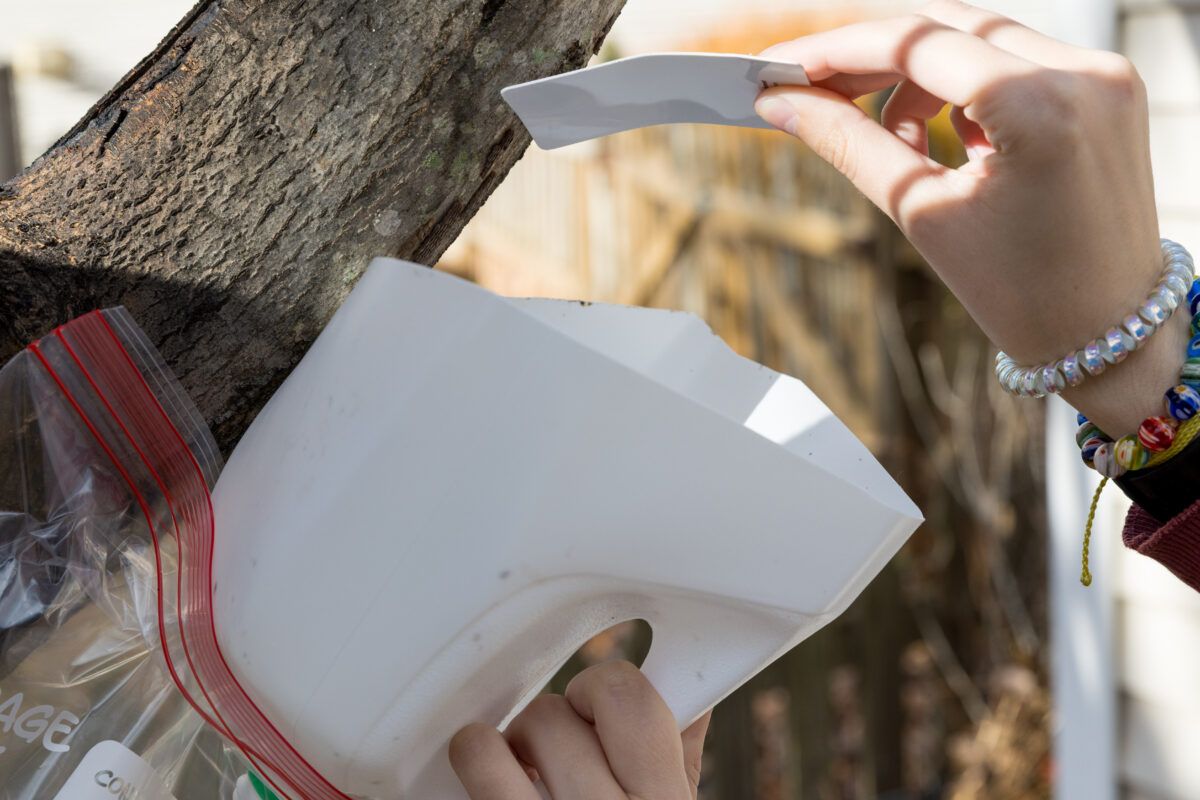
Egg masses resemble smears of gray putty and can contain dozens of eggs. Scraping them into rubbing alcohol or hand sanitizer destroys the eggs before they hatch.
Inspect Plants Regularly
During summer, keep an eye out for:
- Clusters of nymphs on young growth
- Adults gathering on tree trunks
- Sticky honeydew beneath trees
- Black sooty mold developing on leaves or outdoor surfaces
Finding them early makes management much easier.
Use Insecticides When Needed
If you start seeing spotted lanternflies on your property, early treatment is the best way to keep populations from growing.
Captain Jack’s® Spotted Lanternfly Eliminator is specifically formulated to kill spotted lanternflies on contact, including both nymphs and adults. Made with botanical extracts and essential oils, it’s a fast-acting, plant-based option that can be used around homes, patios, decks, ornamental and fruit trees, shrubs, gardens, garages, and other outdoor spaces. When used according to the label, it’s safe for use around people, pets, plants, and bees.
For best results, spray lanternflies directly as soon as you notice them, before populations have a chance to increase. Captain Jack’s® Spotted Lanternfly Eliminator is available in both a Concentrate formula, which is mixed with water in a garden sprayer, and a convenient Ready-to-Spray version that attaches directly to a garden hose.
As with any pesticide, always read and follow the product label carefully before use.
Should you report a spotted lanternfly?
If you discover spotted lanternflies in a location where they haven’t previously been confirmed, Massachusetts encourages residents to photograph the insect and report it through the state’s reporting system. Established infestation areas may not require every individual insect to be reported, so it’s worth checking the current guidance before submitting a report.
frequently asked questions
Do spotted lanternflies bite?
No. They do not bite, sting, or spread disease to people or pets.
Are they harmful to dogs or cats?
No. They’re considered a nuisance pest rather than a direct threat to pets.
Can one lanternfly kill my tree?
Usually not. Healthy, mature trees can often tolerate some feeding. Problems arise when large numbers feed repeatedly over multiple seasons, particularly on susceptible plants.
Will winter kill them?
Adult lanternflies die after hard frosts, but their egg masses survive the winter and hatch the following spring. That’s why scraping egg masses is one of the most effective ways homeowners can help reduce next year’s population.
stay one step ahead
Spotted lanternflies are likely to remain part of New England’s landscape for years to come, but staying alert can make a real difference. Learning to recognize each life stage, checking your property regularly, and taking action when you find them helps protect both your landscape and the region’s trees and agricultural crops.
If you have questions about identifying spotted lanternflies or choosing the right control products for your yard, stop by your local Mahoney’s Garden Center. Our team is always happy to help you protect your landscape.