
January 12, 2026
Welcoming the Dark-Eyed Juncos: Winter’s Little Snowbirds
If chickadees are the friendly chatterboxes of winter, dark-eyed juncos are the quiet companions that let you know the season has truly arrived. Often nicknamed “snowbirds,” juncos appear in New England just as the weather turns cold, bringing soft flashes of gray, white, and slate to snowy landscapes. With their round bodies, pink bills, and habit of hopping along the ground, they’re a subtle but comforting presence during the winter months.
These birds are seasonal visitors here in Massachusetts, making winter the best time to spot them. Whether you’re an avid birdwatcher or simply enjoy noticing wildlife outside your window, dark-eyed juncos are a rewarding bird to welcome into your yard.
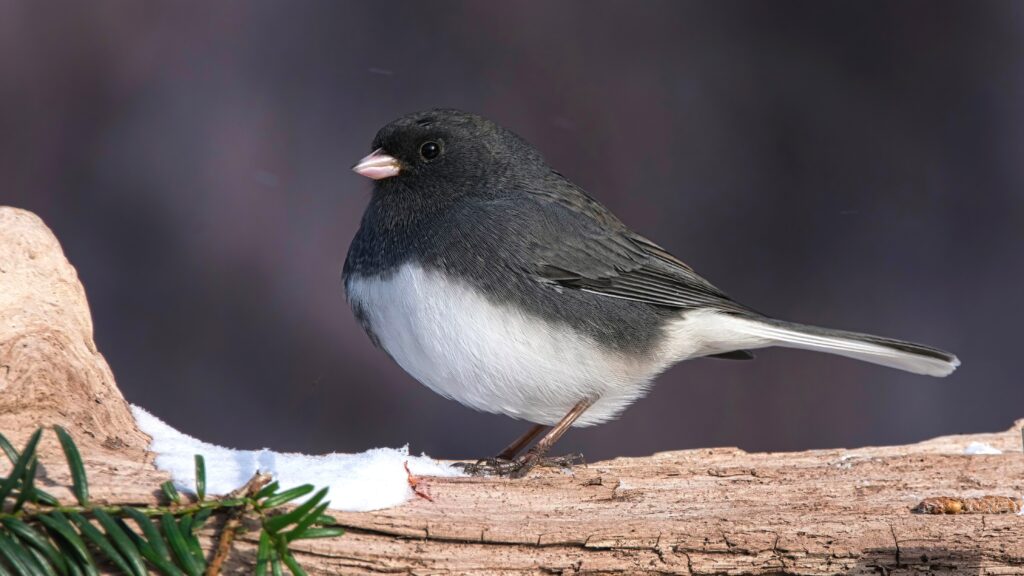
What Do Dark-Eyed Juncos Eat in Winter?
Unlike many feeder birds that prefer perches, juncos are ground feeders. You’ll often see them scratching and hopping beneath feeders, searching for fallen seeds. Offering the right food—and placing it thoughtfully—will make your yard especially inviting.
 Junco favorites include:
- Cracked Corn: Easy to eat and perfect for ground feeding, especially during cold snaps.
- Millet: One of their top choices. White or red millet sprinkled on the ground or in a low tray works well.
- Shelled Sunflower Seeds: Without the hulls, these are simple for juncos to eat and less messy underfoot.
- Mixed Seed Blends: Look for mixes that include millet and cracked corn rather than large seeds meant for bigger birds.
Pro tip: Scatter seed on a cleared patch of ground or use a low platform feeder. Juncos feel most comfortable feeding where they can stay close to the earth.
Creating the Perfect Winter Habitat for Juncos
While food is important, shelter and familiarity are just as key for these winter visitors.
Shelter from Cold & Predators
- Juncos often take cover in dense shrubs, hedges, and low evergreens, especially during storms.
- Leaving a section of your garden a little “wild”—with leaf litter or low brush—gives them places to hide and forage naturally.
A Familiar Winter Stop
- One fascinating trait of dark-eyed juncos is their loyalty. Many return to the same yards year after year, making your garden a familiar winter refuge.
- Consistent food and shelter increase the chances they’ll keep coming back each season.
Natural Foraging Areas
- Juncos feed on seeds from grasses and plants left standing through winter. Native grasses and seed-bearing perennials can provide bonus nutrition when snow is light. Check out our blog on the benefits of keeping perennials up throughout the winter!
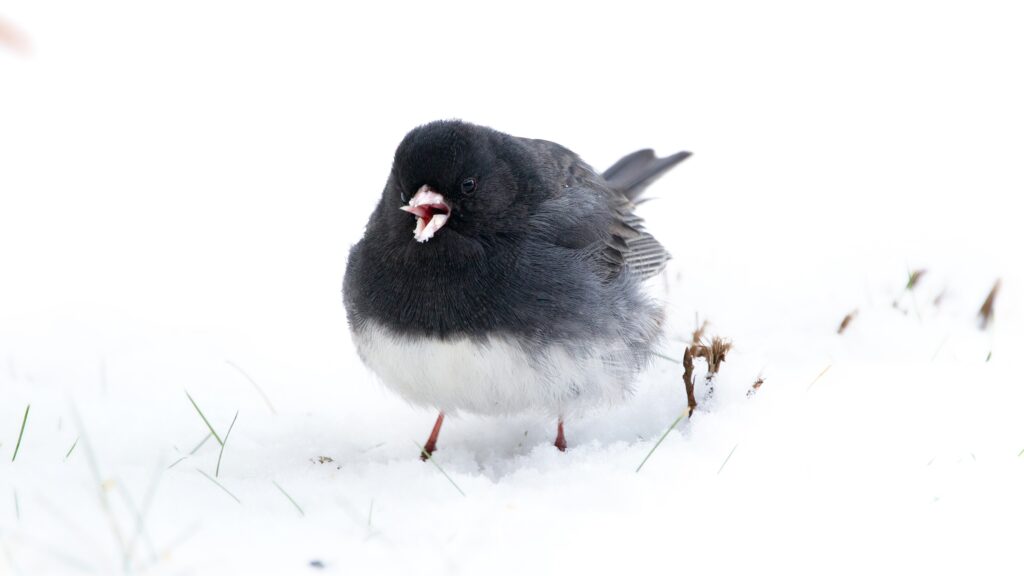
Fun Facts About Dark-Eyed Juncos
- Juncos are sometimes called “snowbirds” because their arrival often coincides with the first winter storms.
- They migrate south from Canada to New England for winter, then head north again in spring.
- Their white outer tail feathers flash in flight, making them easier to spot against snowy ground.
- Juncos often travel in loose flocks, sometimes mixing with sparrows and other winter birds.
How to Enjoy Watching Juncos This Winter
Dark-eyed juncos bring a calm, steady rhythm to winter birding. Here are a few ways to make the most of their visits:
- Watch the Ground: If you only look at hanging feeders, you might miss them. Scan the base of trees and feeders instead.
- Keep Feeding Areas Clear: Shoveling or sweeping a small patch of snow makes it easier for juncos to forage.
- Be Patient: Juncos are quieter than chickadees, but once you notice them, you’ll start spotting their gentle movements everywhere.
Mahoney’s Has What You Need for Winter Birding
At Mahoney’s Garden Centers, we love helping customers support winter birds like dark-eyed juncos. From seed blends rich in millet and cracked corn to platform feeders and garden tips for bird-friendly landscapes, we’ve got everything you need to make your yard a welcoming winter stopover.
Stop by one of our 7 locations to stock up, ask questions, and get inspired to support your winter birds—because even the quietest snowbirds deserve a warm welcome.