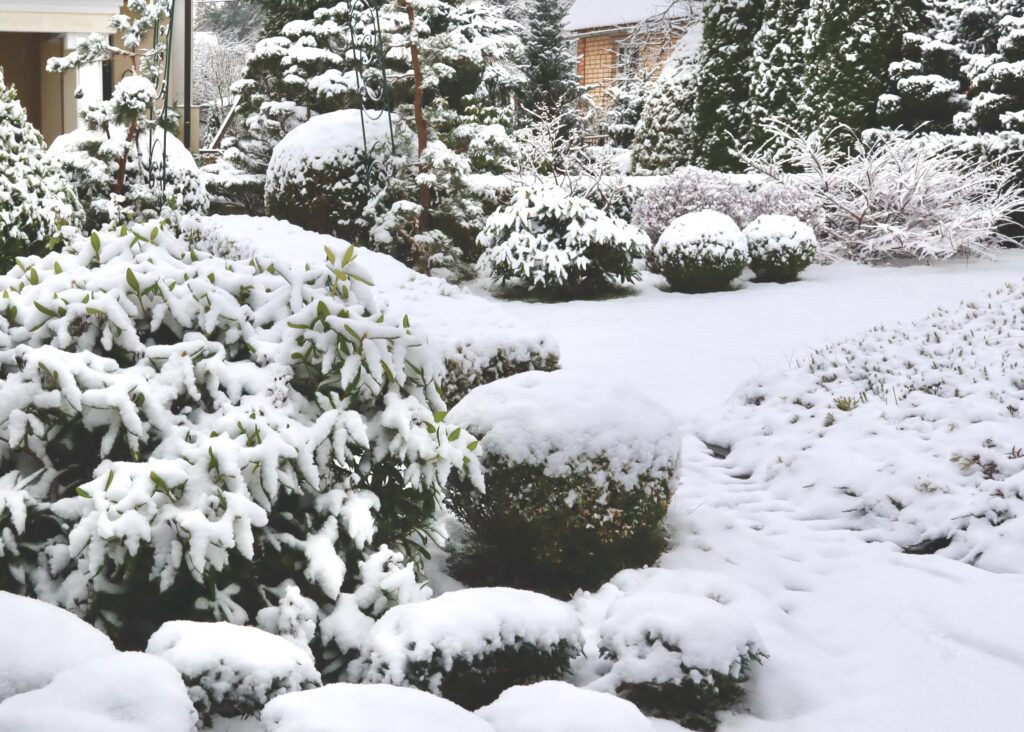
Snow Is Usually Protective
It may look dramatic, but fresh snow actually helps your landscape. Snow acts as an insulating blanket, stabilizing soil temperatures and protecting roots from freeze–thaw cycles. Perennials, shrubs, and newly planted trees often benefit from consistent snow cover.
Problems tend to come not from the cold itself, but from weight, breakage, and increased access for wildlife when snow piles up.
Before You Do Anything: Don’t Rush
Avoid Shaking Snow Off Branches
It’s tempting to knock snow off shrubs and trees, but frozen branches are brittle. Shaking them can cause more damage than the snow itself.
If a branch seems at risk:
- Gently brush snow upward and off
- Use a broom instead of your hands
- Let ice melt naturally whenever possible
Be Patient With Evergreens
Evergreens often look flattened or misshapen after a storm, but they’re surprisingly resilient. In most cases, branches gradually return to their natural shape as temperatures warm.
What looks alarming in midwinter often corrects itself by early spring. Hold off on pruning unless you see clear breakage.
What Actually Needs Attention
Check for Broken Branches
As snow begins to melt, take a slow walk through your landscape and look for:
- Split or cracked limbs
- Branches resting on the ground
- Wood that is clearly snapped
If a branch is broken, prune it cleanly once temperatures are consistently above freezing. You do not need to wait until the official last frost — just wait for a stretch of milder weather so frozen wood doesn’t splinter.
Branches that are bent but unbroken often rebound on their own — give them time before making cuts. Check out our guide to dormant pruning for more details.
 Watch for Rabbit Damage at the Base of Trees
Deep snow creates an unexpected issue: it raises the “ground level” for hungry animals.
Rabbits and other critters can stand on packed snow, allowing them to reach bark higher up on trunks — sometimes above tree guards that were effective earlier in the season.
What to Look For
- Chewed or missing bark on young trees
- Damage higher on the trunk than expected
- Clean, gnawed edges on bark
What You Can Do
- Carefully dig snow away from tree trunks
- Make sure guards or cages are still upright
- Extend protection higher while snow remains deep
If you’ve experienced rabbit damage before, adding a repellent can provide extra protection alongside physical barriers. Products like Rabbit Scram (a granular repellent applied around planting areas) and Bobbex (a spray applied directly to trunks and lower branches) help discourage browsing through scent and taste. Repellents work best when reapplied as snow melts and combined with proper guards.
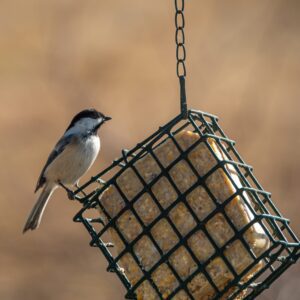 Remember the Wildlife
Heavy snow doesn’t just affect plants — it also limits natural food sources for birds. Supporting them through winter storms adds life to your landscape and helps them conserve energy during cold stretches.
Feeding birds is a small effort that makes a meaningful difference — and brings welcome movement to the winter garden.
Winter Recovery Is Mostly About Observation
After a major snowstorm, the most important step is simply paying attention. A quick walk-through now — checking for broken wood, exposed trunks, and shifted guards — prevents small problems from becoming bigger ones in spring.
In most cases, snow protects more than it harms. With light pruning, refreshed protection, and a little patience, your landscape will be ready to rebound beautifully as temperatures rise.
If you have questions about winter damage, pruning, or protecting young trees, stop by and talk with our team — we’re happy to help you set your landscape up for a strong spring recovery.