
If you love plants but want something a little different, air plants might be your perfect match. These fascinating plants are low-maintenance, endlessly decorative, and don’t require soil to grow. Whether you’re short on space, new to houseplants, or just looking for a unique accent, air plants are a fun and approachable option.

What Are Air Plants, Anyway?
Air plants belong to the genus Tillandsia and are part of the bromeliad family. What makes them special is that they’re epiphytes, meaning they naturally grow attached to other plants, rocks, or tree branches rather than in the ground. Instead of pulling nutrients from soil, they absorb water and nutrients through their leaves using tiny structures called trichomes.
Being epiphytes also means air plants are not parasitic. In nature, they simply use trees or rocks as a place to perch while they gather moisture from rain, humidity, and the air around them.
Where Do Air Plants Come From?
Air plants are native to warm regions of the Americas, including Central and South America, Mexico, and the southern United States. Depending on the species, they may grow in humid rainforests, dry deserts, or mountainous regions. This wide range of habitats explains why some air plants prefer more moisture while others thrive in drier conditions.
How Do You Care for Air Plants at Home?
Despite their exotic look, air plants are surprisingly easy to care for once you understand the basics.
Light
Air plants prefer bright, indirect light. A spot near a sunny window with filtered light is ideal. Too much direct sun can scorch their leaves, while too little light can slow growth.
Water
Watering is the most important part of air plant care. Most air plants do best with a weekly soak:
- Submerge the entire plant in room-temperature water for 20–30 minutes
- Gently shake off excess water
- Place the plant upside down or on a towel to dry completely within a few hours, as it’s important that water doesn’t collect in the crown
Between soakings, occasional misting can help, especially in dry homes.
Airflow
Good airflow is essential. Air plants should never sit in water or stay wet for long periods, as this can cause rot. Open displays tend to work better than enclosed containers with no ventilation.
Temperature
Air plants are happiest between 50–85°F. Keep them away from cold drafts, heaters, and fireplaces.
Do Air Plants Flower?
Yes! Air plants bloom once in their lifetime, producing colorful flowers or bracts that can last weeks or even months. After flowering, the mother plant slowly produces “pups” (baby plants) at its base. These pups can be left to form a clump or gently separated once they’re about one-third the size of the parent plant.
Creative Ways to Decorate with Air Plants
One of the biggest joys of these plants is how versatile they are in décor. Since they don’t need soil, the display options are almost endless:
- Mounted on driftwood, cork, or stone for a natural, sculptural look
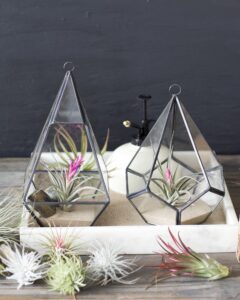
- Placed in glass globes or terrariums (open or with airflow holes)
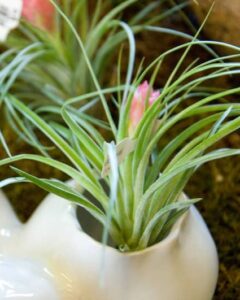
- Displayed in small ceramic holders on shelves or desks
- Used as table centerpieces for events or seasonal décor
- In hanging wire or macramé holders to add greenery without taking up surface space
They’re perfect for small apartments, offices, bathrooms with good light, or anywhere you want a touch of greenery without a pot.
Are Air Plants Good for Beginners?
Absolutely. Air plants are forgiving, don’t need repotting, and clearly show you when something’s wrong. Wrinkled or curling leaves usually mean they need more water, while soft or dark bases can indicate too much moisture. Once you get into a simple routine, they’re incredibly rewarding plants to grow.
If you’re curious to see different air plant varieties, get hands-on care advice, or explore creative display ideas, stop by one of our garden center locations and check out our air plant selection—we’re always happy to help you find the perfect plant and setup for your space.