
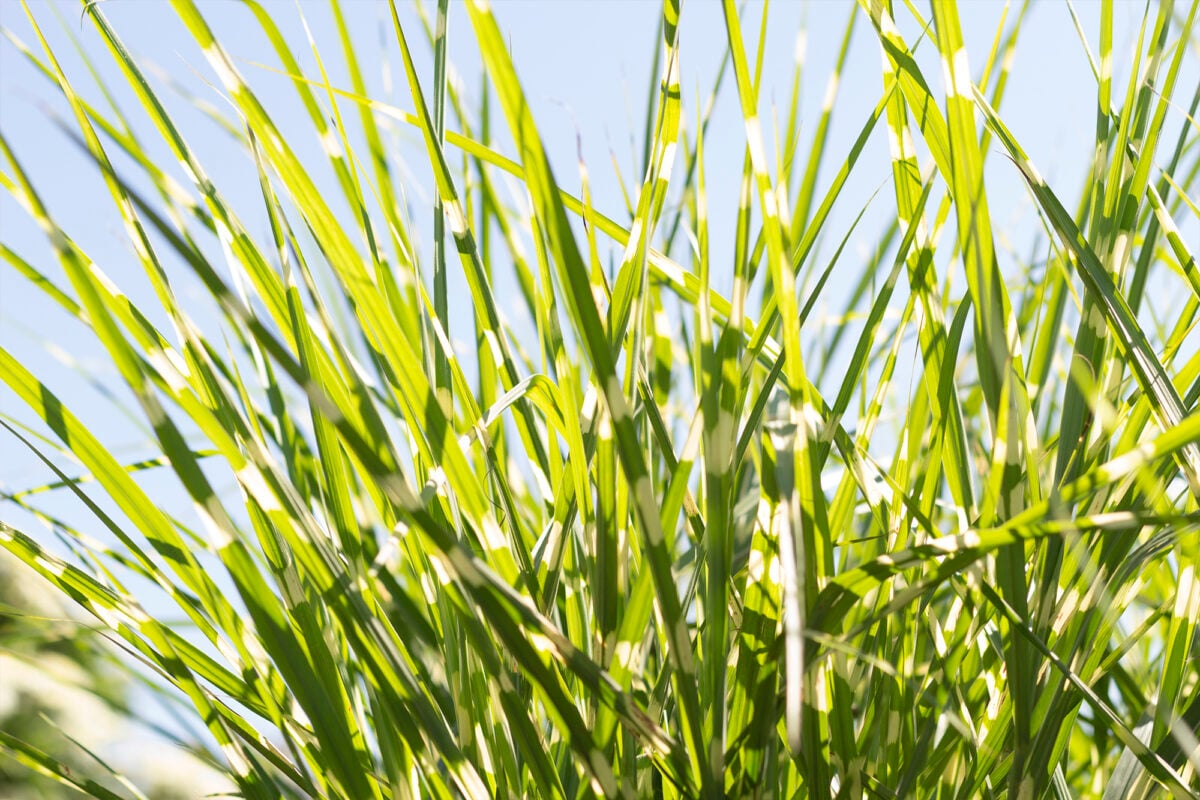
Ornamental grasses bring something special to the landscape. Their upright forms, soft movement and distinctive seed heads add texture that can be difficult to get from other plants, and many look just as interesting in fall and winter as they do during the growing season.
For years, Miscanthus—also known as Chinese silvergrass, Eulalia or maiden grass—has been one of the most familiar ornamental grasses in New England landscapes. But with Miscanthus sinensis now being phased out in Massachusetts because of its invasive behavior, it’s a good time to discover some of the many other grasses that can fill the same roles in the garden.
The best alternatives to Miscanthus for Massachusetts gardens include switchgrass, big bluestem, feather reed grass and Carex. The right choice depends on whether you need height, privacy, fall color, variegated foliage or shade tolerance.
The good news? There are plenty to choose from! Whether you’re looking for a tall statement grass, colorful fall foliage or something compact for a smaller space, these Miscanthus alternatives offer plenty of options.
Why Is Miscanthus Being Banned in Massachusetts?
In December 2025, the Massachusetts Department of Agricultural Resources (MDAR) added Miscanthus sinensis to the state’s Prohibited Plant List after it was designated invasive by the Massachusetts Invasive Plant Advisory Group.
Miscanthus has long been planted as an ornamental, but the problem begins when it doesn’t stay where it was planted. It can reproduce by seed as well as spread through rhizomes, allowing it to escape cultivated landscapes and establish in less-managed areas. In Massachusetts, escaped populations have been documented along roadsides, in parks, conservation lands, grasslands and other open spaces. In some locations, particularly on Nantucket, it has formed extensive, dense stands that compete with surrounding vegetation. Its dry foliage can also present an increased fire risk.
The state is currently phasing out Miscanthus sinensis. New stock can no longer be imported or propagated in Massachusetts, and the sale of existing nursery stock will end after December 31, 2026.
Why Does Choosing Non-Invasive Plants Matter?
An invasive plant is more than simply a plant that grows vigorously. Invasive plants are non-native species capable of spreading into natural or minimally managed areas, where they can compete with native vegetation and disrupt existing plant communities.
That matters even if your own Miscanthus has stayed neatly in place. Seeds don’t necessarily respect property lines. They can travel beyond the garden and establish in places where no one is regularly weeding, pruning or otherwise keeping plants under control.
Choosing non-invasive alternatives is one simple way gardeners can help reduce the introduction and spread of problem plants. And in the case of ornamental grasses, you don’t have to give up the height, movement, texture or fall interest that made Miscanthus appealing in the first place.
Our Favorite Miscanthus Alternatives
There isn’t one single grass that needs to replace Miscanthus. Instead, think about what you liked about it—height, color, texture, screening or movement—and choose a grass that provides those qualities while fitting the conditions in your garden.
Switchgrass (Panicum virgatum)
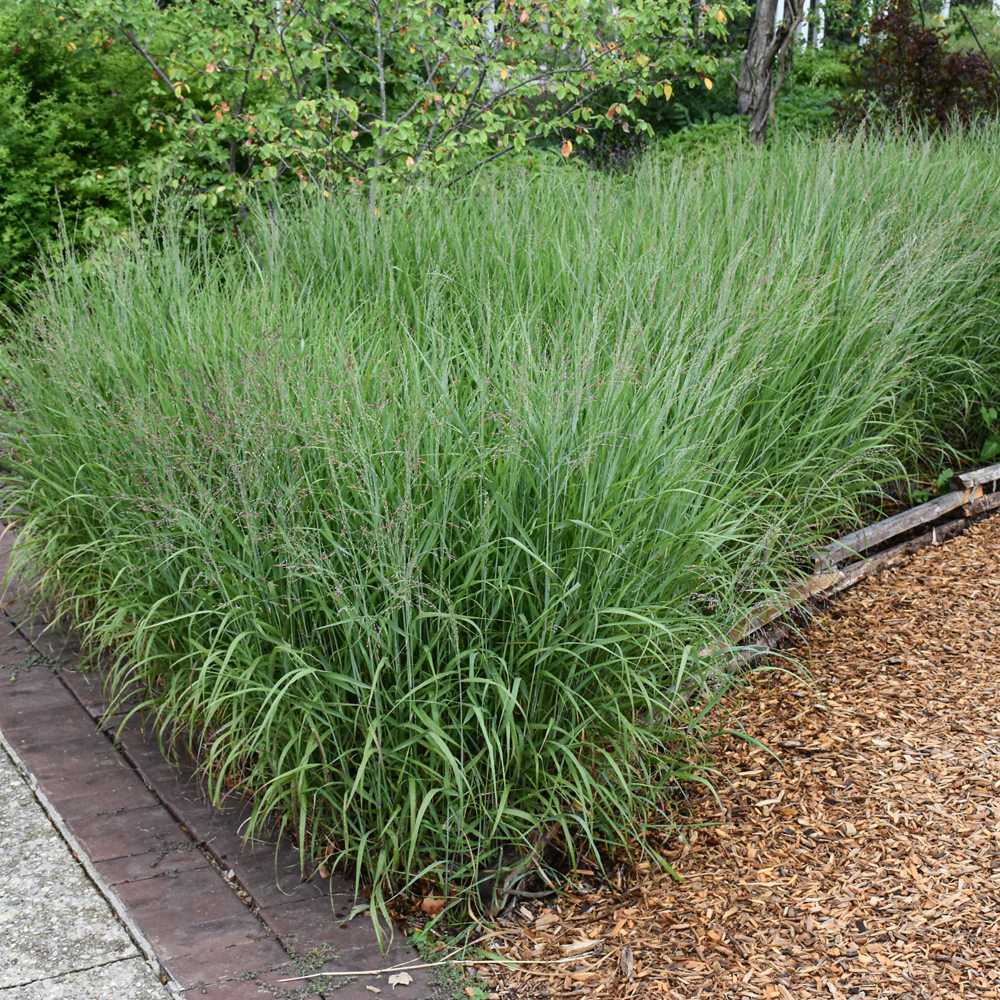
Switchgrass is an excellent place to start when looking for a Miscanthus alternative. Different cultivars offer dramatically different heights and colors, making this group useful in everything from mixed borders to large-scale landscape plantings.
‘Cape Breeze’ stays relatively compact at about 2–3 feet tall with blooms. Its green foliage and late-summer flowers work well where you want the texture of an ornamental grass without overwhelming neighboring plants. Plant it in full sun and dry to average soil.
‘Shenandoah’ grows to about 4 feet with blooms and combines green foliage with increasingly noticeable red tones. Its midsummer flowers and fall color make it especially useful for adding seasonal interest. It performs in full sun and soils ranging from dry to moist.
For serious height, look to ‘Thundercloud’ and ‘Cloud Nine’. Both can reach approximately 8 feet with blooms and feature blue-green foliage followed by midsummer flowers. Their size makes them particularly useful when you’re trying to replace the tall, architectural presence associated with larger Miscanthus varieties. Both prefer full sun and dry to average soil.
Big Bluestem (Andropogon gerardii)
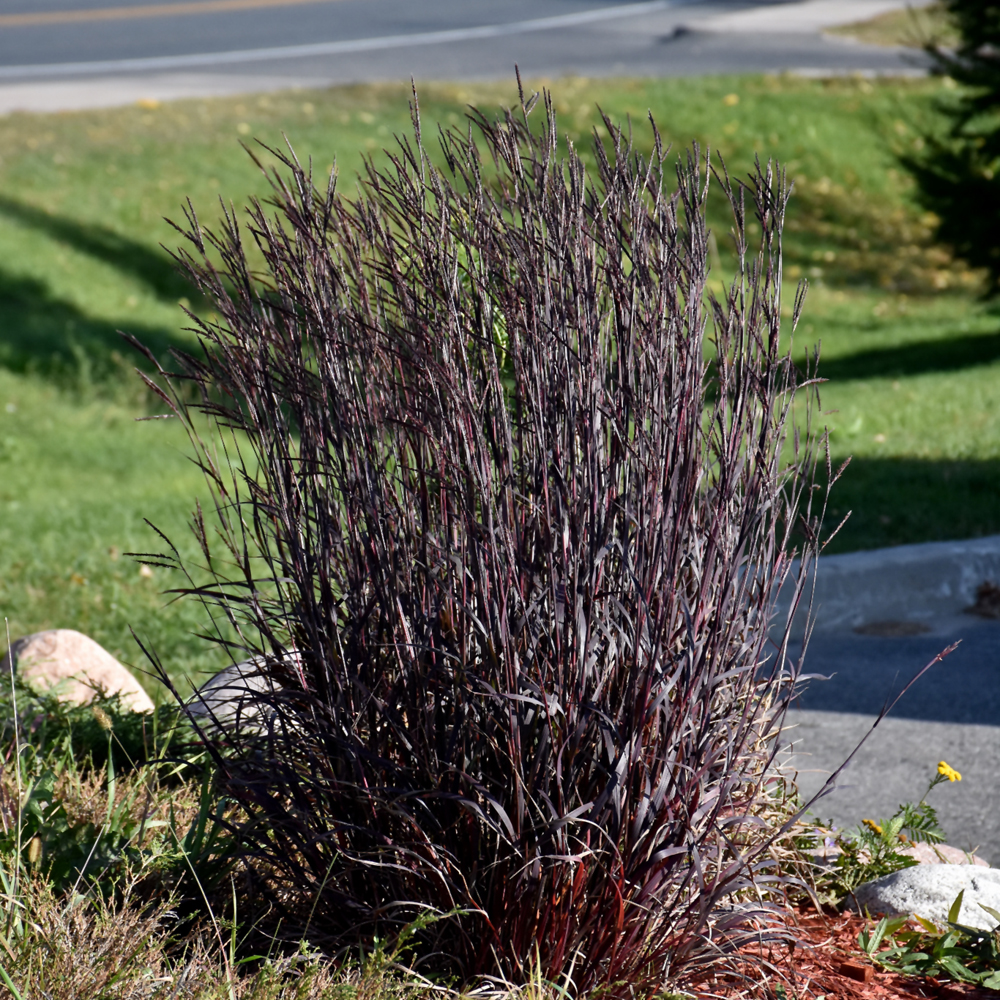
Another option for gardeners who love ornamental grasses with strong seasonal color is big bluestem.
‘Red October’ reaches approximately 5–6 feet with blooms. Its green foliage develops red coloration, creating an impressive vertical accent as the season progresses. It prefers full sun and dry to average soil, with flowers appearing around midsummer.
‘Blackhawks’ offers an entirely different look. Growing approximately 4–5 feet with blooms, its foliage develops striking purple coloration and provides beautiful fall interest. Like ‘Red October,’ it performs best in full sun with dry to average soil.
Feather Reed Grass (Calamagrostis)
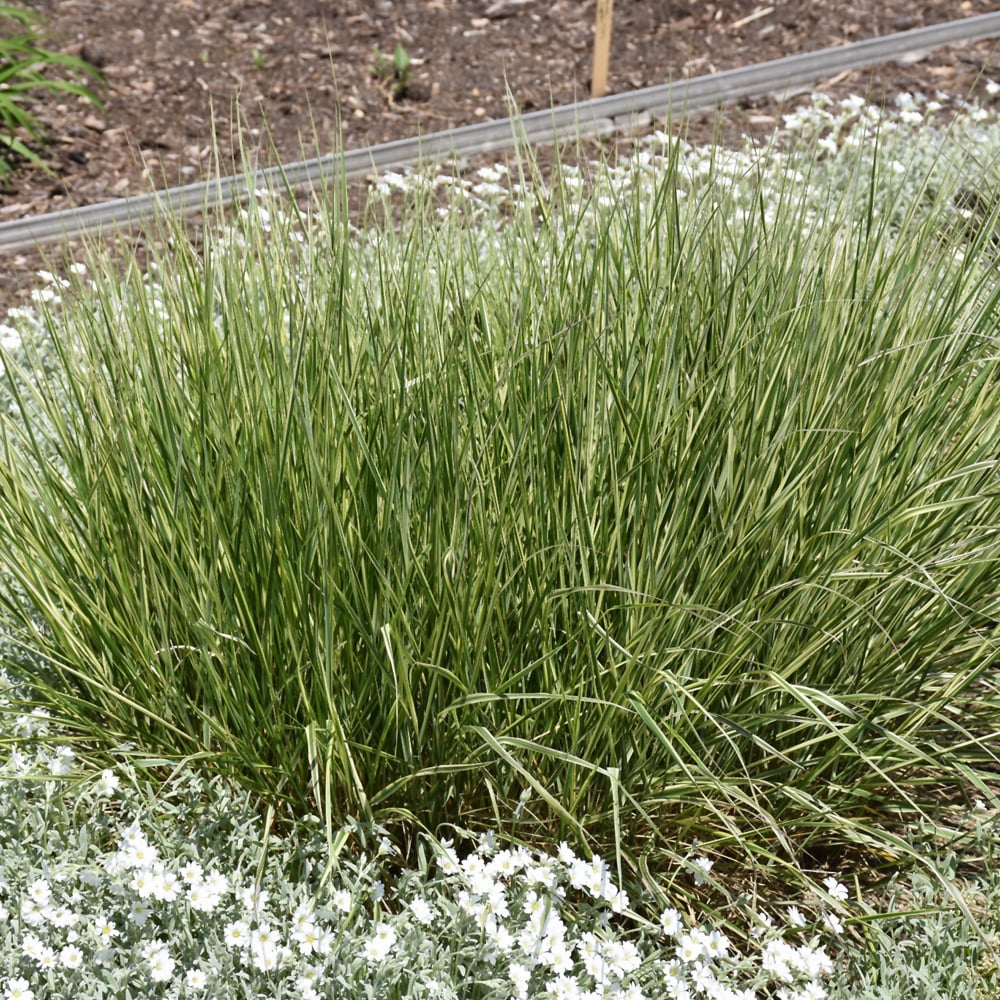
For a more upright, structured look, consider Calamagrostis.
‘Overdam’ grows to approximately 5 feet with blooms and features green-and-white variegated foliage. Its vertical habit makes it easy to work into perennial borders, foundation plantings and other areas where you want height without an especially wide footprint. It prefers full sun and tolerates soils ranging from dry to moist.
‘Cheju Do’ is another approximately 5-foot option with green-and-white variegated foliage. It also prefers full sun and can handle dry to moist conditions. Both varieties flower earlier than many of the warm-season grasses on this list, providing interest beginning in spring to late spring.
Looking for Something Smaller? Try Carex
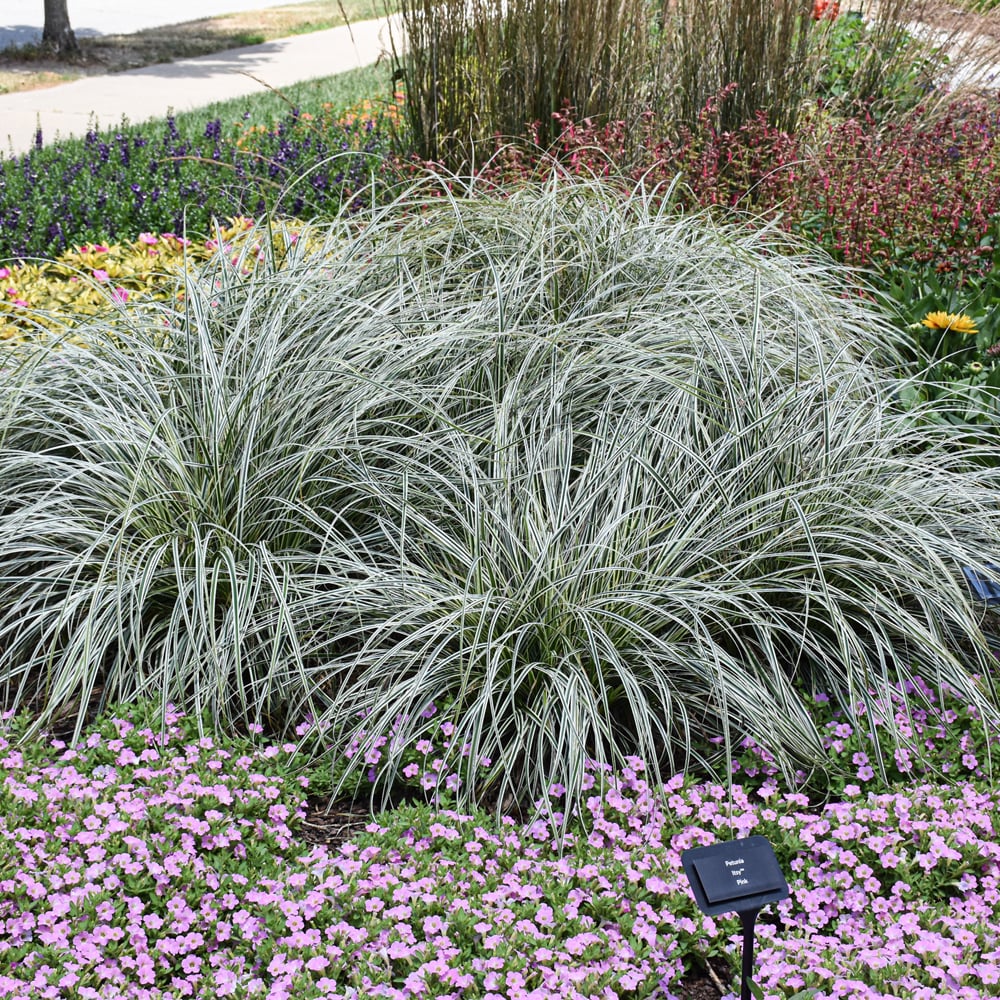
Not every ornamental grass needs to tower over the garden. For lower-growing texture—especially in areas with less sun—Carex offers a completely different way to bring a grassy look into the landscape.
Feather Falls™ grows to approximately 18 inches and has green-and-white variegated foliage. Unlike most of the taller grasses on this list, it prefers part shade and handles soil ranging from dry to moist.
EverColor® ‘Eversheen’ is even more compact at approximately 1 foot tall. Its lime-green variegated foliage can brighten partially shaded to shaded areas, and it tolerates dry to moist soil.
These smaller options won’t directly replace a 6- or 8-foot Miscanthus, but they’re worth considering anywhere you’re primarily looking for fine texture and movement rather than height.
Choosing the Right Grass for Your Garden
When replacing Miscanthus, start with the job you want the plant to do.
If height and screening are the priority, ‘Thundercloud’ or ‘Cloud Nine’ switchgrass are standouts, reaching around 8 feet with blooms.
For bold fall color, look at ‘Shenandoah,’ ‘Red October’ or ‘Blackhawks.’
If you prefer variegated foliage, ‘Overdam,’ ‘Cheju Do,’ Feather Falls™ and EverColor® ‘Eversheen’ provide several options at very different heights.
And if you’re planting in part shade or shade, the Carex varieties give you options where the sun-loving taller grasses may not be a good fit.
Above all, match your choice to the amount of sun, available space and soil moisture in the planting area. A grass that naturally suits your site will be easier to establish and much easier to enjoy for years to come.
A New Generation of Ornamental Grasses
Moving away from an old landscape favorite can feel limiting at first, but it can also be an opportunity. Today’s selection of ornamental grasses gives gardeners an incredible range of heights, colors, textures and habits to work with—all without relying on Miscanthus.
Whether you want the towering blue-green foliage of ‘Cloud Nine,’ the dramatic seasonal color of ‘Blackhawks,’ the variegation of ‘Overdam’ or a compact Carex for a shady corner, there are plenty of beautiful ways to get that ornamental-grass look.
Stop by your local Mahoney’s and explore our selection of ornamental grasses in person. Our team can help you compare varieties and find the right grass for the light, space and growing conditions in your garden.
FAQ
Why is Miscanthus being phased out in Massachusetts?
Miscanthus sinensis is being phased out because it can spread through seeds and rhizomes into natural areas, where it competes with surrounding vegetation. The Massachusetts Department of Agricultural Resources added it to the state’s Prohibited Plant List in December 2025.
When will Miscanthus sales end in Massachusetts?
New Miscanthus stock can no longer be imported or propagated in Massachusetts. Nurseries may sell qualifying existing inventory through December 31, 2026, after which sales of Miscanthus sinensis will be prohibited.
What are the best alternatives to Miscanthus?
Some of the best Miscanthus alternatives for Massachusetts gardens include switchgrass, big bluestem, feather reed grass and Carex. The right choice depends on the height, color, sunlight, soil moisture and screening needs of your planting area.
Which Miscanthus alternatives are best for height and privacy?
‘Thundercloud’ and ‘Cloud Nine’ switchgrass are excellent choices for height and screening. Both can reach approximately 8 feet tall with blooms, providing the tall, architectural appearance associated with larger Miscanthus varieties.
What ornamental grass alternatives grow in shade?
Carex varieties are well suited to areas with less sunlight. Feather Falls™ grows approximately 18 inches tall and prefers part shade, while EverColor® ‘Eversheen’ reaches about 1 foot and grows in partial shade to shade.