
Categories

Winter Plant Protection: Don’t Let Winter Catch Your Garden Off Guard

by Amanda Rose Newton, Ph.D.

Winter has a way of reminding us who’s really in charge of the garden. One day, the landscape is looking tidy and ready for its winter rest. A few snowstorms, gusty winds, and hungry rabbits later, and spring can reveal a very different picture. That’s why a little winter plant protection can make such a difference.

Last winter was a particularly unwelcome reminder for many New England gardeners. Evergreen shrubs emerged with browned foliage, heavy snow left branches bent or broken, and rabbits made meals out of plants that had taken years to establish. Unfortunately, some of that damage isn’t easily repaired, and replacing mature shrubs and young trees can be expensive.

The good news? Many common types of winter damage are preventable. With a little preparation and the right protection, you can help your plants weather the season and emerge ready for spring.

How Can You Protect Evergreens from Winter Burn?

It might seem strange to think of plants becoming dehydrated in the middle of winter, especially when the ground is covered in snow. But for evergreens, winter can be an especially thirsty season.

Unlike deciduous plants that shed their leaves, evergreens retain foliage throughout the year. Those leaves and needles continue to lose moisture, even during cold weather. When the ground freezes, roots may have difficulty replacing that lost water. Add drying winds and bright winter sunshine, and the result can be winter burn, also called winter desiccation.

Broadleaf evergreens such as boxwood, holly, and rhododendrons are particularly susceptible. The damage often appears as brown, dry, or scorched foliage, sometimes concentrated on the side facing prevailing winds or winter sun.

One of the simplest ways to help prevent winter burn is to make sure plants enter winter well hydrated. Continue watering during dry fall weather, particularly for newly planted trees and shrubs, until the ground freezes. Water deeply and slowly so moisture reaches the root zone rather than simply wetting the soil surface. A layer of mulch can also help conserve soil moisture and moderate temperature fluctuations, but keep it a few inches away from trunks and stems.

For plants in especially exposed locations, an anti-desiccant such as Wilt Stop may offer additional protection by helping reduce moisture loss from foliage. These products should be applied according to label directions, paying particular attention to temperature requirements and plant suitability.

A little attention to watering in autumn can go a long way toward keeping evergreens healthy through winter.

Can Burlap Protect Shrubs from Wind and Heavy Snow?

A blanket of snow can be a welcome sight in the garden, especially when it insulates roots and protects low-growing plants from temperature extremes. But when snow piles up on branches or winter winds whip through exposed shrubs, that same season can become a little less friendly.

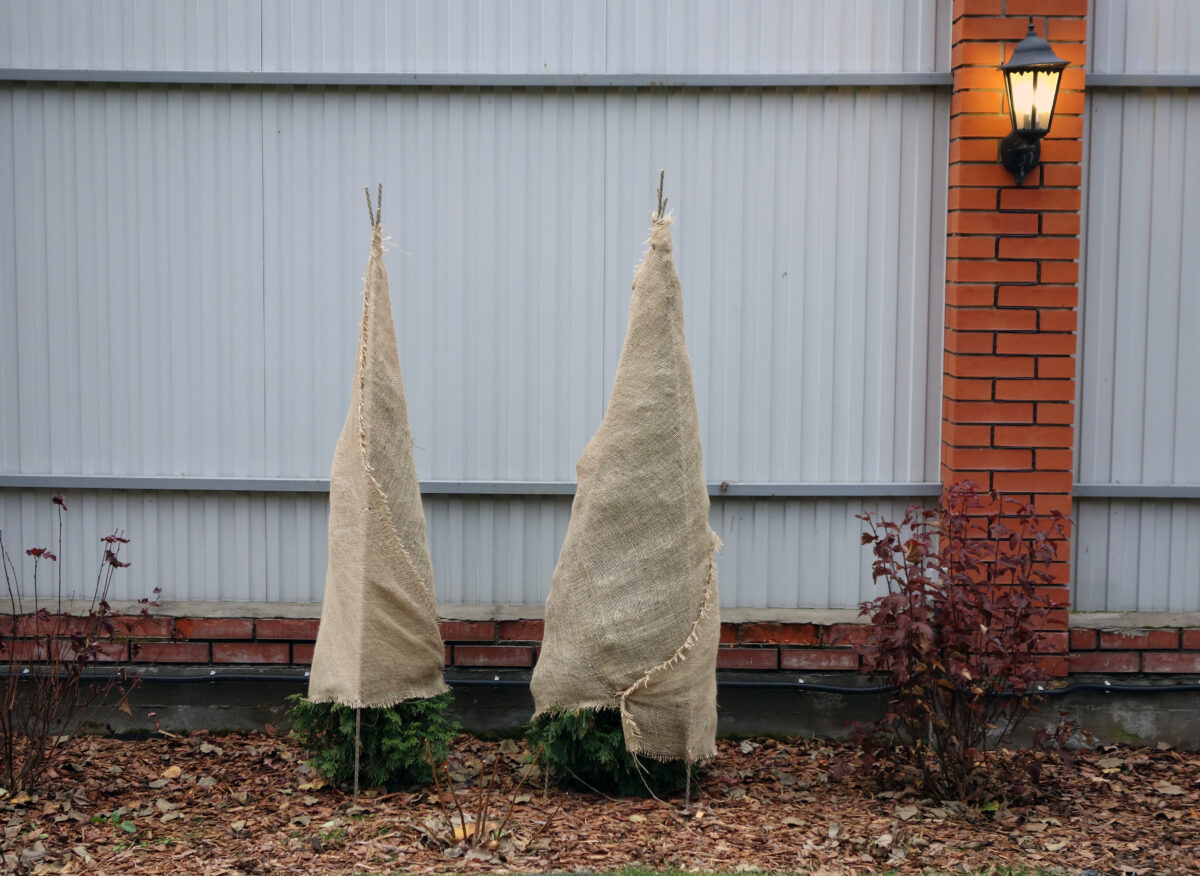
Burlap is a simple way to give vulnerable plants some breathing room. For shrubs exposed to strong winds, create a protective screen by securing burlap to sturdy stakes placed around the plant. Leave space between the burlap and foliage to allow air to circulate. Think of it as a windbreak rather than a winter coat!

winter plant protection with burlap

Heavy snow requires a different approach. While many shrubs can tolerate ordinary snowfall, wet, heavy snow can bend branches out of shape or cause them to break, particularly on evergreens with dense foliage. Plants growing beneath rooflines are especially vulnerable when snow or ice slides off above them.

For these situations, a sturdy A-frame or similar protective structure can help keep falling snow from landing directly on vulnerable branches. Burlap can be secured over the frame as a covering, but it’s the support underneath that does the heavy lifting.

And what if the snow has already arrived? Resist the temptation to shake frozen branches or knock off ice. Brittle branches can break under the pressure. Loose snow can be gently brushed away when safe to do so, but ice-covered branches are best left to thaw naturally.

How Can You Protect Your Plants from Hungry Winter Wildlife?

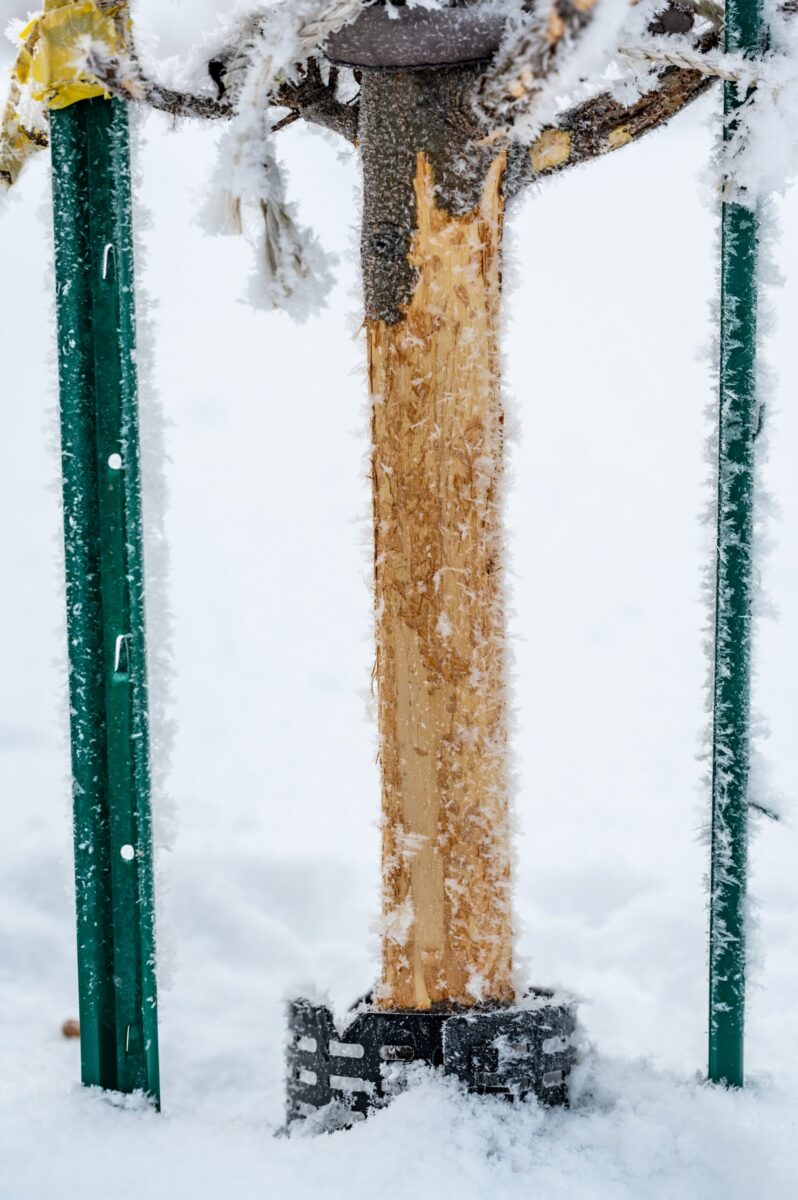
Rabbit damage on young tree bark in a snowy landscape

Winter can be a difficult season for wildlife, too. As grasses, tender shoots, and other familiar food sources disappear beneath snow, animals must make do with what’s available.

Unfortunately, sometimes what’s available is your landscaping.

Rabbits are among the most common culprits. When other food becomes scarce, they may turn to the bark, buds, and twigs of young trees and shrubs. Their feeding can leave stems neatly clipped or bark stripped from trunks.

If rabbits strip bark all the way around a trunk, they can interrupt the movement of sugars through the plant. This damage, called girdling, can eventually kill the tree.

And here’s something gardeners sometimes overlook: rabbits get taller in winter!

Well, not exactly. But a rabbit standing on two feet of accumulated snow can reach branches and bark that would have been safely out of reach in November. A protective barrier that seems tall enough in fall may become considerably less effective after a heavy snowfall.

Vinyl tree guards and cylinders of hardware cloth can help protect the trunks of young trees from chewing. Hardware cloth should be installed with enough space to avoid rubbing against the trunk and should extend high enough to account for anticipated snow accumulation.

Chicken wire supported by stakes can also be used to surround vulnerable shrubs and prevent rabbits from reaching tender stems. Make sure the barrier is securely anchored so animals cannot simply squeeze underneath it.

Rabbits aren’t the only winter visitors worth considering.

Rabbit feeding on tree bark in winter, causing trunk damage above the snow.

Deer may browse on evergreen foliage, buds, and woody stems when other food becomes less available. Arborvitae, yews, and other landscape favorites can be especially tempting. Deer may also damage young trees by rubbing their antlers against trunks.

Because deer can reach much higher than rabbits, short protective fences usually aren’t sufficient. Taller, appropriately designed fencing or individual plant enclosures may be necessary where deer pressure is significant.

And don’t forget voles! These small rodents may feed on bark near the base of young trees, sometimes beneath the snow where their activity goes unnoticed until spring. Fine-mesh hardware cloth barriers can help protect vulnerable trunks.

The key is matching the protection to the animal. A barrier that works beautifully against rabbits may do little to discourage a hungry deer.

When Should You Start Protecting Your Garden for Winter?

 The best time to think about winter protection is before the weather makes the job difficult.

Once the ground freezes, stakes become harder to install, snow can conceal vulnerable plants, and opportunities to apply protective sprays may be limited.

Start by taking a walk through your garden and identifying plants that might need a little extra attention.

Newly planted trees and shrubs, broadleaf evergreens, plants in exposed locations, and specimens that suffered damage last winter are all good candidates.

A few simple steps can make a big difference:

  • Water vulnerable evergreens during dry fall weather, continuing as appropriate until the ground freezes.

  • Apply Wilt Stop to suitable plants according to label directions and recommended weather conditions.

  • Install burlap windbreaks around exposed shrubs before winter winds become a problem.

  • Protect young trunks and shrubs with tree guards, hardware cloth, or chicken-wire barriers before hungry animals discover them.

Remember that protection should help plants survive winter without creating new problems. Avoid tightly binding foliage, trapping excess moisture against trunks, or leaving guards in place indefinitely without checking for rubbing and plant growth.

A Little Protection Now Goes a Long Way

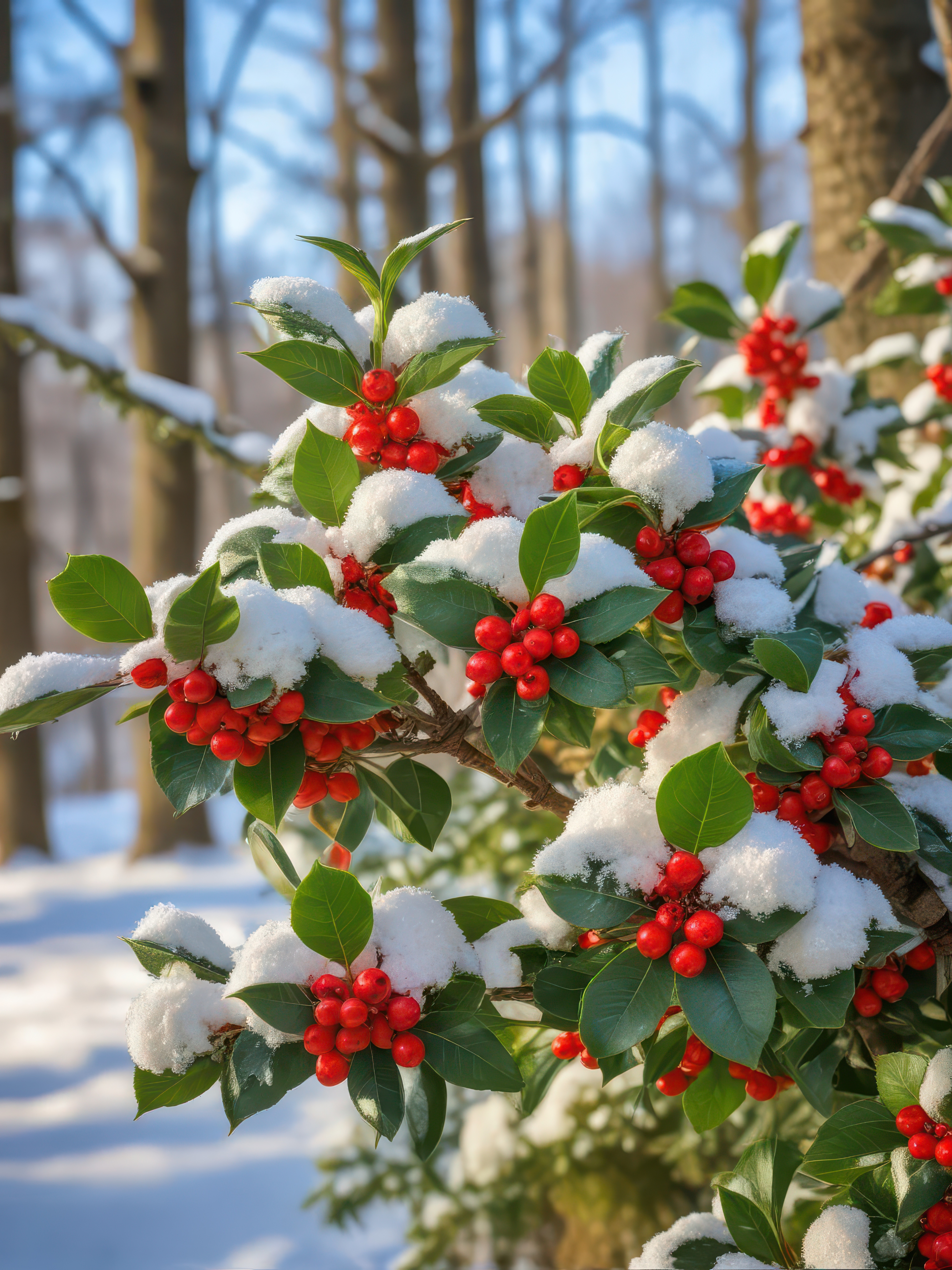
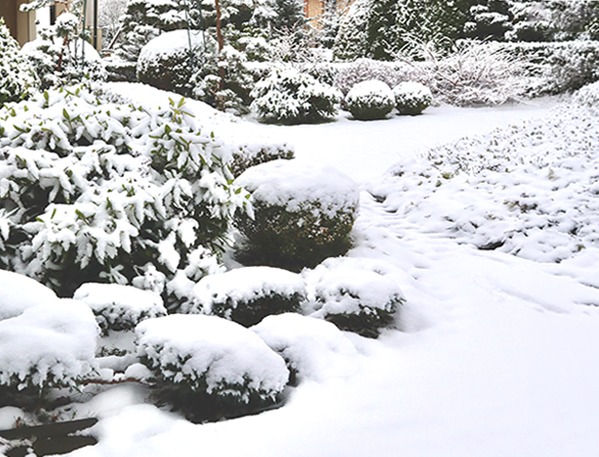
Snow-covered shrubs and evergreen plantings blanketed after a winter storm in a landscaped yard.

Winter will always bring a few surprises. That’s part of gardening in New England! But brown evergreens, broken branches, and bark-stripped trees don’t have to be among them.

A little preparation now can save a lot of disappointment when the snow melts. After all, spring is much more enjoyable when you’re admiring new growth instead of calculating replacement costs.

Stop by your local Mahoney’s Garden Center for Wilt Stop, burlap, tree guards, and other winter protection supplies. Our team can help you choose the right approach for your landscape.

Frequently Asked questions about winter plant protection

Should I wrap my shrubs completely in burlap?

Not necessarily. A burlap screen supported by stakes is often preferable to wrapping material tightly against foliage. The goal is to reduce exposure to drying winds while maintaining airflow. Snow protection may require a separate, sturdier support structure.

How tall should rabbit fencing be?

Rabbit fencing should generally be at least 2–3 feet tall, but remember that accumulated snow can allow rabbits to reach over it. In areas with heavy snowfall, taller barriers may be necessary. Secure the bottom to prevent rabbits from slipping underneath.

Does Wilt Stop prevent all winter damage?

No. Wilt Stop is designed to help reduce moisture loss from foliage. It does not prevent broken branches, animal feeding, or every type of cold injury. It works best as part of a broader winter protection strategy.

Can winter-damaged evergreens recover in spring?

Sometimes! The extent of recovery depends on the plant and severity of injury. Brown foliage may not regain its color, but healthy buds and stems can produce new growth. Wait until spring growth begins before making major pruning decisions, unless branches are broken or pose a safety hazard.