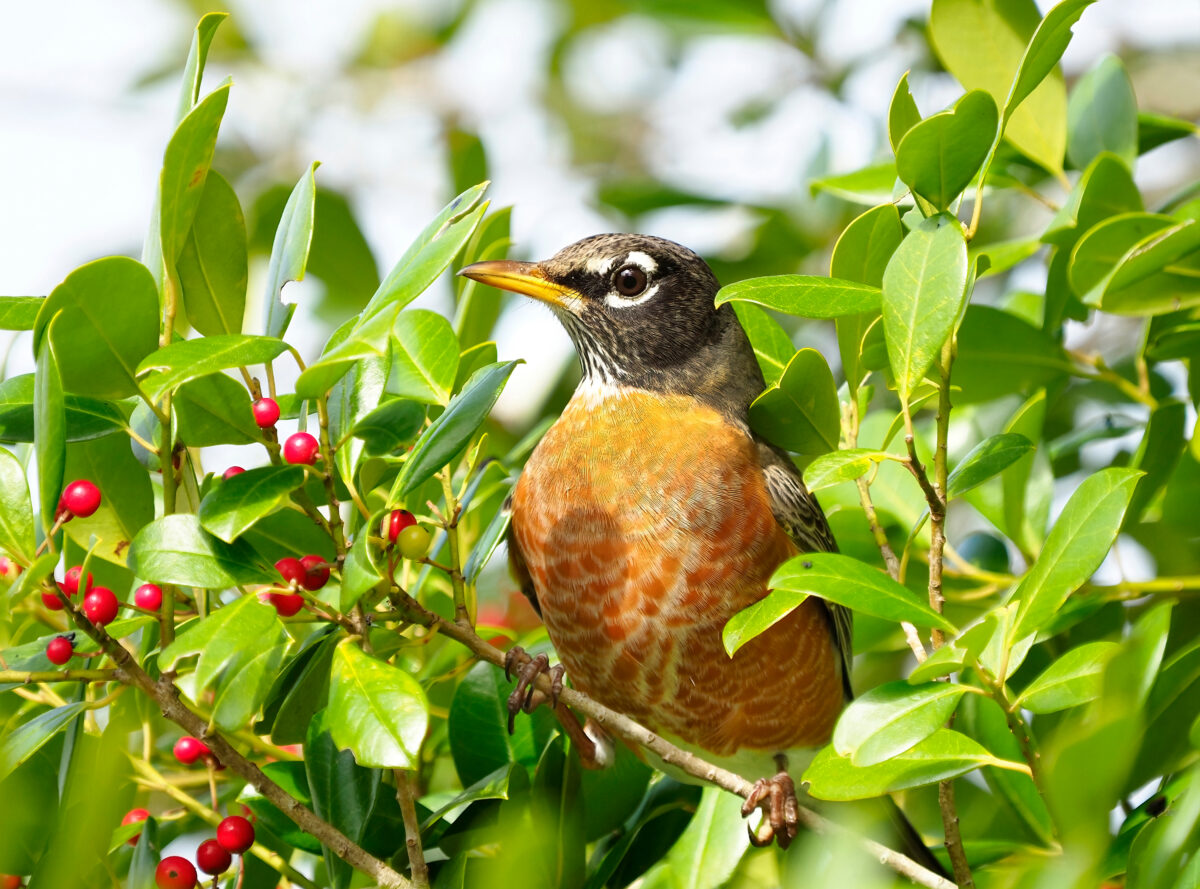
If your bird feeder is the busiest spot in the yard, imagine what could happen if the rest of the landscape joined in. Bird feeders are a great way to bring feathered visitors closer, but some of the best bird food does not come in a bag. Berries, seeds, acorns, and even the insects living on our plants can turn an ordinary garden into a year-round destination. In New England, that might mean blueberries and elderberries in summer, viburnums and crabapples as the seasons change, bright winterberries after the leaves have fallen, and an evergreen waiting nearby when it’s time to get out of the weather.
The best part? Planting for the birds usually means planting a more interesting garden for us, too.
What Should You Plant to Feed the Birds?
Berries are a great place to start, and luckily for us, many berry-producing plants bring plenty of ornamental appeal to the garden, too.
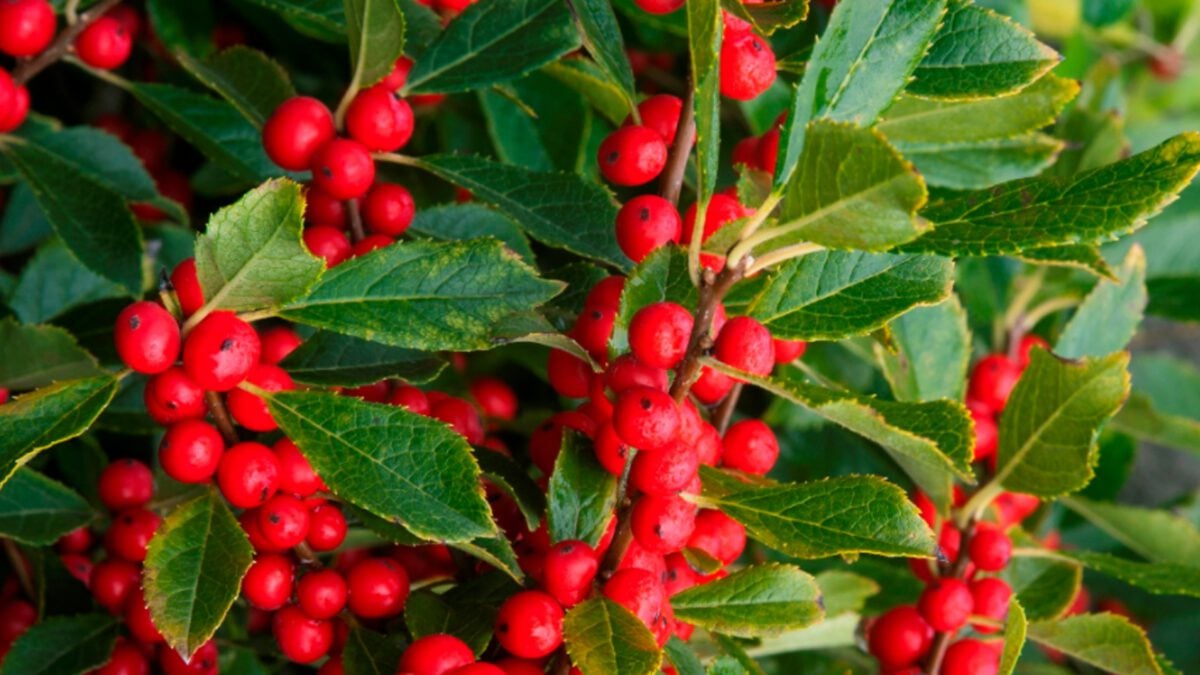
Winterberry (Ilex verticillata) is hard to beat for winter interest. Once the leaves drop, the bright berries finally get their chance to show off. They can also provide food for birds during a season when the garden has considerably less to offer.
There is one catch. Winterberry is dioecious, meaning male and female flowers grow on separate plants. If you want berries on the female plants, you’ll need a compatible male blooming nearby at the same time.
Blue holly (Ilex × meserveae) is another great multitasker. Its dense evergreen foliage provides cover, while the berries offer extra food. Like winterberry, you’ll generally need compatible male and female plants to get berries.
And don’t stop with the hollies. There are plenty of other bird-friendly plants worth finding room for:
- Elderberry (Sambucus spp.) produces clusters of summer fruit that birds love.
- Viburnum (Viburnum spp.) produces flowers followed by fruits for birds.
- Blueberry (Vaccinium spp.) may turn berry season into a race between you and your feathered neighbors. Consider planting enough to share!
- Serviceberry (Amelanchier spp.) begins with spring flowers, followed by early-summer fruit.
- Aronia (Aronia spp.) offers berries for wildlife along with excellent fall color.
- Dogwood (Cornus spp.) can provide fruit, structure, and plenty of seasonal interest.
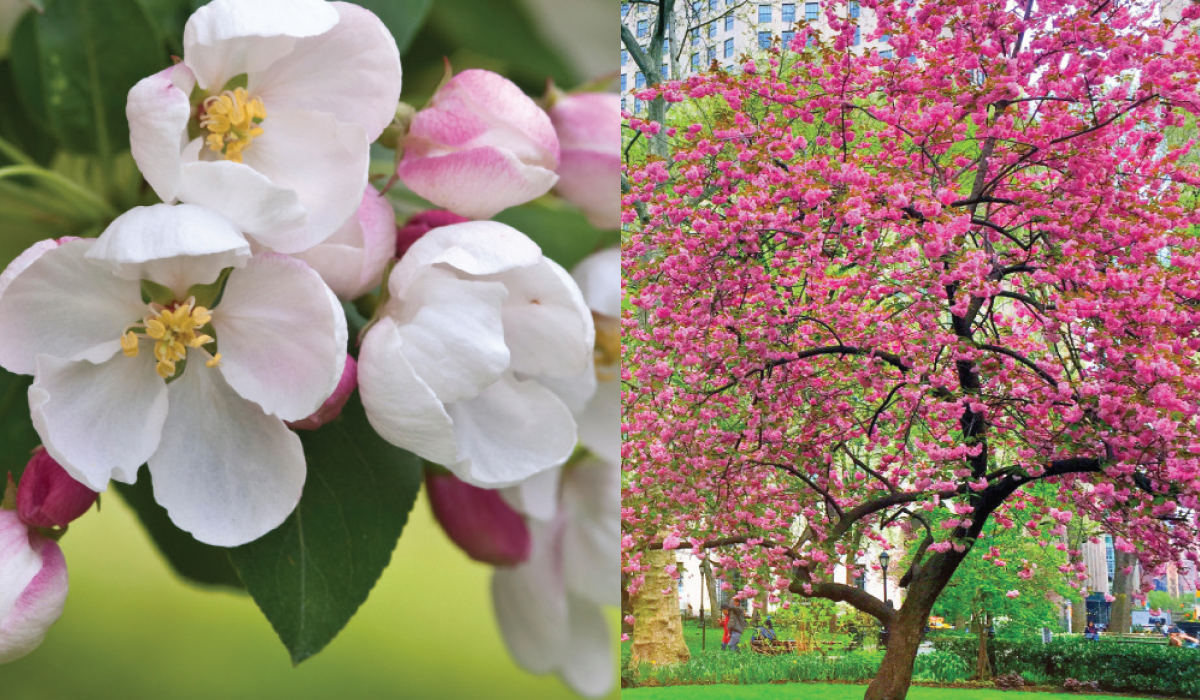
- Crabapple (Malus spp.) brings spring flowers to the garden, and varieties with persistent fruit can keep interest long after flowering ends.
Choosing several different plants helps keep something on the menu as the seasons change.
Not Every Great Bird Plant Has Berries
This is where things get a little more interesting.
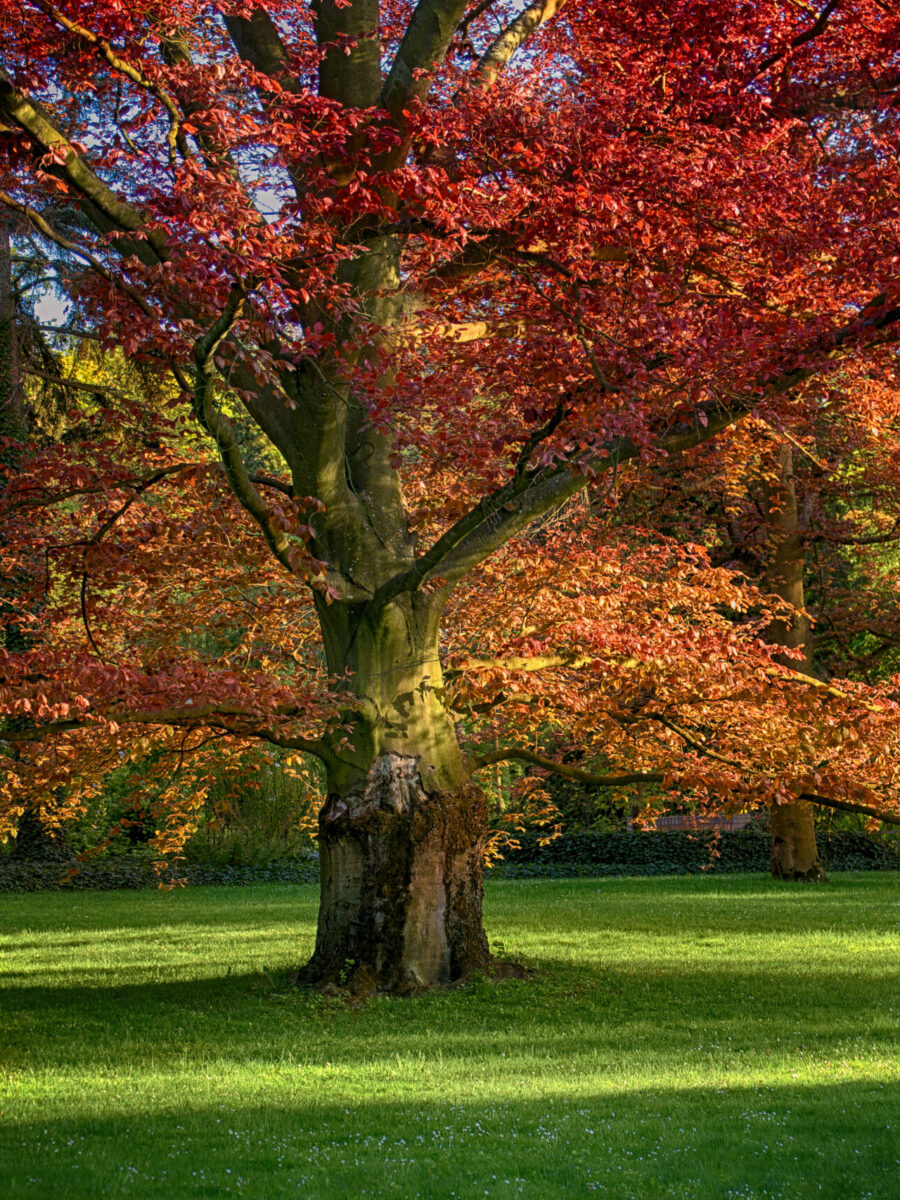
Oaks (Quercus spp.) might not be the first plants that come to mind when planning a garden for birds. Acorns are an obvious wildlife food, but there is much more happening in those branches than meets the eye.
Oaks support an incredible diversity of insects, including caterpillars. Those caterpillars become especially important when birds are raising young.
Even birds that happily visit a feeder for seeds may spend nesting season hunting for insects to feed their chicks. A berry-filled garden is wonderful, but if you want baby birds around, it helps to think about what is feeding the insects that feed the chicks!
This is one reason native plants can be such valuable additions to a bird-friendly landscape.
Supporting the insects that belong in the local food web ultimately puts more food on the birds’ menu, too.
What Plants Provide the Best Shelter for Birds?
A good restaurant is even better when a safe place to hang out is nearby.
Food may bring birds into the garden, but trees and shrubs give them places to hide from predators, escape bad weather, roost, and potentially raise a family.
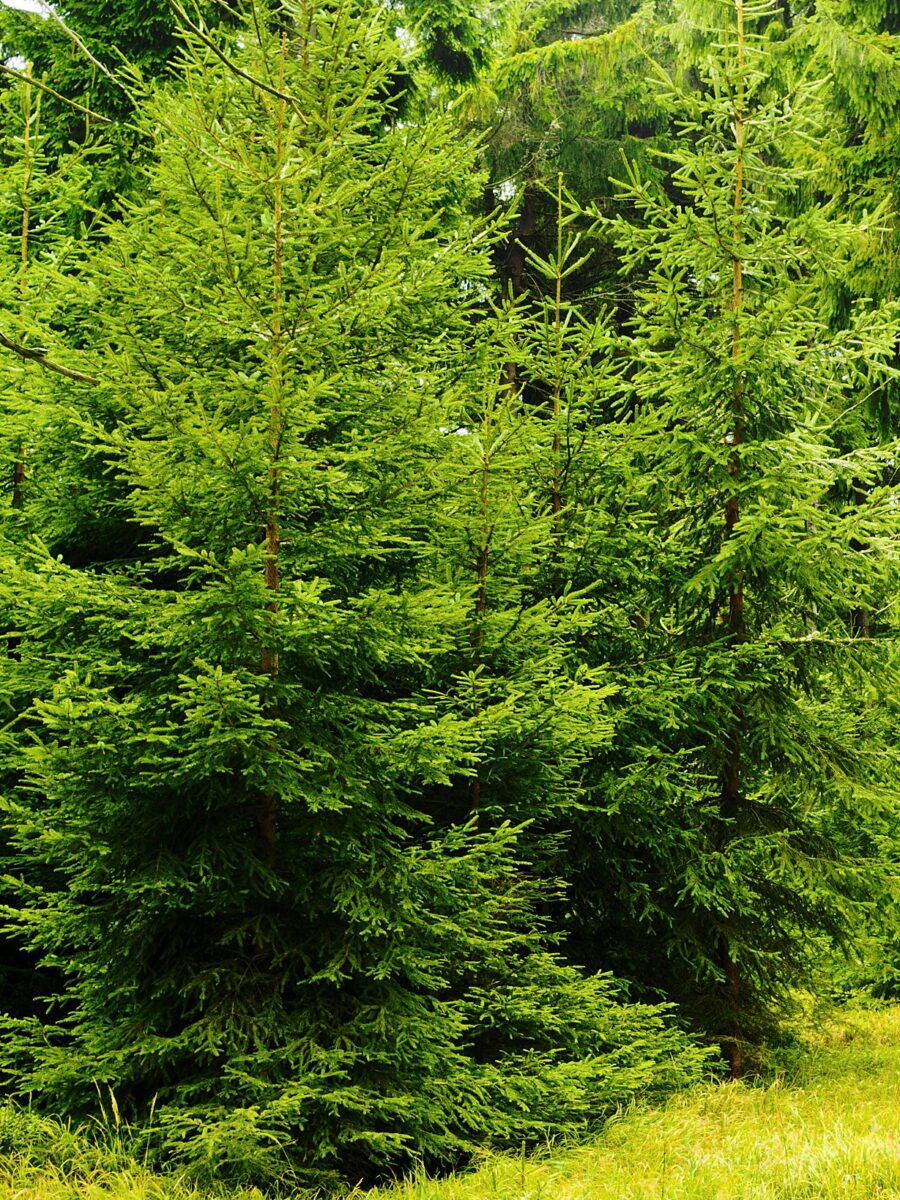
This is where conifers really shine. Spruce, fir, pine, hemlock, arborvitae, and other evergreens provide year-round foliage where birds can duck out of the wind, snow, or sight of a hungry predator. That cover becomes particularly valuable during a New England winter when deciduous trees and shrubs have dropped their leaves.
Dense shrubs offer plenty, too. Hollies and viburnums are especially useful because they can provide both food and cover.
If space allows, think in layers rather than planting everything at one height. Tall trees, understory trees, shrubs, perennials, and lower vegetation create different places for different birds to feed, hide, and nest.
You don’t need acres to make it work. Even a small grouping of shrubs can create a protected pocket where a chickadee can disappear.
How Can You Make Your Garden More Bird-Friendly?
Here is your official permission to put off a little garden cleanup.
Those coneflower, black-eyed Susan, aster, and sunflower seed heads do not need to disappear as soon as the flowers fade. Leave some standing and they become natural bird feeders, especially for seed-eating visitors such as finches and sparrows.
Fallen leaves are useful, too. The leaves themselves aren’t necessarily dinner, but all the tiny creatures living in and underneath them can be. Leaf litter provides habitat for insects and other invertebrates, creating another place for birds to forage.
Dead wood also has value. Where it is safe to leave one standing, a dead tree, or snag can become a perch, feeding site, or even a nesting spot for woodpeckers and other cavity-using birds. Of course, any dead or damaged tree that could fall on a person, building, road, or other target should always be evaluated for safety.
Sometimes what we leave behind in the garden is just as important as what we plant.
The bird feeder doesn’t have to be the only busy spot in the yard.
Add something that berries, something that seeds, something that shelters, and something that supports insects. You don’t have to create a wildlife sanctuary overnight. Each new plant simply gives the birds one more reason to stick around.
And before long, you may find that the best bird feeder in your yard is the garden itself.
Frequently Asked Questions About Planting for Birds
What are some of the best plants for attracting birds in New England?
There isn’t one perfect bird plant. A mixture of berry-producing shrubs, deciduous trees, conifers, and seed-producing perennials provides food and shelter at different times of year. Winterberry, blue holly, elderberry, viburnum, blueberry, serviceberry, crabapple, oak, and conifers are all great places to start.
Do I need both male and female winterberry plants to get berries?
Yes. Winterberry is dioecious, meaning male and female flowers grow on separate plants. You’ll need a compatible male blooming at the same time to pollinate female plants and produce berries. One male can generally pollinate multiple nearby female plants.
Are native plants better for birds?
Native plants can be especially valuable because of their relationships with the insects and other wildlife found in the region. Since insects, particularly caterpillars, are an important food source for many nesting birds, including native plants can help support more of the food web.
Do birds need a water source in the garden?
Yes. Birds need water to drink and bathe throughout the year. A shallow birdbath with secure footing is an easy addition, especially if you clean it regularly. During a New England winter, a heated birdbath or birdbath heater can help keep water available when other sources freeze.
Ready to put out the welcome mat for the birds? Stop by Mahoney’s and let us help you find trees, shrubs, evergreens, and perennials that work for your landscape and give New England birds plenty of reasons to stop by.