
by Amanda Rose Newton, Ph.D.
As autumn settles into New England, most gardeners are preparing their gardens for winter. Perennials are winding down, leaves are piling up, and the first frosts are making themselves known. But what about the garden beneath the water’s surface?
Water can be one of a pond plant’s greatest defenses against winter cold, since they insulate living tissues from freezing temperatures. Yet too much water, or water that’s too cold, can spell trouble for plants that are not adapted to those conditions. Some aquatic plants retreat into dormancy beneath the ice, others tolerate freezing along the shoreline, and a few would much rather spend winter indoors.
The trick to overwintering pond plants is not to treat everything the same way. It’s understanding which plants can weather a New England winter and which might need a little help.
How Do You Prepare Your Pond for Winter?
Pond winterization begins before the surface freezes. As water temperatures drop in autumn, hardy aquatic plants slow their growth and prepare for dormancy.
This is a good time to tackle a few maintenance tasks.
Remove fallen leaves and debris. Leaves that accumulate in the water eventually sink and decompose, contributing excess organic material that can affect water quality. A good pond net can help keep falling leaves out in the first place.
Trim dying vegetation. Remove yellowing, collapsing, or decaying leaves to reduce decomposition beneath the ice. Healthy stems may be left standing.
Stop fertilizing. As growth slows, aquatic plants no longer need the nutrients they required during the growing season.
Check pumps and equipment. Follow manufacturer recommendations for winterizing pumps, filters, and other pond equipment, particularly in shallow ponds where freezing may cause damage.
Consider your fish. If you have those! If fish remain outdoors, maintaining an opening in the ice for gas exchange is important.
How Deep Should Pond Plants Be for Winter?
One of the most common recommendations for overwintering pond plants is to move them into deeper water. Unfortunately, “deeper” can mean very different things depending on the pond and the plant.
Many backyard ponds have shallow planting shelves around their edges, with deeper water toward the center. A pond might be 30 inches deep at its lowest point, while a plant sitting on a shelf has only 6 inches of water above its container.
That difference matters when temperatures fall below freezing.
Shallow water (6–12 inches): Common along pond edges and planting shelves. These areas are more vulnerable to freezing during prolonged cold weather.
Deeper water (24–36 inches): Often provides a more protected environment for certain hardy plants, provided their crowns and rhizomes remain below the expected ice depth. These measurements aren’t a guarantee against freezing.
Planting depth: The distance from the water surface to a plant’s crown or growing point, rather than the bottom of its container.
A hardy water lily may benefit from being lowered into deeper water for winter, while a marginal plant adapted to shallow water may not tolerate having its crown submerged several feet beneath the surface.
So, deeper isn’t automatically better! The right winter location depends on the species, the pond’s freezing conditions, and how the plant naturally grows.
Should You Sink It, Trim It, or Bring It Inside?
Not all aquatic plants follow the same winter survival strategy. Some rely on underground energy reserves, others tolerate freezing conditions along pond edges, and tropical species may need an entirely different arrangement.
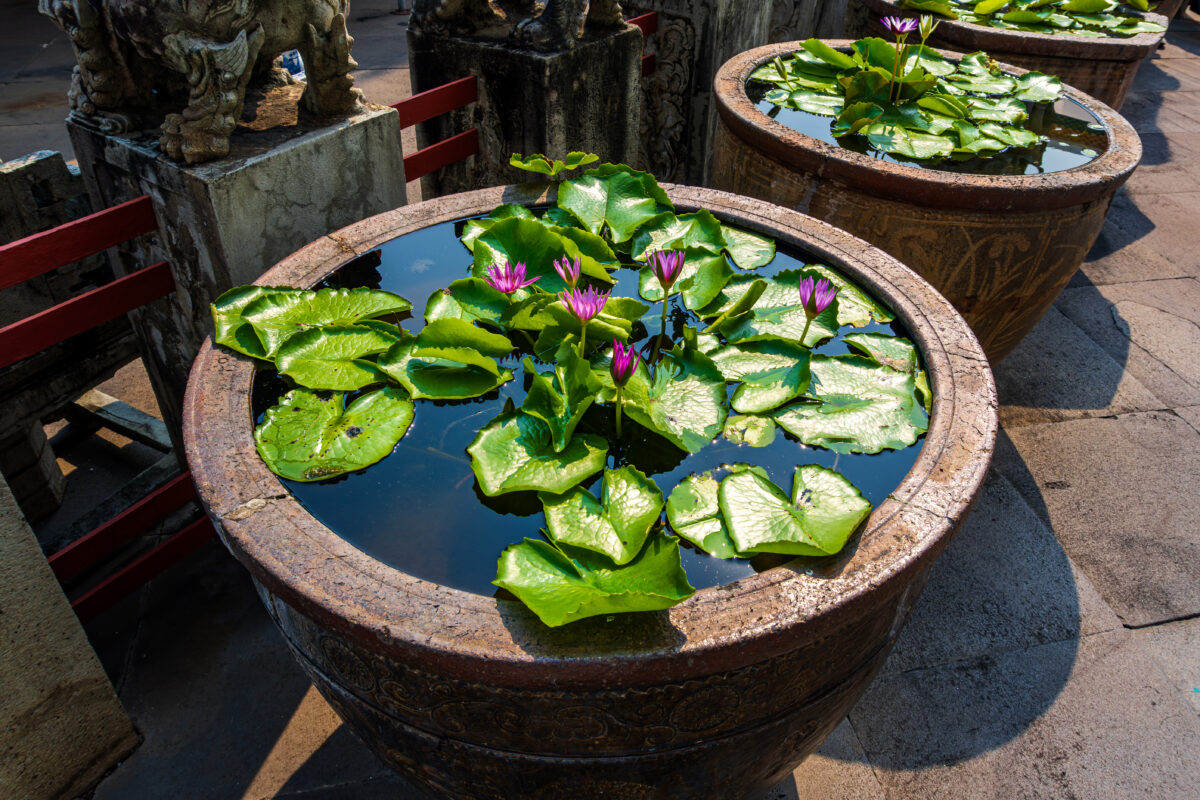
Hardy Water Lilies
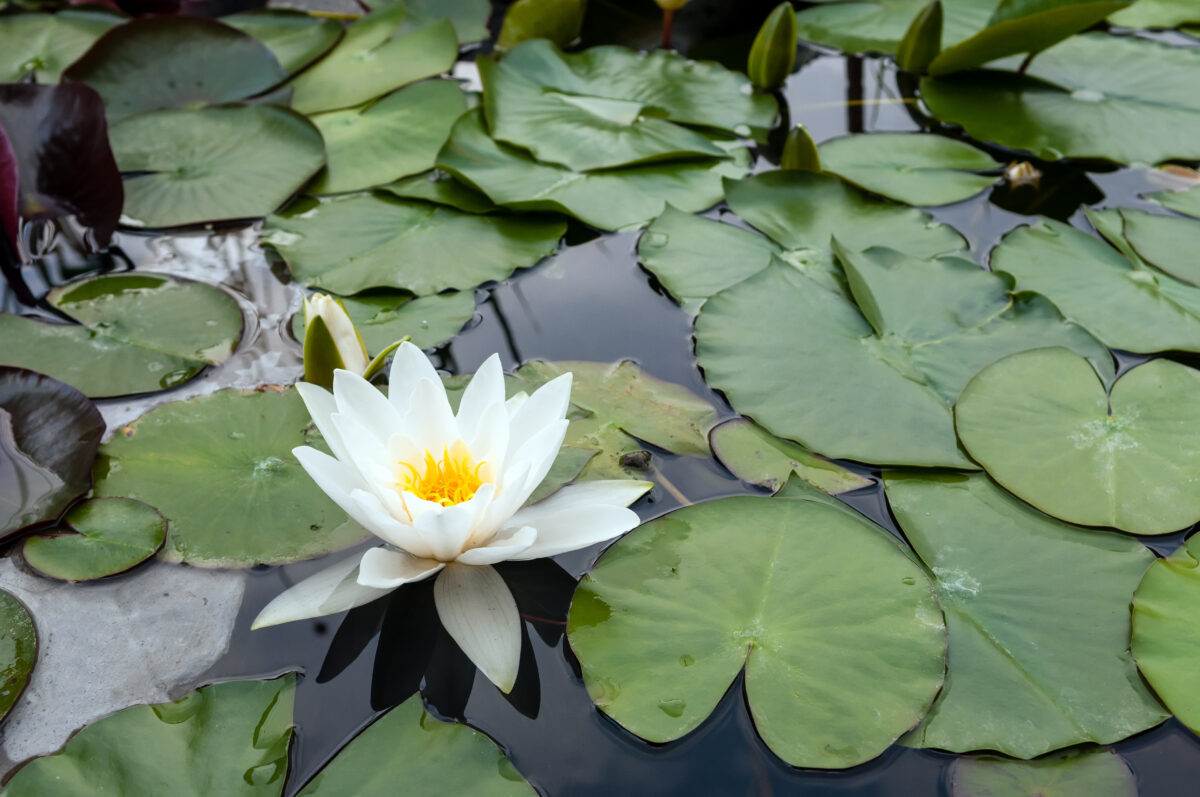
Hardy water lilies (Nymphaea) are well adapted to cold winters. Their floating leaves and flowers die back as temperatures drop, but their rhizomes remain alive beneath the water.
Think of the rhizome as a botanical savings account. During the growing season, sugars produced through photosynthesis are stored as starch in the rhizome. Come spring, the plant draws on those reserves to fund its first flush of new growth!
What to do in fall: Remove dying leaves and spent flowers. If the lily is growing in shallow water, move its container below the expected ice depth.
Where it spends winter: Hardy water lilies can usually remain in a sufficiently deep pond as long as their crowns and rhizomes do not freeze. In ponds that freeze to the bottom, protected, cool, frost-free storage may be necessary, with rhizomes kept moist.
Varieties such as ‘Attraction’ and ‘Madame Wilfron Gonnere’ can return year after year with appropriate winter care.
Hardy Marginal Plants
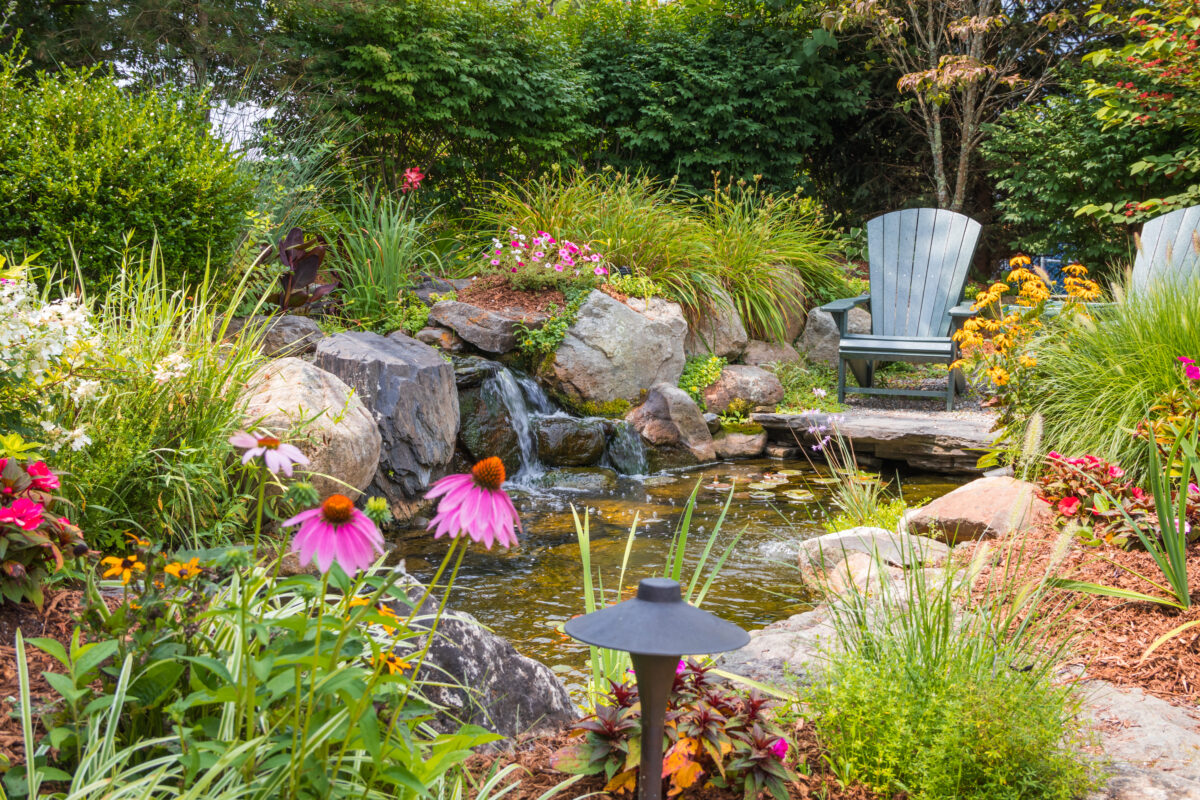
Marginal plants grow along pond edges, where their roots remain wet but much of their foliage extends above the water. Native blue flag iris (Iris versicolor), pickerelweed (Pontederia cordata), rushes, horsetails (Equisetum Hyemale) and many sedges are adapted to the seasonal conditions of northern wetlands.
However, surviving a frozen shoreline isn’t the same as surviving months beneath several feet of water.
What to do in fall: Remove collapsing foliage and check the species’ cold hardiness. Some standing stems can be left in place for wildlife habitat.
Where they spend winter: Many hardy marginal plants can remain on their planting shelves, particularly when their crowns are positioned at appropriate depths. Some species naturally tolerate frozen soil, while less hardy container-grown plants may need additional protection.
Avoid automatically moving every marginal plant to the bottom of the pond. Their natural growing conditions are a better guide than a one-size-fits-all rule.
Tropical Water Lilies
Tropical water lilies may look similar to their hardy relatives, but their winter survival strategies are very different.
What to do in fall: Remove tropical water lilies before damaging cold arrives. Depending on the variety, they may be maintained as growing plants or allowed to form storage tubers.
Where they spend winter: Growing plants require warm water and adequate indoor lighting. Suitable dormant tubers can be stored using variety-specific methods that prevent drying and rotting.
Unlike hardy water lilies, tropical varieties generally cannot simply be lowered into deeper outdoor water and forgotten until spring.
Tropical Marginal Plants
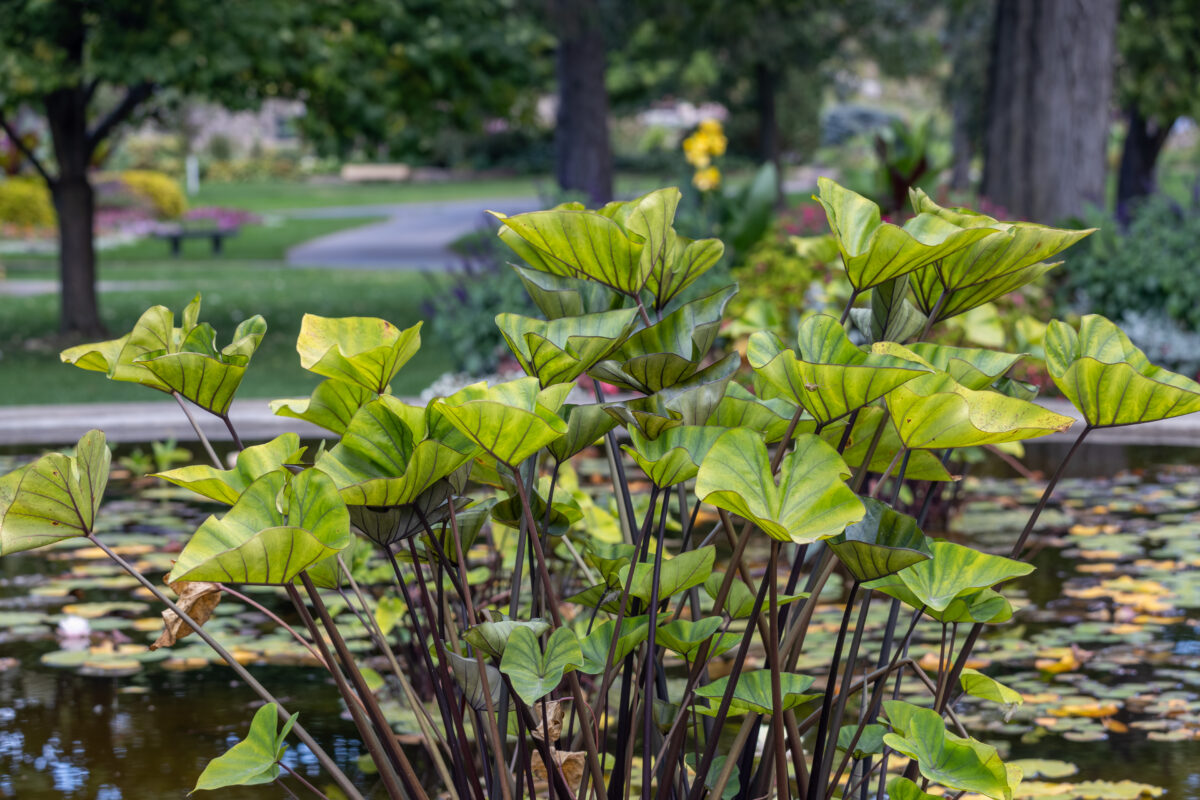
Elephant ears (Colocasia) and tropical papyrus (Cyperus papyrus) bring dramatic foliage and height to summer water gardens, but they aren’t equipped for a New England winter outdoors.
What to do in fall: Move plants indoors before frost damages tender growth. Remove dead or damaged foliage and inspect for insects.
Where they spend winter: Papyrus can be maintained in a bright, frost-free location with consistently moist roots. Some elephant ears can be kept growing indoors, while others can be stored as dormant tubers.
The best method depends on the species and whether you have the space and lighting to maintain active growth.
Floating Pond Plants
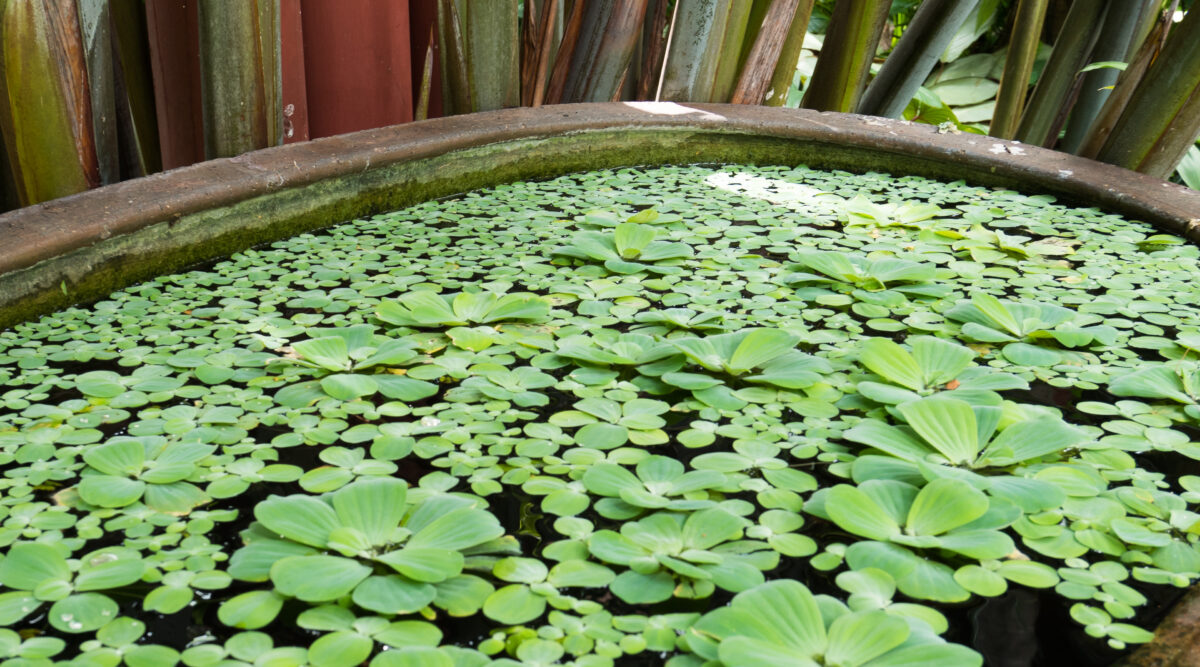
Water lettuce (Pistia stratiotes) is a floating plant that provides shade and absorbs nutrients from pond water. Unfortunately, they aren’t cold hardy in New England.
What to do in fall: Remove these plants before freezing temperatures cause them to collapse and decompose in the pond.
Where they spend winter: They can sometimes be maintained in warm indoor water gardens or aquariums with strong lighting, but overwintering can be challenging. Many gardeners treat them as seasonal plants and replace them in spring.
While it may be tempting, it is never a good idea to release floating plants in local waterways. Some aquatic ornamentals can become invasive when introduced outside their intended growing environments.
Will Your Pond Plants Come Back in Spring?
One of the remarkable things about hardy aquatic plants is how thoroughly they can disappear during winter.
A water lily that covered the pond with leaves in August may show almost nothing above its planting container by December. Beneath the surface, however, its rhizome is still alive, conserving energy until conditions improve.
As daylight increases and water temperatures rise, new shoots begin to emerge. Marginal plants send up fresh foliage, and water lily leaves begin their journey back toward the surface.
Resist the temptation to declare a dormant plant dead too early! Water warms much slower than air, and aquatic plants may take their time responding to spring weather.
With a little patience, you’ll soon have a front-row seat to another growing season, this time from the water’s edge.
Getting your water garden ready for winter? Stop by one of our seven locations for advice on caring for your aquatic plants and keeping your pond looking its best from one growing season to the next.
Frequently Asked Questions About Overwintering Pond Plants
Can pond plants survive winter in New England?
Many hardy aquatic plants can survive New England winters if their roots and rhizomes are appropriately protected. Tropical pond plants generally need to be brought indoors or treated as seasonal additions.
How deep should pond plants be during winter?
Hardy water lilies often overwinter successfully when their crowns remain below the expected ice depth. In many garden ponds, deeper areas are approximately 24–36 inches, although the necessary depth depends on local freezing conditions. Marginal plants may require different placement.
Should I cut back pond plants before winter?
Remove yellowing, collapsing, and decaying foliage to prevent excess organic matter from accumulating in the pond. Some healthy standing stems can remain for wildlife habitat.
Can I leave water lilies in my pond over winter?
Hardy water lilies can generally remain outdoors if their rhizomes won’t freeze. Tropical water lilies require warmer conditions and usually need indoor protection.
When should I start winterizing my pond plants?
Begin preparing in autumn as water temperatures decline and plant growth slows. Move frost-sensitive tropical plants indoors before damaging cold arrives.
Amanda Rose Newton, Ph.D., is a horticulturist, entomologist, educator, and garden writer with a passion for helping people better understand the plants and insects in their own backyards. She is a Board Certified Entomologist and FNGLA Certified Horticulturist with extensive experience in horticulture education, plant and pest diagnostics, integrated pest management, and sustainable gardening.
Amanda Rose has taught horticulture, entomology, and biology at the college level and has worked with gardeners, growers, and agricultural professionals in the United States and internationally. She is also the author of several books on biology, insects, and the connections between people and the natural world. Her writing combines science with practical, approachable advice to help gardeners understand not just what to do in the garden, but why it works.