February 12, 2026
February 12, 2026
Succulents are some of the most resilient and visually striking plants, but to keep them thriving, it’s important to understand their specific care needs. From proper sunlight to watering techniques, a little attention goes a long way in maintaining their vibrant colors and compact growth. Here’s everything you need to know to keep your succulents happy and healthy!
Sunlight plays a major role in keeping succulents compact and colorful. The process of sun-stressing—exposing succulents to bright light—can enhance their beautiful shades of pink, red, purple, and even orange.
If your succulent looks stretched or pale, it’s likely not getting enough light. Gradually increase exposure to help it regain a more compact shape and prevent sunburn.
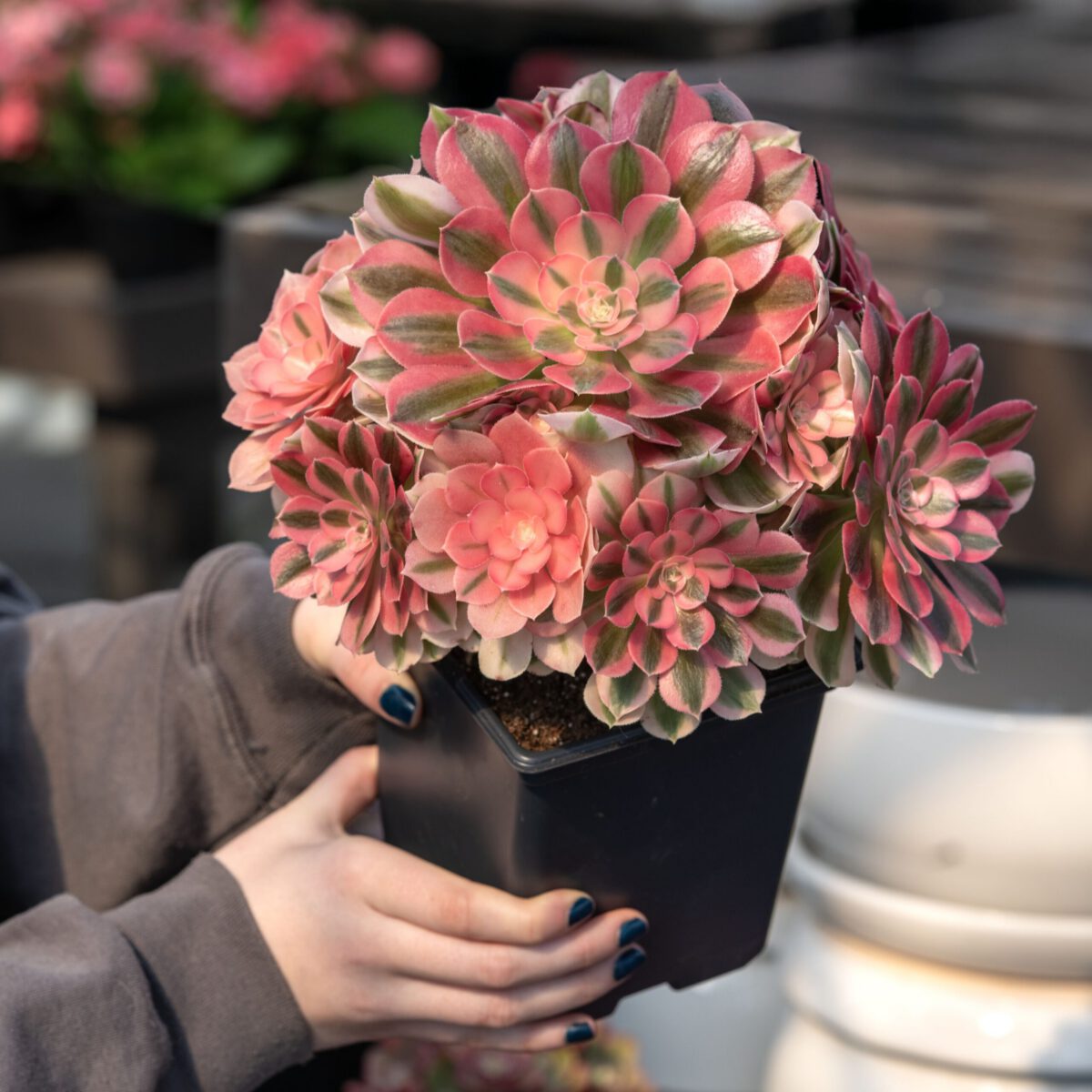
Succulents love temperature variations between day and night, a process called cold-stressing, which can bring out deeper, more intense colors.
Providing these natural temperature changes will promote healthier growth and improve their overall appearance.
Surprisingly, succulents don’t require fertilizer! With the right combination of sunlight and proper watering, they will grow naturally and thrive without any extra feeding.
If you want to encourage faster growth, you can use a diluted succulent fertilizer in spring and summer, but it’s completely optional.
By providing proper light, temperature shifts, and mindful watering, your succulents will stay healthy and colorful all year long. Whether you’re keeping them indoors or outdoors, following these simple care tips will help them flourish!
Have a succulent care question? Come visit us at any of our 7 locations—we’d love to help! ?
Succulents should only be watered when the soil is completely dry. Most indoor succulents need water every 1–3 weeks depending on light, temperature, and humidity. Overwatering is one of the most common causes of succulent problems.
Most succulents thrive in bright light and prefer at least 4–6 hours of sunlight each day. Indoors, placing them near a sunny south- or west-facing window usually provides the best conditions.
Soft, mushy leaves are usually a sign of overwatering or poor drainage. Succulents store water in their leaves, so soggy soil can quickly lead to root rot and leaf damage.
Yes, many succulents do very well indoors year-round as long as they receive enough sunlight and are not overwatered. Good airflow and proper drainage also help keep indoor succulents healthy.